• TalkBass has been independent since 1998. Add your voice.
    Create a free account to reply to discussions, view embedded media, and browse with fewer display ads.
    Join freeLog in
    Want zero display ads or expanded classifieds tools? Compare plans.

Current doubler question

I have a power supply that is mostly 9v (some 250mA, some 500mA ports)

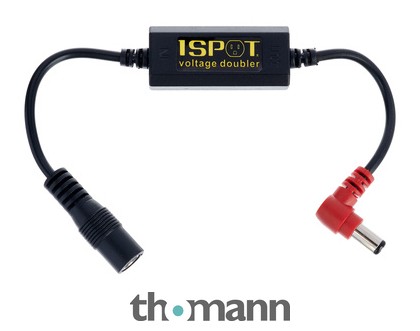
I want to put my pigtronix mothership 2 on the board. To do that I'd need a current doubler i assume.

This product says max 100mA

Under "specs" on the pigtronix product page is says it needs 18v 100mA

Screenshot_20250802_155905_Chrome.jpg


Will this work if the power supply port i use is 250mA. I am assuming it will only draw as much as it needs?

Am i mistaken?

Cheers, all.

To clarify, when i say mostly 9v, some ports are switchable 9/12/15V. I understand that when you switch from the lower volt (9) to the higher ones, the mA is halved (or fractioned maybe?) So 9v is 450mA, 12, is half that and 15 half again? I think i picked up on that here in another thread. Unrelated to my initial question though.
 
Last edited:
I have a power supply that is mostly 9v (some 250mA, some 500mA ports)

I want to put my pigtronix mothership 2 on the board. To do that I'd need a current doubler i assume.

This product says max 100mA


Under "specs" on the pigtronix product page is says it needs 18v 100mA

View attachment 7289788


Will this work if the power supply port i use is 250mA. I am assuming it will only draw as much as it needs?

Am i mistaken?

Cheers, all.

To clarify, when i say mostly 9v, some ports are switchable 9/12/15V. I understand that when you switch from the lower volt (9) to the higher ones, the mA is halved (or fractioned maybe?) So 9v is 450mA, 12, is half that and 15 half again? I think i picked up on that here in another thread. Unrelated to my initial question though.
You need a voltage doubler like the one you linked but not a current doubler. Voltage doublers work by converting current to voltage proportionally, so doubling the voltage should only halve the available current (plus probably a little lost in heat) and your 250mA 9V output should give you close to 125mA at 18V. The current draw that pedal companies list is also generally more than the pedal will ever use (usually rounded up to match the included power supply for example). In other words, you should be fine with the voltage doubler coming from one of the 250mA outputs
 
What @sunbeast said.
With the Mothership being an all analog pedal, it's not exactly likely that it'll draw 100mA - it's likely less.
Apart from that, if the voltage doubler device is rated at 100mA max, it will most likely hold up to 10% more than that, so there is a margin.

There also are Y cables that double the voltage by using two 9V outputs, and those will deliver more mA, but your PSU should handle things well.
 
  • Like
Reactions: lidl e
The OM for the MS2 says it needs 18V and 300mA. Whether it actually draws 300mA I can't say. IMHO I would not choose the Truetone Voltage Doubler TVD for this application.

AFAIK the TrueTone can supply 100mA at 18V. I don't know how it actually doubles the voltage, but I believe devices usually hold the power constant, which means there is a conversion between voltage and current.

Power = Voltage x Current
  • 100mA at 18V out = 1.8W

So the input needs 1.8W.

At 9V the required current to provide 1.8W is 1.8/9 = 200mA

Since conversion is not 100% efficient, the required input current could be a bit more.
 
  • Like
Reactions: lidl e
I don't know if your power supply can be used this way.

The way voltage and current doublers work with Voodoo Lab is they actually use an adapter that ties two output together.

For the voltage doubler, two outputs are tied together in series. Available current is equal to what the lowest rated output can provided. So if you hook up 100mA and 500mA 9V outputs in series, then you 18V and 100mA.

For the current doubler two, outputs are tied together in parallel. Available current is equal to double what the lowest rated output can provide. So if you hook up 250mA and 300mA 9V outputs in parallel, then you get 9V and 500mA.
 
  • Like
Reactions: lidl e
The OM for the MS2 says it needs 18V and 300mA. Whether it actually draws 300mA I can't say. IMHO I would not choose the Truetone Voltage Doubler TVD for this application.

AFAIK the TrueTone can supply 100mA at 18V. I don't know how it actually doubles the voltage, but I believe devices usually hold the power constant, which means there is a conversion between voltage and current.

Power = Voltage x Current
  • 100mA at 18V out = 1.8W

So the input needs 1.8W.

At 9V the required current to provide 1.8W is 1.8/9 = 200mA

Since conversion is not 100% efficient, the required input current could be a bit more.
Aye. Understood.

I did know it was 300mA but the specs on the page for this pedal says 100.

If i pit the voltage doubler in a 500mA Output woild that get me closer?

Any recommendations on a more suitable solution? I auppose i could use the power supply that came with it, but I'd prefer not to.
 
Aye. Understood.

I did know it was 300mA but the specs on the page for this pedal says 100.

If i pit the voltage doubler in a 500mA Output woild that get me closer?

Any recommendations on a more suitable solution? I auppose i could use the power supply that came with it, but I'd prefer not to.
The voltage doubler you linked says it is only rated to put out up to 100mA, so it probably wouldn’t matter which output you used. The 300mA is the current for the included power supply, but in most cases the included supply is way more than needed (for example the HX Stomp lit, included supply, and even the pedal itself all say 3000mA while the Stomp has been measured to only draw less than 1000mA). Where did you see the 100mA current draw for the Mothership listed?
 
The voltage doubler you linked says it is only rated to put out up to 100mA, so it probably wouldn’t matter which output you used. The 300mA is the current for the included power supply, but in most cases the included supply is way more than needed (for example the HX Stomp lit, included supply, and even the pedal itself all say 3000mA while the Stomp has been measured to only draw less than 1000mA). Where did you see the 100mA current draw for the Mothership listed?

Under specs here:


Typo? The adapter is definitely 300mA
 
Under specs here:


Typo? The adapter is definitely 300mA
Ah ok I only saw the manual which says 300mA, probably just because that matches the included adaptor. If the adaptor is 300mA then you can be certain that the actual current draw is significantly less, but that’s all the info you can really draw from it. It’s hard to say for sure without measuring the current draw, which you can do using a multimeter. Or maybe just email Pigtronix and ask if 100mA is correct
 
  • Like
Reactions: Wasnex and lidl e
Ah ok I only saw the manual which says 300mA, probably just because that matches the included adaptor. If the adaptor is 300mA then you can be certain that the actual current draw is significantly less, but that’s all the info you can really draw from it. It’s hard to say for sure without measuring the current draw, which you can do using a multimeter. Or maybe just email Pigtronix and ask if 100mA is correct
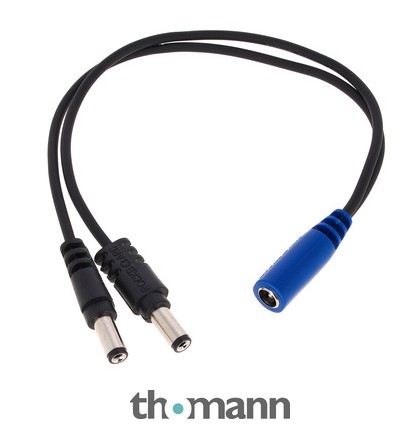
I think this might work with 2 500mA ports.

 
I think this might work with 2 500mA ports.

Yeah that should definitely work, but would eat up a lot of your power supply for a single pedal that may well not need anywhere close to that much current! I suspect the worse case scenario is that one of those cables into two of the 250mA outputs would work, best case scenario is that a single 250mA output combined with the other linked adaptor would be sufficient.
 
  • Like
Reactions: lidl e
Yeah that should definitely work, but would eat up a lot of your power supply for a single pedal that may well not need anywhere close to that much current! I suspect the worse case scenario is that one of those cables into two of the 250mA outputs would work, best case scenario is that a single 250mA output combined with the other linked adaptor would be sufficient.
I know. Might take up too many ports!

I was just walking my dog trying to count up the ports in my head. Might just stick with the C4 on this board, and put the Mothership on my smaller board where i dont need all the ports. The pigtronix is so much fun though! But I'm already going to need a current doubler for the plethora X3 and if i add this voltage doubler that's 4 ports taken out of 10.
 
I’d mail Pigtronix and ask if 100 mA would be enough current to power the MS2.
And they'll probably just refer you to their standard specs.

The way it works with semiconductors is that the current draw between different devices of the same part can vary quite a bit. Especially between different batches. A data sheet for an op amp usually specifies a typical and a maximum value for the current it will draw. All the manufacturer guarantees is it will be no more than the maximum, anything equal or less is acceptable. The pedal design engineers use these maximum values and other info to calculate the total maximum current needed. Then they'll add a safety margin and round up to a common value.

A power supply is rated to be able to supply at least the rated current at the given voltage. Usually. they can supply a bit more.

So, a pedal that's rated as drawing 100 mA might actually draw 87 mA or 64 mA. A power supply rated as able to provide 100 mA might actually be able to provide 121 mA. But there's no way to know without actually measuring your own individual pedals. As long as you stay within the rated specs for pedal and power supply, you're good though.
 
  • Like
Reactions: Wasnex
And they'll probably just refer you to their standard specs.

The way it works with semiconductors is that the current draw between different devices of the same part can vary quite a bit. Especially between different batches. A data sheet for an op amp usually specifies a typical and a maximum value for the current it will draw. All the manufacturer guarantees is it will be no more than the maximum, anything equal or less is acceptable. The pedal design engineers use these maximum values and other info to calculate the total maximum current needed. Then they'll add a safety margin and round up to a common value.

A power supply is rated to be able to supply at least the rated current at the given voltage. Usually. they can supply a bit more.

So, a pedal that's rated as drawing 100 mA might actually draw 87 mA or 64 mA. A power supply rated as able to provide 100 mA might actually be able to provide 121 mA. But there's no way to know without actually measuring your own individual pedals. As long as you stay within the rated specs for pedal and power supply, you're good though.
Most companies that include power supplies (like Pigtronix, Line 6, etc) don't actually document the current draw of pedals though, they just put the current capability of the included power supply (hence a Line 6 HX Stomp that says "3A" current required while it has been consistently measured to draw less than 1A of current). Agreed it is best to just measure for yourself in these situations, though no harm in asking Pigtronix.
 
  • Like
  • Sad
Reactions: mouthmw and Wasnex
I don't know how it actually doubles the voltage, but I believe devices usually hold the power constant, which means there is a conversion between voltage and current.
Power = Voltage x Current
I was about to type in several paragraphs explaining how voltage doubling works, when I reread this statement and realized it could just as easily mean we don't know which method of voltage-doubling they're using.

No matter what though:
Power Out = Power In - some loss = Power In x Efficiency =
Voltage Out x Current Out = Voltage In x Current In x Efficiency
(Efficiency is always <1.0)

So a voltage doubler will require input current at least double the output current.

(aka the First Law of Thermodynamics).
 
Last edited:
  • Like
Reactions: Wasnex