• TalkBass has been independent since 1998. Add your voice.
    Create a free account to reply to discussions, view embedded media, and browse with fewer display ads.
    Join freeLog in
    Want zero display ads or expanded classifieds tools? Compare plans.

Double Bass Custom engraved tuner plates

JBarz

On indefinite internet sabbatical
Supporting Member
Mar 6, 2015
1,970
3,274
Hey gang,

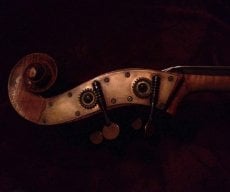
Do you guys think there's a market in the bass world for custom engraving tuning plate services in the classic tradition, like the old King Mortone basses feature? It doesn't seem like anyone is doing this in our circle. It might be "gilding the lily", but my New Standard's plates look 'naked' to me and are begging for it...

I'm considering investing some time and money into expanding this skill-set that I started in my saxophone days, but am reticent. I have a knack for this kind of detail-oriented work, but I fear/suspect ultimately few people share my aesthetic for the totally unnecessary, flowery ornamental engravings. Not to mention the extra hassle of removing the plates for shipping might be too much of a deterrent for most folks.

Talk me out of it?

J
 
By all means develop that skill! I don’t expect you’d get a lot of work, but there’s surely a few people that would pay. Look at the Spitfire pickguards, the guy is still pouring vintage correct tortoise shell plastic sheets in the old style and people pay a lot for them. I could see it going over well with the rockabilly crowd, like a pin-stripe motif etched on a black plate. You may be able to parlay it in to doing neck plates, truss Rod covers, pickguards either plastic or the anodized ones, and electronics cavity covers on the electric side as well if you’d want to drum up more business. I say go for it, but keep your expectations low. It won’t be a day job, but with a little work you may get enough business to pay for vacation or something. Best of Luck!!!
 
  • Like
Reactions: zootsaxes
I agree, it's a neat project to consider.

Keep in mind that not all DB 2x and 3x tuners (for 5 string DBs) are mounted on a single plate... My Alcoa's original tuners each have their own separate plates. If you're engraving completely by hand, that isn't a problem, but if you're using templates it means some expanding of your tooling.

P.S. Along with managing expectations, you might want to talk with some engravers, in particular about repetitive stress. Speaking as an old guy now, I'm surprised at how temperamental my hands are getting. I've done some stupid things with my hands (and ears and back and shoulders and ...) in the past, and now have to think about how I use these limited resources.
 
Last edited:
  • Like
Reactions: zootsaxes
In the Kay world there are many prewar instruments where proper restoration would require engraved tuning plates. Many have been lost, mangled or transferred to other basses over time. I think newish-looking factory-style engraved tuning sets could draw significant money for both restoration and upgrades from a small group of owners. But I can see almost as much difficulty in acquiring clean blanks as the engraved ones, so, leaving aside building whole sets from scratch, you'd be focused on decorating existing plain plates. You'd prefer to work around the keys and pillow blocks, which are hard to disassemble without damage, where the originals were engraved without them. These challenges, as well as the high cost of good handwork, narrow the portion of demand one could realistically serve, I expect.
 
I commissioned a bass from a local luthier, sourced plain brass plate tuners and tattooed them. The luthier told me he had a friend who did saxes and bread instrument engraving (Bill), but the luthier failed to follow thru on the plan, and my bass ended up with individual tuning machines recycled off a Shen willow. I was looking forward to the engraved plates.

So, yes, I do think their is a market for your idea in the custom build market space. You should source some plain brass plates, restore them, engrave them, then antique the whole assembly. Offer them up for sale to bass builders.
 
  • Like
Reactions: zootsaxes
I have a feeling that doing this with lasers or maybe CAM is more practical today than by hand, and could get around some of the problems.

Yeah, laser engraving just looks so cheesy, though, imho, but I’m a traditionalist...

I’ve not given up on the idea, but it’s pushed to the furthest back burner, right next to my copy of “so you want to build an upright bass” and that abalone vine inlay that I bought on a lark, lol.
 
Last edited:
Grace Her Scroll.jpg
 
  • Like
Reactions: zootsaxes
I could imagine this being a fun hobby, but I would really question whether you could make a profit at it. I suspect the market of people who would be willing to pay what your time is worth would be awfully small.

I'm pretty sure Upton cuts their own plates. I wouldn't think it too challenging to commission blanks from any small machine shop.
 
  • Like
Reactions: zootsaxes
I’ve never given the plain plates on my New Standard a second thought.

All I see is a blank canvas…

Of all the basses I’ve sold, I regret selling that early Mortone with half its back veneer missing the most… those early King tuners are where its at and exactly what I would want to copy, for the most part.

Steven is 100% correct, though- if I can’t take the plates off the rest of the hardware it’ll be tremendously limiting in terms of what I can accomplish and I don’t want to do it unless I can make it bombin’…

A fun dream to consider, regardless.
 
  • Like
Reactions: Don Hergert

Latest posts