• TalkBass has been independent since 1998. Add your voice.
    Create a free account to reply to discussions, view embedded media, and browse with fewer display ads.
    Join freeLog in
    Want zero display ads or expanded classifieds tools? Compare plans.

Custom stack advice needed

I'm planning 2 2*12 cabs as a stack from a semi-custom one man shop here in Germany. I've had 3 cabs made for me by him (2*12, 2*10, 1*15). Won't play other cabs. Now is the first time I actually specify speakers which are gonna be Eminence Delta-12A and we'll work out cab size together. I have two questions: I'm into mid-heavy distorted metal tones on a tuned down 4-string in C#. So far I've decided not to use tweeters. What other design elements would complement the tone? Especially regarding compactness vs bigger size. Does it matter? Second question: The speakers are 8 Ohms which would mean 2 4-Ohm-cabs. I'm planning to go with poweramp into cabs. No amp. I run two preamps on the pedalboard in series for gain stacking and then blend in clean/compressed signal with a passive mixer (Radial 2:1) whose mono output is then supposed to go into the poweramp. Is there many options regarding poweramps which can do say 2*500-800W at 4 Ohms per channel?
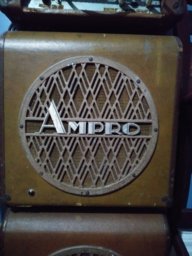
 
The builder also does 3*12 cabs which is an awesome idea as it's louder than 4*10 but just 10cm (4") higher. With wheels in the back and grip on top it shouldn't be too hard to transport. I've asked him if he can put the Eminence speakers in but I don't know if that makes sense with regards to impedance as that cab would be 1200W @ 2.7 Ohms. I don't know of an amp that does 800-1000W at 2 Ohms.
 
Size matters depending on the speakers. You have to design the cabinet around them. If the guy building your cabinets is competent, he should know the correct dimensions. Eminence has designs for cabinets in the spec sheets if you don't know how to do it yourself.

There are loads of amps that will do what you're asking. What you need to be aware of is the input sensitivity of the amp. Some power amps are more suited to instrument levels than others. Just because you have to pedals doesn't mean it's going to put out a suitable signal.
 
  • Like
Reactions: H3R3T1K
I'll be needing 16 ohm 12" speakers that can handle at least 200W which would mean a 800W @ 4 ohms amp can be cranked without breaking anything. What options do I have? I was originally gonna go with EVM12Ls (8 ohms unfortunately) and am into modern overdriven metal tones. No tweeter, no midrange driver. Guitar speakers would be fine too but I'm not aware of any that do 200W/16ohms.
 
Be sure you understand how power ratings are obtained, the metrics used and what they need.

I think you will find the Delta 12 (not the LF version) will be quite limited in low frequency power handling and extension even in larger cabinets.

Note the significant displacement limited power handling:
[Invalid or Expired Link Removed]
 
Last edited:
  • Like
Reactions: tshapiro
I decided to go with a 3*12 FMC cab (German manufacturer) with an adjustable 8" midrange speaker and neo speakers weighing 27kg and a 1U power amp with 580W at 4 Ohms that is also made in Germany. It's class H and weighs 8.5kg. The cab is not much bigger than a 410. Rated 900W.

image.jpg
 
I built a cab with a Delta-12LFA in a fairly small (1.5 cu.ft. ?) bass reflex, and it was a very good performer. After modeling both 12A and 12LFA versions, the LFA seemed much better suited to what I was doing, more convential electric bass, no distortion. I used the APT tweeter crossed at 3.5K, I believe, and that cab worked really well. I suspect 2 Delta 12LFA's in a 3 or 4 cubic foot bass reflex would move some air.

I don't know anything about the kind of tone you're chasing, but I would be concerned about overexcursion, using a de-tuned bass with the Delta-12A.
 
Last edited:
I talked to the obviously very knowledgeable builder who is using Sica speakers from Italy who also make Jensen speakers. He talked me out of using PA type speakers and go with proper bass speakers. He said they would work very well for distorted metal tones. He had 2U custom built Tolex covered rack case in the style of Mesa Boogie on hand which fits my poweramp perfectly. It looks super premium with Sansamp RBI and poweramp. The cab is being built right now.

We agreed on another 112 cab with a PA type speaker from Faital which he uses for cabs with modelling in mind as they are very neutral. The speaker is 300W and can handle both guitar and bass. I wanted to go with Celestion but he knows his stuff and recommended that speaker instead. There's a Dutch manufacturer of state of the art class D poweramps with strong DSP that he said can be fit inside the cab. That would mean I have nice loud 112 cab that I can just hook guitar or bass up to with Sansamp or a Helix stomp and go. This one will stay at home for practicing and tone experiments.

To complement amplification I'm having custom pedals built locally. One Plexi preamp with additional 3-band EQ and a Marshall Guvnor pedal which is said to be great with bass also. In addition I went with a simple HPF/optocomp in one enclosure which is gonna be the secret weapon keeping the tone focused and even after cutting the sub lows without removing dynamics much going into the distortion box. Together with the Marshall style pedals I'm certain I'll nail Lemmy type tones without getting muddy. My mission was to get old-school distorted bass tones without the ubiquitous Darkglass split 'n grit. I'm kinda tired of that. There were badass distorted metal bass tones before that. Guess I just wanted to be different.
 
Last edited:
Just a quick question to ask about the correct way to hook up the power amp to the cab (bridged mode). Below is the backside. I went XLR from the Sansamp RBI into the very left input, set left control to "full", right control to "bridge" and plugged speaker cable into BRIDGE. Is that the correct way for bridged mode? I noticed that somehow the front controls for both channels work. Is that correct? I was assuming one would become "master volume" in bridged mode. It seems you can use either control.

Now if I wanted to use just one channel (A) I would just switch "bridge" to "mono" and plug speaker cable into OUTPUT A?
red-rock-modus-m-3_0-linear_1015845_3.jpg
 
Input to the input A jack, output from the bridge output jack, bridge switch in the bridge position. Generally on;y input level control A will work, but this is not always the case depending on the intent of the designer. If both controls work, they should generally be set identically. Check your owner's manual.
 
  • Like
Reactions: H3R3T1K
Input to the input A jack, output from the bridge output jack, bridge switch in the bridge position. Generally on;y input level control A will work, but this is not always the case depending on the intent of the designer. If both controls work, they should generally be set identically. Check your owner's manual.

Manual says to crank both controls in bridge mode. I'm still figuring out how to run pre/power amp. At one point the power amp had it's protection circuits activate I think because I was feeding it too hot a signal? I don't know but I guess nothing is broken. My speakers are safe because the power amp delivers up to 580W bridged at 4 Ohms and my cab can take 900W @ 5.3 Ohms so there's no way this amp can blow my speakers.

One thing I don't understand is how to figure out if there's power amp clipping. I'm still trying to understand what the front LEDs do. I think they can indicate clipping as well but there's nothing on it in the manual. It's totally barebones. Just how to run it mono/stereo/bridged and the tech spec sheet.

red-rock-modus-m-3_0-linear_1015845_1.jpg
 
When the limit LED flashes, you are at the limit of the power amp’s capabilities. The limiter prevents clipping, but running hard into limiting on some amps at the lowest rated impedance can sometimes trigger the protection circuit.

This is often speaker dependent because the speaker may have regions of its impedance curve that extend below the minimum impedance of the amp even though the speaker manufacturer states the nominal impedance at say 4 ohms.
 
  • Like
Reactions: H3R3T1K