• TalkBass has been independent since 1998. Add your voice.
    Create a free account to reply to discussions, view embedded media, and browse with fewer display ads.
    Join freeLog in
    Want zero display ads or expanded classifieds tools? Compare plans.

Darkglass Microtubes 900 Class D Amp

Super silent fan
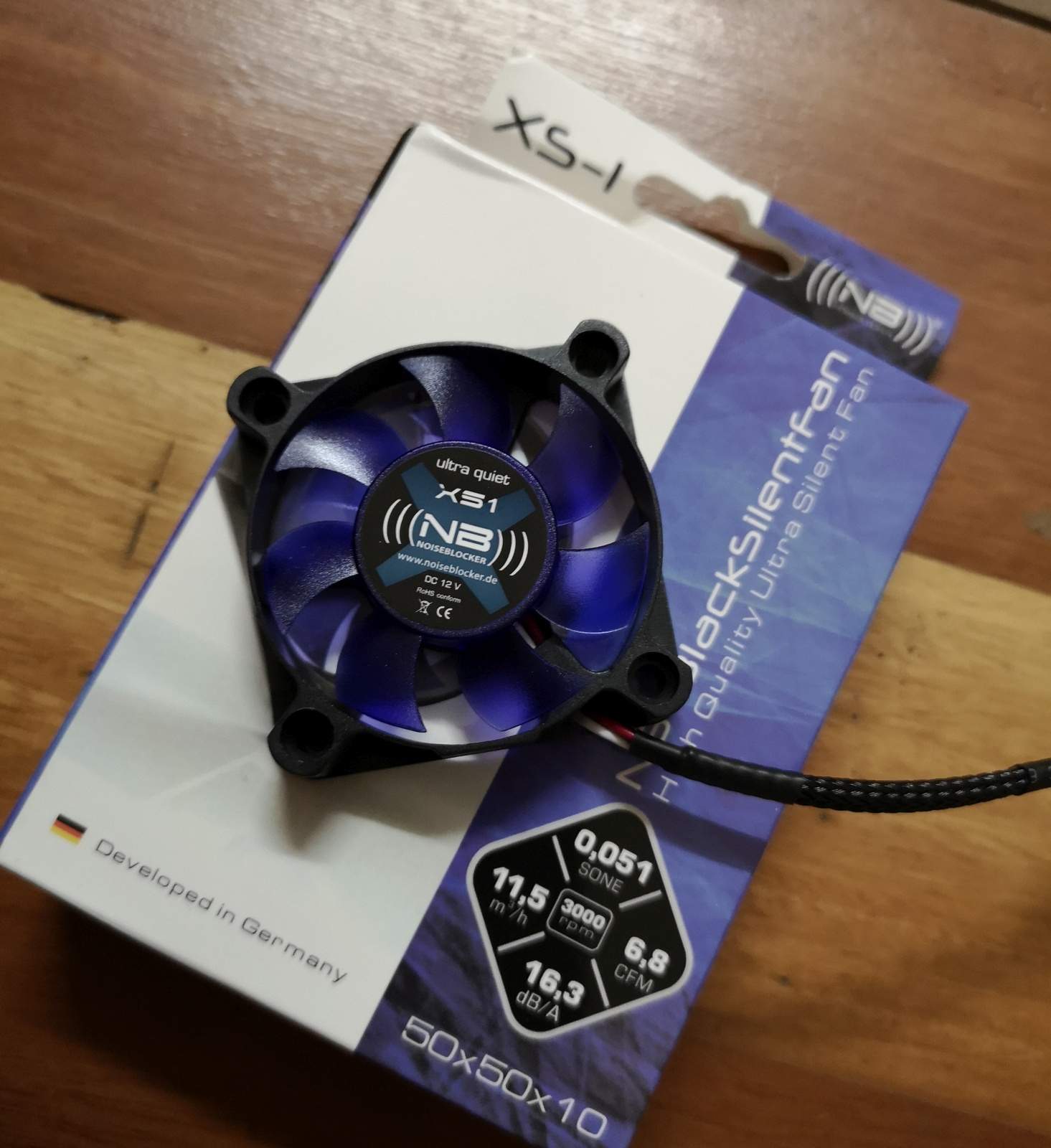
So I got this German Noiseblocker 50mm XS-1fan and put it in the M900. 50 Ohm resistor inline with the cord (total 150 Ohm inline with the existing supply) puts the 15V supply down to around 8.5V and runs around 30mA. Have to look to see if it is spinning or feel for air gently coming out of the vents. The ICEPower 700 ASX module also has a temperature monitor lead coming off it so there is a possibility to make a simple temperature controlled fan circuit, but this fan is so silent that I don't think I'll need to.

The stock fan circuit puts the + fan line on the ground voltage and - fan line runs to -15V with a 100 Ohm resistor in line dropping the fan voltage to 10.5V with a 40mA draw.
M900_fan_03.jpg
 
Super silent fan
So I got this German Noiseblocker 50mm XS-1fan and put it in the M900. 50 Ohm resistor inline with the cord (total 150 Ohm inline with the existing supply) puts the 15V supply down to around 8.5V and runs around 30mA. Have to look to see if it is spinning or feel for air gently coming out of the vents. The ICEPower 700 ASX module also has a temperature monitor lead coming off it so there is a possibility to make a simple temperature controlled fan circuit, but this fan is so silent that I don't think I'll need to.

The stock fan circuit puts the + fan line on the ground voltage and - fan line runs to -15V with a 100 Ohm resistor in line dropping the fan voltage to 10.5V with a 40mA draw.

Just note that it would be a good idea to check with the manufacturer if you expect them to honor any warranty claims. It's quite possible that the air flow will not provide adequate cooling IMO.
 
  • Like
Reactions: DiscoRiceJ
Just note that it would be a good idea to check with the manufacturer if you expect them to honor any warranty claims. It's quite possible that the air flow will not provide adequate cooling IMO.

Very true.

My amp is out of warranty; I will not be pushing the output to redline for extended periods and those who will be doing so will not worry about fan noise. As with everything engineering, you need to monitor the effects that your modifications have on things - I'll monitor my temperatures and will definitely post back if the airflow is anything close to inadequate and I need to install a smart fan circuit.

Another warranty voiding mod coming....
 
Very true.

My amp is out of warranty; I will not be pushing the output to redline for extended periods and those who will be doing so will not worry about fan noise. As with everything engineering, you need to monitor the effects that your modifications have on things - I'll monitor my temperatures and will definitely post back if the airflow is anything close to inadequate and I need to install a smart fan circuit.

Another warranty voiding mod coming....

Others are likely not aware of such things and will often blindly follow what they read on the internet without understanding what they are doing. That's in part what keeps hospital ER's in business ;)
 
Moving DI and effects loop to before master volume - theory

Please be in no doubt that this is warranty voiding and you should not open an amp that is plugged in, especially if you don't know what you are doing. Also don't believe everything you read on the internet (thanks agedhorse).

I prefer the master volume to be after the DI and effects loop so that send and DI send levels do not get affected by changes in the master volume and the signal-noise ratio remains higher in the effects loop when using the amp at lower volumes.

Main circuitboard has a 10 pin 2.54mm header at the back right corner which runs to the effects loop/DI/limiter board. I traced the circuit below.
SND pin -> Preamp out jack
LIM pin <- Limiter <- Power amp in jack
POST pin -> DI output
CLN pin -> DI output

M900_mainboard_03.jpg


Moving the master volume (in green):
Remove master volume pot and short the signal in to the wiper pin.
Place the master volume pot in the return from the limiter and the ground pin to ground.

Moving the DI output (in cyan):
3 options:
1. Original line on POST pin - will result in DI signal after master volume
2. From LIM line at input of master volume pot - DI signal taken after effects loop and limiter and before master volume
3. From SEND pin - DI signal taken after preamp and mute, but before effects loop

M900_mainboard_04.jpg
 
Moving DI and effects loop to before master volume - practice

Pull the mainboard out - 11mm nut for the input jack and 10x 10mm nuts for the pots after pulling the knobs. 2 screws to the risers. 4 headers to disconnect. Did I mention unplug before opening and make sure you can do this type of work? Double check the circuit flow on your amp - I have a Rev5 mainboard which means that you may have something different.

The master volume pot on the far right is difficult to desolder as the mute switch sits immediately over it. Gentle wiggle backwards and forward to fatigue the pins and you still have plenty of pin as well as the rivets to solder on to. Easy to stuff up.

M900_mainboard_05.jpg


Short the master volume pot signal pads with a small jumper.

M900_volume_02.jpg


I soldered 3 wires onto the pot and ran them to a 3 male pins with one female pin off the input to pull the DI signal from here if needed. Reversed the wires initially (picture) and correct orientation is as per red diagram. 2 female header pins in the LIMIT line to insert the master volume and one female pin to a ground wire. Secure the master volume pot to the faceplate before you put the mainboard back in. If you need to ask where to plug the pins in, you shouldn't be doing this.

Male header pin on the POST wire that goes to the DI board and female pins on the POST wire at mainboard end as well as one on the SEND line so that deciding where the DI signal comes from is done by deciding which of 3 options you plug it into. You could put a switch in somewhere, but it seems a shame to drill this chassis.

M900_volume_03.jpg


Works how I want it.
 
  • Like
Reactions: bjelkeman
Once a mod like this is done, most manufacturers will no longer service an amp.
It’s fine for a hobby if you know what you are doing, but also why I recommend against buying modified amps and verifying that your are not getting a surprise.

I do appreciate the creativity and tenacity though.
 
Good bass day to all,
after long decade with GK and MarkBass I decided to get out of my comfort zone and try something I dind't want to accept as my main amp. tl;dr; I did something not realy clever. I bought D class. Problem is that all these cool, elegant and pure sounds of AB solid state or full tube amps are great but hurt my back. And in these days, playing bass is different then it was 20 years ago. Reading tons of reviews about different brands I found out that Aguilar is recommended for jazz, groove and session guys, GK for others, Ampeg for rockers and.... Because I am session, groove, jazz, classics, soul guy with PBass who needs clean tone with a little bit of bite and sometimes slight overdriven I bought... Darkglass X 900 - full metal machine. :D:D
To be honest, I work a lot with electronics and other HW staff and my motivation was slightly different. I was curious about this new approach and wanted clean sound(so I bought something known for distortion at its best). Despite the fact that I was told that Darkglass is adding a lot of colour to the tone I found out clean channel as superclean and it is adding nothing to the sound.
Compressor is called studio grade in marketing papers. Nothing even close Darkglass, sorry.:smug: Compressor works really good for this money but for "studio" I prefer something with more controls and less marketing.
X channel is something "nice to have" but I didn't plan to use it. Very smart decision to buy something which should be used as metal boost tone amp which rolls of the socks and can be used in mines to loose the rocks... neveretheless I tried it and after few hours of having fun and playing free gig for my neighbours I found out that I still remember all my favourite Primus lines, I still cannot play anything from Steve Harris and I love The Who bass tone.
So, I hope I am going to like it even more and more. Stay tuned.:bassist::bassist:
 
  • Like
Reactions: MattiZ
Does anyone use this machine always or for a long time at 2 Ohm? A colleague tells me that he doesn't recommend it because it would end up damaging the device because it would get hotter or something like that... I doubt it, because I suppose that if they have designed it that way it will be to use it in any way. I ask about it. If anyone had a bad experience using it at 2 Ohm?
Thanks.
:bassist:
 
Does anyone use this machine always or for a long time at 2 Ohm? A colleague tells me that he doesn't recommend it because it would end up damaging the device because it would get hotter or something like that... I doubt it, because I suppose that if they have designed it that way it will be to use it in any way. I ask about it. If anyone had a bad experience using it at 2 Ohm?
Thanks.
:bassist:
Not always on, but sometimes practice for three hours. I doubt it will suffer. It doesn’t get hot, it is so loud I can’t really go very high on the volume knob anyway. Using it with two 2x12 & 1x8 cabs at 2 ohms.
 
  • Like
Reactions: Spanish Pirate
Does anyone use this machine always or for a long time at 2 Ohm? A colleague tells me that he doesn't recommend it because it would end up damaging the device because it would get hotter or something like that... I doubt it, because I suppose that if they have designed it that way it will be to use it in any way. I ask about it. If anyone had a bad experience using it at 2 Ohm?
Thanks.
:bassist:

No issues at all running it for a long time at 2 ohms
 
  • Like
Reactions: Spanish Pirate