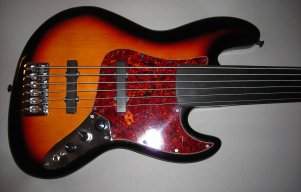
I bought an FSR Jazz last month from GC, and as I have played it, I have found I have several dead spots in the 1st octave of my E and A strings. I understand they frequently get them on the G, but this sucks being down where I play all the time! Is this something that would constitute an exchange at GC, or do I just need to replace the neck? I wanted to get your opinions before I call them and look like an idiot. Thanks!

Enjoy the benefits of a premium membership!
Upgrade Account
-
TalkBass has been independent since 1998. Add your voice.
Create a free account to reply to discussions, view embedded media, and browse with fewer display ads.
Join free Log in
Want zero display ads or expanded classifieds tools? Compare plans.
You are using an out of date browser. It may not display this or other websites correctly.
You should upgrade or use an alternative browser.
You should upgrade or use an alternative browser.
Dead spot, what would you do?
- Thread starter betardfoosier
- Start date
More options
Who Replied?I would definatly try taking it back and see if you can exchange it for a new one. Why did you wait a month before addressing the problem though? If you've gone past 30 from the purchase date they might not do it.
I bought an FSR Jazz last month from GC, and as I have played it, I have found I have several dead spots in the 1st octave of my E and A strings. I understand they frequently get them on the G, but this sucks being down where I play all the time! Is this something that would constitute an exchange at GC, or do I just need to replace the neck? I wanted to get your opinions before I call them and look like an idiot. Thanks!
Hi betardfoosier,
I am not sure that I fully understand what you mean by dead spots but the thought occurs to me that it could be possible that you are playing your bass in a small room and a problem with a standing wave is causing a phase problem which presents itself as a dead note.
Do you get the same problem on-stage, in a studio, rehearsal room, outdoors - places other than where you originally noticed the problem?

Hi betardfoosier,
I am not sure that I fully understand what you mean by dead spots but the thought occurs to me that it could be possible that you are playing your bass in a small room and a problem with a standing wave is causing a phase problem which presents itself as a dead note.
Do you get the same problem on-stage, in a studio, rehearsal room, outdoors - places other than where you originally noticed the problem?
Apropos of that, you might want to try headphones to try to determine if it's really deadspots on the bass.

If the string doesn't ring out when you play in certain areas it can be because of a high fret. Raising the action can get rid of the problem, otherwise you probably have to level the frets or replace the nut. There were some dead spots on a used bass I bought which prevented me from lowering the action to a really playable height; leveling the frets made a huge difference.
It took about an hour without specialty tools or any specific experience. I assume a decent repair guy could do it faster, but it's very doable for a handy person.
It took about an hour without specialty tools or any specific experience. I assume a decent repair guy could do it faster, but it's very doable for a handy person.

Take it back if you are within the return window. No sense in keeping something that is obviously bugging you to the point you are starting a thread about it. Take it back and look for something without issues that will irk you.


Even outside the 30 day return window, actual dead spots are an actual fault. (Especially in the bottom octaves of the E and A strings.) Do they sound as dead when you play acoustically?
To eliminate room resonance from the equation, test the bass through a pair of headphones. Dead spots are not usually found on the E & A strings.
Hi betardfoosier,
I am not sure that I fully understand what you mean by dead spots but the thought occurs to me that it could be possible that you are playing your bass in a small room and a problem with a standing wave is causing a phase problem which presents itself as a dead note.
Do you get the same problem on-stage, in a studio, rehearsal room, outdoors - places other than where you originally noticed the problem?
A "dead spot" does not refer to room resonances, though they also can cause problems. A "dead spot" is neck resonance in the bass that sucks the sustain out of certain notes making them sound thuddy or dull.
To test for dead spots find the notes that are dull. Play it normally listening to it "ring" (or not ring as the case may be). Then take your headstock and press it into something solid like a wall. You should feel the note suddenly come alive with tone and sustain just like the other notes. That is more or less the "true test" for a dead spot.
The quick and dirty fix is to add weights to headstock, the "real" fix is a new neck or new bass!

okcrum
in your chest
Are the strings twisted? Try loosening them up and checking before you send the bass back. I've seen a number of folks reporting E/A string problems that turned out to be twists.


