+1 This right here.I think flats vs round wounds are really the defining thing about basses for me. That makes a way bigger difference in tone and how I play it than whether it's active or not.

TalkBass has been independent since 1998. Add your voice.
Create a free account to reply to discussions, view embedded media, and browse with fewer display ads.
Join free Log in
Want zero display ads or expanded classifieds tools? Compare plans.
+1 This right here.I think flats vs round wounds are really the defining thing about basses for me. That makes a way bigger difference in tone and how I play it than whether it's active or not.

He basically leans passive and I can’t argue with his logic. I say active with a passive bypass and passive tone pot is foolproof.

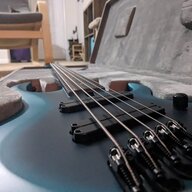
That video and that argument about the tradeoff is a large part of why I decided to give EMG's J pickups a shot. I have them in two basses, the clarity just can't be beat.The part about the tradeoffs with magnets and coils is well worth listening to.
The infamous Gibson mudbuckers of the original EB series are a great example. No high end, slow note attack…but very high output and massive lows.
One thing I love about EMG pickups is that it’s possible to roll the passive tone knob full CCW to reduce the high end but the notes are still clearly defined.



 !)
!)
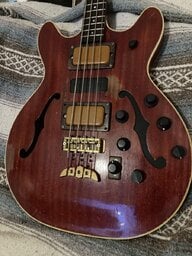
When I went to school, all MP&E students were brain washed into the only way to record bass is a fender jazz bass with everything wide open. I laughed when confronted with this in the studio and said I don't own a passive bass let alone a jazz bass so... should I leave then?

I've experienced this. I was hired to remotely provide a bass part for a song and my first pass was with an Alembic Series I. They said I wasn't getting the right feel. I provided other takes with various basses, that I thought sounded fine. Same complaint. Finally, I played it with a Lakland Jazz bass and they said I nailed it. Same exact part. It's interesting how they attributed the problem to my playing, rather than the engineer's inability to mix anything but a Fender.

Active tones have never been among my favorites, but I think they work in certain contexts. It can really fill out the live sound in an atmospheric or minimalist arrangement.

It has always seemed to me that engineers should be embarrassed to not be able to mix the signals of Non-Fender basses. That said, I think many see a Non-FSO bass, and they “hear” the mix with their eyes. Sadowsky’s, which sound pretty distinct from passive Fenders, call BS on the difficulty of mixing Non-Fenders.
+1
Agreed - especially with mixing tools that are available. Too unruly, get a little compression on it.
Trouble frequency? Notch it out w/parametric EQ. I think a lot of this mythos can be chalked up to not being proficient at their craft or worse, a bit of laziness.
Engineers are there to capture the audio given by the performer & make it sit its best in the mix. Insinuating that only a passive 7ender instrument will work the best in any given genre, or mix, is ridiculous at face value. IMO.
This is an interesting evaluation/compartmentalization. What kinds of 'active tones' fit this criteria? The list of 'active tones' on decidedly non-atmospheric or minimalist arrangements is long. Are these 'bedroom active tones' that are scooped out perhaps?

The quintessential active tone, in my opinion, is the Stingray. I found it to have a 'big' sound that filled up space with sparse compositions in the live setting.


