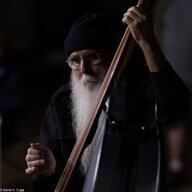
At 65, my wife and I are some of the youngest among our local group of part-time musicians and jamming friends. About 20 years ago we looked around at our older friends and noticed that while they were most all still enjoying playing music and jamming, their chops were getting less and less polished, and not due to any lack of effort or practice. This was due to various, mostly natural, age related issues and not necessarily any particular active disease... In our observation, keeping rhythm seems to be the first thing to go... Not necessarily to a point of stopping music altogether, but enough to keep from performing.
My wife and I decided to accelerate our practice and music work, realizing that we also would too soon be losing our chops, and we wanted to have no regrets about doing too little music. Since then we've played on big and small stages all over the place, we've been active with numerous bands and countless jams, we've performed regularly on an international Satellite TV series and for numerous short spots on other shows, we've recorded, produced and released 4 Gospel albums, and with only a few exceptions, have loved every minute of it. This along with the real big lifetime accomplishments of raising our two sons, supporting a home and nurturing two pretty successful careers.
We've had a few major issues on the way... in 2010, like @buckthorn , I contracted GBS which went into CIDP, leaving my lower extremities deeply numb and slowly but continuously weakening and stiffening. During checkups that year, like @210superair , I was also diagnosed with severely degenerative C3-C4-C5 (and more, but not practical to repair) and had a successful fusion of those vertebrae. In 2015 my wife was diagnosed with a bad cardiac mitral valve and had an open heart repair. And over the last few years we've both been experiencing stiffer joints all over the place than we've ever felt before, especially lately as winter comes around. These have been good reminders for both of us, inspiring us to work harder and smarter at everything that we love doing.
Last year I made the decision to retire from my 35 year systems analyst career a little early; actually my wife made it for me, realizing I was getting more and more frustrated with situations at work, and that I could earn just as much or more money than I was earning at work by collecting monthly checks from SS and from my retirement fund. My wife is still working and enjoying it, but is also planning to retire in the next year or so. The goal for both of us is to be retired early enough to still enjoy it; we have a modest RV and really want to travel the nation during the summer bluegrass festival season sometime in the next few years. And, we'll see, we may have other trips up our sleeves.
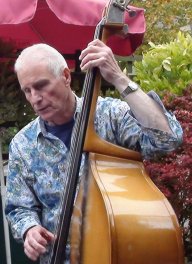
Early last year I acquired my Alcoa and dove very seriously into the double bass quagmire -- and I have loved every minute of it. This year, we finished and released our latest Gospel album, plus I'm continuing serious work on double bass and, as possible, honing my banjo and mandolin chops. We're performing often and loving music, but at the same time we're looking over our shoulders as the age-train seems to be accelerating.
Music has been wonderful to my wife and I over the last 50 years; it's how we met and it's always been there for us to enjoy. But early on, we decided not to try to make it in music full time, because the stress took all the fun out of it for us. Of the full time musicians that we know -- and we know and care about a lot of them -- about 15% pay a mortgage instead of rent. About 10% have health insurance. About 5% have a serious retirement fund. And about .01% actually make it big, with many of them living posh, but basically horrible lives from then on.
The best recommendation I can make to anyone who is making, trying or planning to make a living at music, is to plan healthcare and retirement for yourself and your family now while you're healthy and young enough to do so. No matter how much you love music, one day, either due to unexpected health issues or due to age, you'll realize that you aren't able to compete anymore and you'll not be in a position to start another career. This is the natural way of music and it has been part of life for musicians throughout the centuries. It is an extremely hard life, and while you'll probably always love music, it stops making money for you someday. Having a plan to manage that situation can keep you loving music even when you aren't performing anymore.
My wife and I decided to accelerate our practice and music work, realizing that we also would too soon be losing our chops, and we wanted to have no regrets about doing too little music. Since then we've played on big and small stages all over the place, we've been active with numerous bands and countless jams, we've performed regularly on an international Satellite TV series and for numerous short spots on other shows, we've recorded, produced and released 4 Gospel albums, and with only a few exceptions, have loved every minute of it. This along with the real big lifetime accomplishments of raising our two sons, supporting a home and nurturing two pretty successful careers.
We've had a few major issues on the way... in 2010, like @buckthorn , I contracted GBS which went into CIDP, leaving my lower extremities deeply numb and slowly but continuously weakening and stiffening. During checkups that year, like @210superair , I was also diagnosed with severely degenerative C3-C4-C5 (and more, but not practical to repair) and had a successful fusion of those vertebrae. In 2015 my wife was diagnosed with a bad cardiac mitral valve and had an open heart repair. And over the last few years we've both been experiencing stiffer joints all over the place than we've ever felt before, especially lately as winter comes around. These have been good reminders for both of us, inspiring us to work harder and smarter at everything that we love doing.
Last year I made the decision to retire from my 35 year systems analyst career a little early; actually my wife made it for me, realizing I was getting more and more frustrated with situations at work, and that I could earn just as much or more money than I was earning at work by collecting monthly checks from SS and from my retirement fund. My wife is still working and enjoying it, but is also planning to retire in the next year or so. The goal for both of us is to be retired early enough to still enjoy it; we have a modest RV and really want to travel the nation during the summer bluegrass festival season sometime in the next few years. And, we'll see, we may have other trips up our sleeves.
Early last year I acquired my Alcoa and dove very seriously into the double bass quagmire -- and I have loved every minute of it. This year, we finished and released our latest Gospel album, plus I'm continuing serious work on double bass and, as possible, honing my banjo and mandolin chops. We're performing often and loving music, but at the same time we're looking over our shoulders as the age-train seems to be accelerating.
Music has been wonderful to my wife and I over the last 50 years; it's how we met and it's always been there for us to enjoy. But early on, we decided not to try to make it in music full time, because the stress took all the fun out of it for us. Of the full time musicians that we know -- and we know and care about a lot of them -- about 15% pay a mortgage instead of rent. About 10% have health insurance. About 5% have a serious retirement fund. And about .01% actually make it big, with many of them living posh, but basically horrible lives from then on.
The best recommendation I can make to anyone who is making, trying or planning to make a living at music, is to plan healthcare and retirement for yourself and your family now while you're healthy and young enough to do so. No matter how much you love music, one day, either due to unexpected health issues or due to age, you'll realize that you aren't able to compete anymore and you'll not be in a position to start another career. This is the natural way of music and it has been part of life for musicians throughout the centuries. It is an extremely hard life, and while you'll probably always love music, it stops making money for you someday. Having a plan to manage that situation can keep you loving music even when you aren't performing anymore.
Last edited: