
The more experienced I became the quicker I could tell. I doubt there's a way to bypass that part.

Enjoy the benefits of a premium membership!
Upgrade Account
-
TalkBass has been independent since 1998. Add your voice.
Create a free account to reply to discussions, view embedded media, and browse with fewer display ads.
Join free Log in
Want zero display ads or expanded classifieds tools? Compare plans.
You are using an out of date browser. It may not display this or other websites correctly.
You should upgrade or use an alternative browser.
You should upgrade or use an alternative browser.
Define a quality bass guitar.
- Thread starter marchone
- Start date
More options
Who Replied?

Gaolee
Official leathers tester and crash dummy
How do I tell?
1. Do I like it?
2. See step 1.
Science!
1. Do I like it?
2. See step 1.
Science!
Perhaps you should properly define "quality" first.
Most folk mistake that word to mean a deep lustrous shine, or expensive materials, but when applied to commercial products and services it means "fitness for the customers purpose".
Most folk mistake that word to mean a deep lustrous shine, or expensive materials, but when applied to commercial products and services it means "fitness for the customers purpose".

Put into words what a good bass is.
Any bass that has a good sound, neck is stable, stays in tune
Regardless of brand or cost
Do the same for a decent bass.
Any bass that has decent sound, occasional or frequent tuning, occasional or frequent neck adjustment
Regardless of brand or cost
Now describe a bad bass.
bad sound, constant tuning, constant neck adjusting,
Note: finish does not define a good or bad bass,,,,,
Any bass that has a good sound, neck is stable, stays in tune
Regardless of brand or cost
Do the same for a decent bass.
Any bass that has decent sound, occasional or frequent tuning, occasional or frequent neck adjustment
Regardless of brand or cost
Now describe a bad bass.
bad sound, constant tuning, constant neck adjusting,
Note: finish does not define a good or bad bass,,,,,
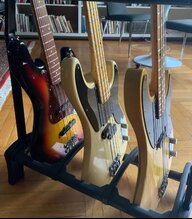

I disagree, it just takes a lot of words.[defining everything that is packaged into the colloquialism “quality”] impossible.
As it’s pushed towards in the OP, the way that Americans (and maybe UK residents as well?) use the word, it’s a word whose meaning is as deep as the oceans and to define it is only impossible to people who haven’t a significant amount of experience in whatever subject which is being subjected to that word.
I disagree, it just takes a lot of words.
You’re on. Go for it.

Good sound in a mix, easy to play, no fret buzz with a good action, stable neck, quiet electronics, comfortable on a strap and on the lap.
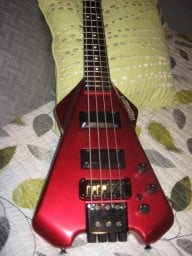
I can't read this whole thread. To me a good bass, any good bass, is one that makes me smile when i play it.

If you can, articulate what is garbage, and what is not.
Try hard to leave out unadulterated opinion and subjectivity.
This is a fool's errand.
One either likes a bass or one doesn't.
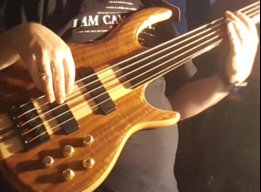
Lots of words, you say? ok, that's my call LoL:
Quality, to me, means it is built to last, can withstand regular professional level use without the metal bending or the wood stripping or the tuners breaking or the pots getting scratchy.
From what I've experienced talking with other bassists and guitarists over the years, I think that is a relatively common interpretation of "quality" regarding our instruments.
The tone of a $100 instrument, and the playability (once you've leveled frets, shimmed neck, completed adjustments of bridge saddles for height and intonation, cut the nut slots deeper/correctly, adjusted pickup height(s), and replaced the strings.... all steps that are required to make a very cheap instrument into a very good playing instrument).... can be great. But it's likely (not guaranteed, mind you) that it uses cheap pot metal for the bridge, tuners, and so forth. It's likely, but not guaranteed, that the tuners will not withstand a lot of use.
When I buy certain brands, I know I will get something that will not fall apart. When I buy other brands or models, I have learned from experience, I know that the bridge metal is garbage... quite literally... to the point where if you tighten a certain bridge adjuster past the point where you get SOME resistance (but not like it's clamping down or anything), you can keep tightening it while you are waiting to feel it hit the end (where you might choose to back off some).... but it turns out it's just gradually bending the bridge metal and breaking it until it'll literally just fall apart. It takes very little force to do this. I won't mention the brand, but the instrument cost in the 4 digits brand new and isn't considered entry level in any way, and is used by some pros.
I've bought several fender guitars (usa) where there was a scratchy pot or very scratchy pickup switch. That doesn't exude quality, not to mention it interferes with actual use until you go out and replace the part immediately, if it isn't cleanable effectively.
So Quality to me means I don't have to start replacing parts right away.
Quality does not mean expensive, necessarily, but cheaper instruments have to, to meet costs, have cheaper hardware and electronics... and that's where you often start to see the cost cutting give way to shorter lifespan before requiring repairs.
Again though, it depends on the instrument. I have gigged very cheap instruments without any issues, and I have had a bass worth tens of thousands of dollars that kept cutting out in a recording session (for known, but expensive to repair, reasons).
So yea... quality. quality, to me, doesn't mean tone or playability. it means build quality, parts quality, meant to last quality.
From reading this thread though I see some people equate quality with playability (Which is just setup skills) and tone (fair enough).
To each their own!
THDIK right?
Quality, to me, means it is built to last, can withstand regular professional level use without the metal bending or the wood stripping or the tuners breaking or the pots getting scratchy.
From what I've experienced talking with other bassists and guitarists over the years, I think that is a relatively common interpretation of "quality" regarding our instruments.
The tone of a $100 instrument, and the playability (once you've leveled frets, shimmed neck, completed adjustments of bridge saddles for height and intonation, cut the nut slots deeper/correctly, adjusted pickup height(s), and replaced the strings.... all steps that are required to make a very cheap instrument into a very good playing instrument).... can be great. But it's likely (not guaranteed, mind you) that it uses cheap pot metal for the bridge, tuners, and so forth. It's likely, but not guaranteed, that the tuners will not withstand a lot of use.
When I buy certain brands, I know I will get something that will not fall apart. When I buy other brands or models, I have learned from experience, I know that the bridge metal is garbage... quite literally... to the point where if you tighten a certain bridge adjuster past the point where you get SOME resistance (but not like it's clamping down or anything), you can keep tightening it while you are waiting to feel it hit the end (where you might choose to back off some).... but it turns out it's just gradually bending the bridge metal and breaking it until it'll literally just fall apart. It takes very little force to do this. I won't mention the brand, but the instrument cost in the 4 digits brand new and isn't considered entry level in any way, and is used by some pros.
I've bought several fender guitars (usa) where there was a scratchy pot or very scratchy pickup switch. That doesn't exude quality, not to mention it interferes with actual use until you go out and replace the part immediately, if it isn't cleanable effectively.
So Quality to me means I don't have to start replacing parts right away.
Quality does not mean expensive, necessarily, but cheaper instruments have to, to meet costs, have cheaper hardware and electronics... and that's where you often start to see the cost cutting give way to shorter lifespan before requiring repairs.
Again though, it depends on the instrument. I have gigged very cheap instruments without any issues, and I have had a bass worth tens of thousands of dollars that kept cutting out in a recording session (for known, but expensive to repair, reasons).
So yea... quality. quality, to me, doesn't mean tone or playability. it means build quality, parts quality, meant to last quality.
From reading this thread though I see some people equate quality with playability (Which is just setup skills) and tone (fair enough).
To each their own!
THDIK right?
Last edited:
I know, but I'm not telling, because everyone else will start buying these basses and drive up my costs.

Feels, looks, sound. I have been playing long enough to know what I want and I have it. I tried most of the classic hits mostly to try them out. To me, the feel of the neck, the tone, and the look of the instrument are the main qualities. Once I tried a Fender Precision in a band setting, there was no looking back. Not only do I love the way a P sits in the mix, I try to make other basses sound as P like as possible when I am playing a different bass. Once I knew I wanted a P bass, I eventually acquired a custom shop that had everything I wanted plus the neck was rift sawn, and it had a nicely rounded fret board; features I didn't know I wanted but love now.

Thank you for my first good laugh of the day.Try hard to leave out unadulterated opinion and subjectivity.
I've been involved in DBT/ABX testing in the hifi world for well over 30y and have shown that pretty much everyone hears with their eyes. I did not get a single statistically significant result and I very closely followed the protocols. When developing product I actually wanted people to be able to hear anomalies in the DUTs to potentially wean them out. However, no one was ever able to do so in a reliable manner.Blind taste tests in the wine world have upset many apple carts and embarrassed many professional sommeliers.
About 15y back there were a couple of tests where a selected MIA Fender was compared to a Squier or SX and the votes came out about 50/50 or no better than guessing. A similar one was done between a Stradivarius and a decent modern violin with a similar result.A blindfolded test of top bass makers would be the end-all to this conversation.
As for a blind test with an instrument, it won't work as no two will feel the same in a player's hands, and they will always prefer one over the other. Playing is unlikely to be similar enough either. This is also the same if one person played them behind a curtain and the audience voted without seeing.

This is probably going to go carrots, but I'll give it a honest go:
SOUND:
* Good: You play it, hear it back from your amp or recording and immediately smile. It's not hard to get a smile-inducing sound out of it.
* Decent: Doesn't immediately get you where you want to be, but enough tweaking can get you in the ballpark of smile-inducing sound.
* Bad: Needs extreme tweaking to get to where you are happy with the sound. You find yourself fiddling with bass/amp knobs incessantly. If recorded, you find yourself reaching for the full bag of tricks to embellish.
PLAYABILITY:
* Good: Feels like home in your hands. It's reasonably comfortable ("reasonably" because there's a lot of personal preference), plays well, action is even across the board, there are no problem spots, no sharp frets, etc.
* Decent: Reasonably comfortable, decent action, there are maybe a few caveats (i.e. you need to adjust your playing technique a lot for certain things, like a floppier B string needing you to move your right hand way back to the bridge, noticeable G string dead spots, etc)
* Bad: Sharp fret ends, unstable tuning, problems when setting up, strings jumping out of their grooves, scratchy pots, etc.
FIT/FINISH:
* Good: Good finish, nothing looks iffy.
* Decent: Can live with a few finish issues, maybe a not-super-tight neck pocket, etc.
* Bad: Noticeable finish issues, frets, misaligned hardware, crappy tuning keys, etc.
SOUND:
* Good: You play it, hear it back from your amp or recording and immediately smile. It's not hard to get a smile-inducing sound out of it.
* Decent: Doesn't immediately get you where you want to be, but enough tweaking can get you in the ballpark of smile-inducing sound.
* Bad: Needs extreme tweaking to get to where you are happy with the sound. You find yourself fiddling with bass/amp knobs incessantly. If recorded, you find yourself reaching for the full bag of tricks to embellish.
PLAYABILITY:
* Good: Feels like home in your hands. It's reasonably comfortable ("reasonably" because there's a lot of personal preference), plays well, action is even across the board, there are no problem spots, no sharp frets, etc.
* Decent: Reasonably comfortable, decent action, there are maybe a few caveats (i.e. you need to adjust your playing technique a lot for certain things, like a floppier B string needing you to move your right hand way back to the bridge, noticeable G string dead spots, etc)
* Bad: Sharp fret ends, unstable tuning, problems when setting up, strings jumping out of their grooves, scratchy pots, etc.
FIT/FINISH:
* Good: Good finish, nothing looks iffy.
* Decent: Can live with a few finish issues, maybe a not-super-tight neck pocket, etc.
* Bad: Noticeable finish issues, frets, misaligned hardware, crappy tuning keys, etc.
Some excellent points made here with the basic thrust of "feels good/sounds good/makes me the best player I can be" dominating the thinking. Let me add one more element that speaks to the "quality" of the instrument: That all of these elements are repeatable and sustained over time. An instrument that needs constant attention or whose components break down does not pass this muster.
I've been playing and buying basses since the 70's, and I can tell you things have changed a lot.
Back then, these Teiscos and all the other plywood basses were still new, still bad, and often what a lot of guys started out on, we'd have killed for the terrific $500 and less basses you can choose from now. Instruments were still mostly hand completed: It was fairly common for good, experienced players to try as many new Precision Basses, for example, until they found a 'good one', i.e., no Lousiville Slugger neck or imitation granite weight, and this was the same for Gibson, Ric, etc. My first bass was a Gibson Ripper as I just was NOT going to play an Alamo, Sears, or Teisco Del Rey. The Peavey T40 made everyone else shape up, Hartley shook the entire business up, often for the better.
Today, things have improved markedly in so many ways, and over my time I have a 3 Question Test any bass has to pass for me, regardless of price (and there have been some expensive ones that flunked !), or they're a non-starter for me:
Provided I like the way it looks (ya can't play an UGLY bass ! ! )
1) It's got to get into tune and reasonably stay in tune (Tuners turn easily, strings pass through the nut without jumping, and once it's tuned, it stays put. I refuse to be one of those guys tuning constantly all night long, it's just not professional and it's aggravating. Got to have a working bridge to sync the string length to the scale, got to be in tune all the way up the neck)
2) It's got to accept a set-up and keep it for a reasonable length of time (Frets look clean, the truss rod access on a used bass doesn't look all chewed up, doesn't have a rubber band neck, good sqaure neck set on a bolt-on bass, good bridge, nut, and keys)
3) It's got to be quiet electronically (I don't want to hear buzzes, hums, or WSM AM through the bass. ANY bass in a worst-case location will be noisy, but for the other 99% of the world, I want q-u-i-e-t !)
Whether on a gig or even practicing at home, a bass that won't play in tune, got action with the strings up to HERE, and makes all kinds of noises is a door stop, or the kiss of death on a gig. Granted, on some axes, all of that can be remedied by smart people, but sometimes, they can't, and those get that big REJECT stamp.
Back then, these Teiscos and all the other plywood basses were still new, still bad, and often what a lot of guys started out on, we'd have killed for the terrific $500 and less basses you can choose from now. Instruments were still mostly hand completed: It was fairly common for good, experienced players to try as many new Precision Basses, for example, until they found a 'good one', i.e., no Lousiville Slugger neck or imitation granite weight, and this was the same for Gibson, Ric, etc. My first bass was a Gibson Ripper as I just was NOT going to play an Alamo, Sears, or Teisco Del Rey. The Peavey T40 made everyone else shape up, Hartley shook the entire business up, often for the better.
Today, things have improved markedly in so many ways, and over my time I have a 3 Question Test any bass has to pass for me, regardless of price (and there have been some expensive ones that flunked !), or they're a non-starter for me:
Provided I like the way it looks (ya can't play an UGLY bass ! ! )
1) It's got to get into tune and reasonably stay in tune (Tuners turn easily, strings pass through the nut without jumping, and once it's tuned, it stays put. I refuse to be one of those guys tuning constantly all night long, it's just not professional and it's aggravating. Got to have a working bridge to sync the string length to the scale, got to be in tune all the way up the neck)
2) It's got to accept a set-up and keep it for a reasonable length of time (Frets look clean, the truss rod access on a used bass doesn't look all chewed up, doesn't have a rubber band neck, good sqaure neck set on a bolt-on bass, good bridge, nut, and keys)
3) It's got to be quiet electronically (I don't want to hear buzzes, hums, or WSM AM through the bass. ANY bass in a worst-case location will be noisy, but for the other 99% of the world, I want q-u-i-e-t !)
Whether on a gig or even practicing at home, a bass that won't play in tune, got action with the strings up to HERE, and makes all kinds of noises is a door stop, or the kiss of death on a gig. Granted, on some axes, all of that can be remedied by smart people, but sometimes, they can't, and those get that big REJECT stamp.
Put into words what a good bass is. Do the same for a decent bass. Now describe a bad bass. Be objective.
Uh, yeah, right...
Latest posts
-

-
 Curious what the percentage of bass players use rounds vs flats is.
- Latest: 5StringBlues
-

-
