General consensus of what constitutes perfect pitch is usually something similar to the following (pulled from
Wikipedia):
[I know that this flies in the face of wikipedia's definition, but for the sake of my post I treat "perfect pitch" as an interchangeable term with "absolute pitch".]
Note that this definition does not have a time limit associated with arriving at the answers. You don't have to be able to do it "fast" to have perfect pitch. Note that there is also not a lower or upper bound to the number of tones in a given chord in bullet point three. You do not need to be able to identify every note in a 10-note atonal cluster specifically designed to confound you, and do it within two seconds.
I've spent a lot of time thinking about this, and I've come to the conclusion that perfect pitch is perceived as a binary, which is false. IMO, it's not that one either has it or doesn't, it's a trainable skill with an entire spectrum of possible ability.
The language comparison is indeed an apt one in a lot of ways. But I'm not sure I agree with this:
Learning language is definitely easier as a child. Nobody thinks about learning their first language, it just happens as a part of growing up. Learning a new language as an adult, however, is much more difficult. Despite this, there are plenty of adults that, with a lot of hard work, have become fluent in additional languages. In the same way, it seems that perfect pitch is
easier to develop as a child when one still has high neuroplasticity. But that doesn't mean it's impossible to learn at an older age.
For every qualification on the definition, for every "but what about..." that I've heard over the years, I've also met someone who disproves that qualification. I know a guy who taught himself perfect pitch as an adult, practices and hones the skill regularly, and is more proficient with it than most people I know who have had perfect pitch since they were children.
When I was younger, I went to Jamey Aebersold's summer jazz camp. When we broke out into theory classes based on ability, I was in the most beginner group, taught in a big lecture hall by Mr. Aebersold himself. At one point during the lesson, Jamey asks "what note is that" as he plays one on the piano. The answer he was looking for was relative, something like "the root" or "the fifth of the chord". Young, eager, and not fully understanding the question, I raised my hand and said "F#".
"How do you know that?"
"I dunno."
"Do you have perfect pitch?"
"I guess so?"
"Come up here."
I walk up to Mr. Aebersold sitting at the piano at the front of the lecture hall. He takes all ten fingers and mashes them on the piano indiscriminately.
"What are all those notes?"
"Uhhhhhh..."
"You DON'T have perfect pitch."
I sheepishly walked back to my seat. I have always been able to sing back any song I know in its correct key. Since receiving formal music training (learning that pitches and keys have associated names like C, Eb, etc), I have been able to conjure any pitch from memory and identify any one played on an instrument. Now, can I tell you that your D string is 7 cents sharp? Of course not. Can I identify your ten randomly chosen notes are in your tone cluster? Maybe if you give me a minute.
I know that I have perfect pitch. But now when people discuss perfect pitch or ask me if I have it, I usually just say "no".
Imagine this conversation:
"I'm a weightlifter."
"Oh really? Can you bench 500lbs?"
"Well, no..."
"Then you're NOT a weightlifter!"
It seems pretty silly to me. Perfect pitch is a skill, not a one-dimensional "you have it or you don't" trait.
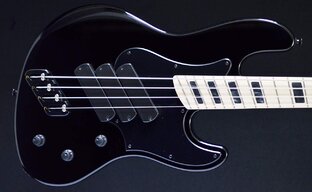
Then there's the pernicious conflation of "relative pitch" and "less developed perfect pitch" According to consensus definition, you don't have to have internalized all pitches. If you had only memorized the pitches of the open strings on a bass and then used those as mental references to identify others, all in your head, then by definition you have absolute pitch. You can do what it says on the tin. (Your only mistake would be explaining to others about how you arrived at your answer, to which they'd shriek "you don't have perfect pitch, you have really good
relative pitch!") Okay, so you used relative pitch to think about a note you do have memorized, open G, and from there you mentally identify Ab. How did you conjure the mental reference tone out of thin air? There's a name for this skill - perfect pitch.
Anecdotally, almost all of the perfect pitch posessors I know are very humble about it. The ones who really seem to care about the semantics (and sometimes seem hell-bent on convincing a perfect pitch posessor that they
don't actually have perfect pitch) are the ones that don't posess the ability at all anyway.

 "No, I don't actually have perfect pitch." Amy can immediately name any note played on the piano ... but that's not quite the same as perfect pitch, as she recognizes.