• TalkBass has been independent since 1998. Add your voice.
    Create a free account to reply to discussions, view embedded media, and browse with fewer display ads.
    Join freeLog in
    Want zero display ads or expanded classifieds tools? Compare plans.

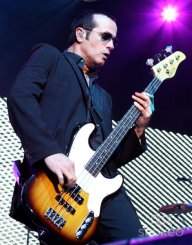
Devin Townsend telling us what we've all been thinking...

Society evolves. Music evolves. The way society interacts with music evolves. To expect things to be like they were 10 years ago, 30 years ago, 50 years ago - is to accept stagnation.

I think that new music will continually be created and put out, just not in the way we are used to seeing it done. The sounds will change, the instruments will change, the way it's released will change, and the way we access and listen to it will change.

From my point of view, a lot of the comments in here seem to be on the surface about music, but they're really more about the BUSINESS of music. Which (like society and music) must evolve, and you can't expect it to stay stagnant.

If some kid today makes a song on a computer (or their phone), they don't have to go play it live to get feedback. They can send it out over the internet and get feedback that way. It's not the way it was done for decades, but that doesn't make it good or bad, it just makes it different.
 
That's the thing with "upper 2nd tier" acts like Devin Townsend. Everyone knows Judas Priest or Iron Maiden, but you have to be into metal to have heard of Devin.

He's coming into my neck of the woods next year. Plays a ~1k+ cap venue, ~50 bucks for tickets. Tickets have been on sale for months, still not sold out. Can't afford a huge production with those numbers.

I saw Devin just before the pandemic and it was one of the best shows I've ever seen. The dude is so talented and entertaining.

I agree that if you're not into metal you probably won't know who Devin is. Same goes for a lot of successful music though, especially for younger people now. I'd be surprised if many under 20 year olds even know who Iron Maiden or Judas Priest is. The industry is so different now though that you don't have to have that instant name recognition to be successful though (success is definitely subjective though). I can think of tons of great bands from the last 15 or so years that are not at all household names but they are successful in creating their music and selling out shows. Now they probably aren't making a ton of music but seemingly enough to get by. It's a shame someone like Devin doesn't make more money, but I'm sure others would agree that I'd have had a happy life doing what he's done as a career.
 
Love Devin! Not only is he a musical mad genius, but so incredibly insightful in both his music and his commentary.

His touring bassist, Nathan Navarro, is amazing too. Probably one of the best contemporary bassists out there. Seriously, peep his YouTube channel, his book, his music... If TalkBass doesn't want to acknowledge amazing contemporary bassists out there hustling, I pity you.

As far as live music goes, I work at a high school and most every student I interact with wants to see their favorite artists live and experience live concerts. Sadly, the ticketing monopolies have made ticket prices stupid expensive. Standing room only tickets for concerts people want to go to cost more than my monthly mortgage payment. That's why livestreaming concerts is becoming the more viable option. (And you would be surprised how many of today's teens are familiar with, and LOVE, "older" music. They listen to as much 80s, 90s, and 2000s music as they do the current stuff).

Culture is changing. The way we consume music is changing. The steps an artist has to take to "make it" are far more numerous and complicated than they were back in 2000. While some genres of music are feeling like dinosaurs going extinct, other genres genres are able to thrive on the grassroots fanbases and have been doing so for decades. Country and metal come to mind. There is a reason why so many brand ambassadors for gear are country or metal artists- they are the ones buying it, using it, etc. Sure they're not genres for everyone, but the people who love them are lifelong die-hards.
 
Screenshot_20221206_161221_Google.jpg
Its not the internet, its not the big busines, its the testosterone.

The average American male had a total testosterone reading of 605 nanograms per deciliter in 2000.. A scant 20 years later, and the average level has plummeted by 27 percent to just 450 nanograms per deciliter. That means the average 22-year-old man today has an average testosterone level roughly equal to that of a 67-year-old man in 2000.

:bored:
 
Culture is changing. The way we consume music is changing. The steps an artist has to take to "make it" are far more numerous and complicated than they were back in 2000. While some genres of music are feeling like dinosaurs going extinct, other genres genres are able to thrive on the grassroots fanbases and have been doing so for decades. Country and metal come to mind. There is a reason why so many brand ambassadors for gear are country or metal artists- they are the ones buying it, using it, etc. Sure they're not genres for everyone, but the people who love them are lifelong die-hards.

Well, you named the two guitar-centric genres that are still popular ("name two guitar music genres that are still doing well" is a question I like to ask people). People here on EU side often don't realize how big Country music is in the US. Where I live, you only really hear Bluegrass or Country if you go to a festival, or the occasional live show, it's not popular music at all.
 
  • Like
Reactions: Dincrest
I think there are more bands and more music than ever before, it's just not in the public domain per se. Back in the 70's with FM radio we ALL knew the latest Jethro Tull, or King Crimson, or Allman Brother album and we could all share that experience. Music is so fractured these days that acts who sell out festivals, i.e. Widespread Panic, Tedeschi Trucks, Joe Bonomassa, and many others, can be virtually unknown by then general public.


Guitar bands are in general still pretty popular here, but it's not like the old days with blues or blues/rock or classic rock as much as it is 80's and 90's.

One thing to consider is that people these days (particularly young people) don't consume music the same way we used to. Back when I was a teenager, you would follow a *band*. You would pretty much swear allegiance, know their band members' names, know the discography, buy the full records. And if you didn't like one, you'd say "ok this isn't my thing, but I will listen to this record a few more times because maybe I don't understand and I will come to like it". These days? You can listen to music all day without knowing what the song is called, let alone the artist. You'd just go to your streaming music app of choice and grab a "coffee break" playlist, a "focus time" playlist, etc. Ask an average teenager today to name a song they like, and then ask them who is it by - it's not uncommon that they don't know, and they don't care either. With smart assistants, you can even say stuff like "Hey Siri, play the "tonight's gonna be a good night"" song and Siri will correctly interpret that as that you want to play "I got a feeling" by the Black Eyed Peas. No need to know.
 
Not everyone. There are still people who enjoy going to a club, getting hot and sweaty with their friends, etc. and enjoying the full-bandwidth experience of being alive in meatspace. And being able to say "I was there the night Drummy stopped the music.":roflmao::roflmao::roflmao:


I was speaking in generalities, not specifics.

Of course there are gigs out there, but I can assure you there is not even close to amount of those gigs that we had in the 60s-70s. The late 70’s and early 80’s I was over doing 200 gigs a year, and they paid enough to support a wife, a Kid, and a mortgage not to mention dependable transportation. I used to play a ski resort for a couple of winters, 13 weeks 7 nights a week. That was 91 gigs alone. Today, they have a DJ and half the people attending, mostly sitting at the bar.
 
  • Like
Reactions: Ekulati
I was speaking in generalities, not specifics.

Of course there are gigs out there, but I can assure you there is not even close to amount of those gigs that we had in the 60s-70s. The late 70’s and early 80’s I was over doing 200 gigs a year, and they paid enough to support a wife, a Kid, and a mortgage not to mention dependable transportation. I used to play a ski resort for a couple of winters, 13 weeks 7 nights a week. That was 91 gigs alone. Today, they have a DJ and half the people attending, mostly sitting at the bar.

I was around then, too. Not making a living, but in '72 a hundred bucks actually bought something.
 
  • Like
Reactions: Ekulati
Well, you named the two guitar-centric genres that are still popular ("name two guitar music genres that are still doing well" is a question I like to ask people). People here on EU side often don't realize how big Country music is in the US. Where I live, you only really hear Bluegrass or Country if you go to a festival, or the occasional live show, it's not popular music at all.

True. However, though the genre is rooted in Americana it's had a more global reach than many think. To this day, "Gentleman" Jim Reeves is still considered a music god in south Asia (India, Sri Lanka), though he's long forgotten in the US. I'm still trying to wrap my head around how a rootsy Americana musician like Gentleman Jim became an icon in south Asia back in his day.

And there was a trend in the 1990s of Japanese violinists experimenting with "country fiddle" and I wonder if that style is now becoming canon in Japanese children learning violin today.

I believe Australia has its own growing country music scene these days.

(By the way, Windreaper, where in EU are you if you don't mind me asking? I was actually born in the Netherlands and only moved to the US when I was 9 or 10. I could write an essay on the culture shock).
 
Last edited:
  • Like
Reactions: Windreaper
Haven't read all the replies, but there must be or will be at least a few from the "The reason gigs don't pay is because musicians don't demand higher pay" or "All you weekend warriors are ruining it for us pros" or "If only bands would up their game and present a professional show they'd all be making two or three bills apiece" contingents.

I'm talking local level mostly. Except for corporate casuals/resorts, weddings, there are simply too many bands competing for ever fewer gigs. Supply and demand. I started in the 80s when venues billed themselves as "live music NIGHTLY." Now, we do it as has been mentioned because it's our expression, it has meaning. But money is very much way down the list compared to when I started.
 
Its not the internet, its not the big busines, its the testosterone.

The average American male had a total testosterone reading of 605 nanograms per deciliter in 2000.. A scant 20 years later, and the average level has plummeted by 27 percent to just 450 nanograms per deciliter. That means the average 22-year-old man today has an average testosterone level roughly equal to that of a 67-year-old man in 2000.

I don't know if this is the root of the problem but I love that you posted this.
 
  • Like
Reactions: IamGroot
These days? You can listen to music all day without knowing what the song is called, let alone the artist....
Right. Sort of like... uh... listening to commercial radio stations that were filled with one-hit wonders? :D


Ask an average teenager today to name a song they like, and then ask them who is it by - it's not uncommon that they don't know, and they don't care either.
When in doubt, blame the youth, amirite?

The way music is made and heard and its place in culture as a whole has changed over time, but it's not like someone flipped a switch 5 years ago that made Kids Today oblivious about cultural specifics overnight.

What we're seeing now is the result of decades of technological, cultural and economic changes, accelerated and cemented by the pandemic. And guess who instigated a lot of those changes? I'll give you a hint: Anyone who was 15 when Napster blew up is now 37. ;)

I'll give you another hint: 26% of Spotify's users are under 24; 29% are aged 25 to 34; 45% are 35 and older.

We should note that older listeners generally have little interest in new music -- including new compositions by bands they listened to in their youth -- and are less willing and able to see live music than when they were young. Why aren't we seeing them as part of the problem, too...?
 
Fake statistics are definitely a problem, but not one related to the current state of the music industry.

Sorry to spoil your fun, but moral panicky claims about "falling testosterone" are bogus.

It's a joke that riffs on my let's go back to hyper-sexed 1987 earlier.

But I had to look it up after you posted. According to a USA Today fact check, between 1999-2016 Testosterone levels have dropped 22-25% for the average male based on some peer-reviewed research. Of course, 6+ years have passed since then so it stands to reason a steady diet of plastic, pollution, and sedentary lifestyle have further decreased those levels.

Fact check: Testosterone levels lower by about 25% from 1999-2016
 
  • Like
Reactions: AlexanderB