Well, my band has been getting more and more practice time in, and we're getting close to playing some live shows. The issue is, most of these venues lack instrument mics (they have drum mics, though), so most people run their instruments to the PA via the DIP-out on the back of their amps.
My issue is that my bass amp is an old Peavey from the 80s, and while it sounds great and is durable as anything, it lacks the necessary DIP-out to run it into the PA. As such, I have begun the search for a good, relatively inexpensive DI box.
My quest has brought me two fine contenders, each with strengths and weaknesses. One of them has double shielding and is super-reinforced, while the other is more "standard" but has an attenuator. My question is: if I'm just running my bass through it, will I need the attenuator?
Besides those two points, both DIs are essentially identical. Quarter inch in and out with a 3-pin DIP-out and ground-lift switch.
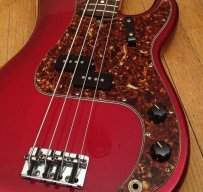
Of note: my bass is a 2009 Fender Deluxe Active Precision Bass, hecho en Mexico.
Invalid Link Removed This one has the attenuator, and the 3-pin DIP-out is black plastic.
Invalid Link RemovedThis one is the "reinforced" one, with a tougher looking DIP-out and extra shielding.
My issue is that my bass amp is an old Peavey from the 80s, and while it sounds great and is durable as anything, it lacks the necessary DIP-out to run it into the PA. As such, I have begun the search for a good, relatively inexpensive DI box.
My quest has brought me two fine contenders, each with strengths and weaknesses. One of them has double shielding and is super-reinforced, while the other is more "standard" but has an attenuator. My question is: if I'm just running my bass through it, will I need the attenuator?
Besides those two points, both DIs are essentially identical. Quarter inch in and out with a 3-pin DIP-out and ground-lift switch.
Of note: my bass is a 2009 Fender Deluxe Active Precision Bass, hecho en Mexico.
Invalid Link Removed This one has the attenuator, and the 3-pin DIP-out is black plastic.
Invalid Link RemovedThis one is the "reinforced" one, with a tougher looking DIP-out and extra shielding.


 ). And the reason I call it a DIN is because that's what it looks like to me
  .
. to issues with customer service (they still made me pay return shipping on the pedal AND the warranty I got for it after telling me that I would have to pay shipping to send the old pedal back and pay for shipping AGAIN for the new pedal). I decided, "Screw it," returned everything, and I refuse to deal with them or their crap ever again.