• TalkBass has been independent since 1998. Add your voice.
    Create a free account to reply to discussions, view embedded media, and browse with fewer display ads.
    Join freeLog in
    Want zero display ads or expanded classifieds tools? Compare plans.

Did I ruin this PJ body?

Corevalay

Supporting Member
Sep 10, 2009
2,619
3,036
New Jersey
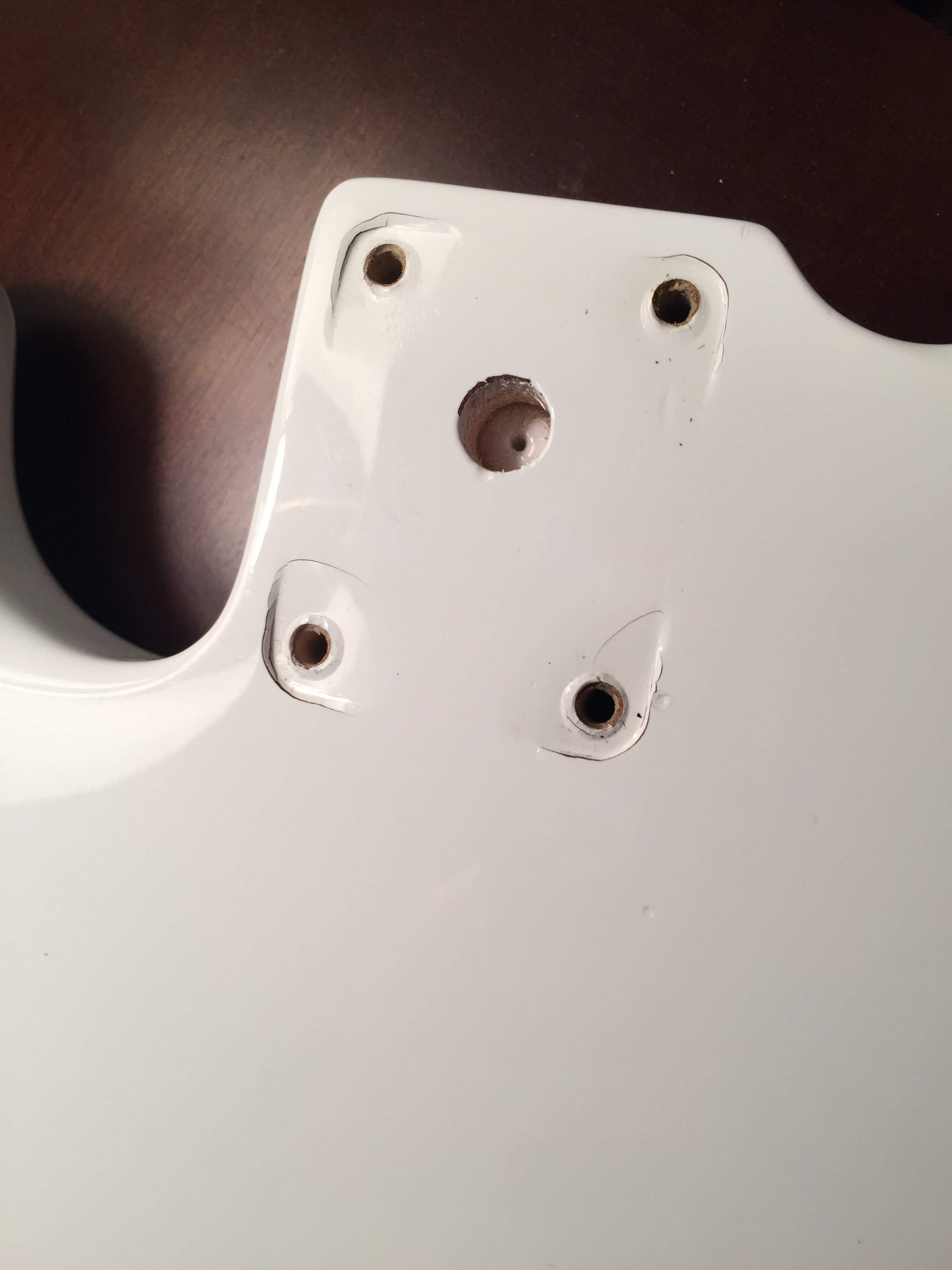
Looks like I over tightened the screws when I was reattaching my neck. I didn't notice until I just pulled the neck off again last night. Seems it actually caved in the wood a bit. It's a Squire body, so I assume part of it is due to cheap wood. Is this now ruined or should it be fine moving forward?

IMG_5807.JPG
 
How on earth did you even accomplish that?
I'm assuming a drill or power driver was used?
I'm also assuming the plate is bent?
Seriously, only hand tighten screws.

I doubt it's ruined though.

Oh, and *Squier

Yes to power drill and bent plate. Stupid move on my part. You know when you know you're doing something wrong, but like an ass you do it anyway? Yup, that's me.
 
It also looks like you fully torqued down each screw, instead of ensuring that it was level, and went counter-clockwise starting with the top left screw (on the provided photo).
You'd think you would've stopped after you bent the hell out of the plate with the first screw :|

C'mon. Give the guy a break. He has already shown great self awareness. He doesn't need beat up on!

Stupid move on my part. You know when you know you're doing something wrong, but like an ass you do it anyway? Yup, that's me.

As long as the threads in the neck are still fine I reckon it will be OK. Just use the bent plate in the same orientation as when you did the damage, and tighten the screws hand tight with a screwdriver. It's never gonna look new but should still play as well as it did. And now you know to be cautious when you get your US pro!
 
How in the world could you possibly tell in what order he tightened the screws?
It's more of a hunch/guess after doing my own fair amount of wood working. It's based on the fact that the top left screw sunk in farther than the rest... looking at it, you see how the top left it the most sunk in, then the bottom left is a little less than top left, bottom right is a little less than bottom left, and top right is least sunk of all. Classic case of severely over-torquing and not ensuring that the piece is level as you attach (usually done in a criss-cross pattern, similar to putting a wheel on a car for instance). I'm not 100% certain that's what was done, but it certainly shows signs that it was likely.
 

Latest posts