Enjoy the benefits of a premium membership!
Upgrade Account
-
TalkBass has been independent since 1998. Add your voice.
Create a free account to reply to discussions, view embedded media, and browse with fewer display ads.
Join free Log in
Want zero display ads or expanded classifieds tools? Compare plans.
You are using an out of date browser. It may not display this or other websites correctly.
You should upgrade or use an alternative browser.
You should upgrade or use an alternative browser.
Did my own "relic" job
- Thread starter TSanders
- Start date
More options
Who Replied?

The biggest problem is that poly does not age like lacquer. All of the techniques people use for relicing only work properly on lacquer finishes. Send it to Dark Horse and let him refinish it in lacquer and give it a pro relicing.

The biggest problem is that poly does not age like lacquer. All of the techniques people use for relicing only work properly on lacquer finishes. Send it to Dark Horse and let him refinish it in lacquer and give it a pro relicing.
+1



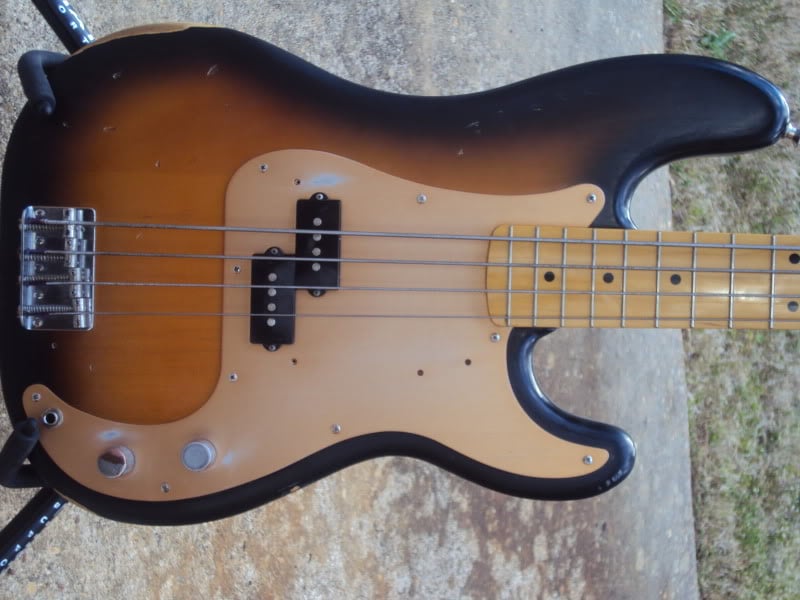
Ive been looking for a keeper P-Bass for a long time. I got this one from a buddy and its been designated my keeper P-Bass. Its a MIJ 57RI a 1993 model. It has everything a P-Bass should have and then some (at around 8 pounds). It sits in a live mix like no other Fender Ive ever heard. It truly is a monster. I have it strung with Ken Smith Slick Rounds and this may be the perfect combo.
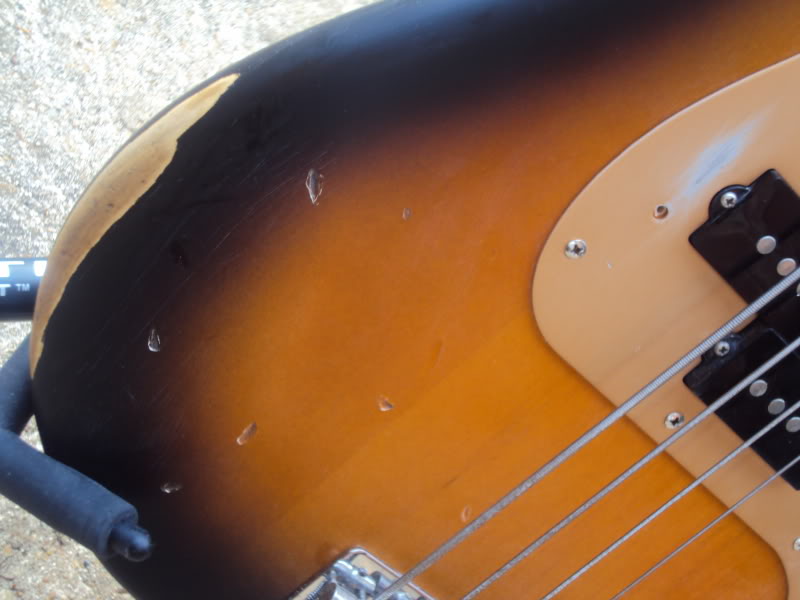
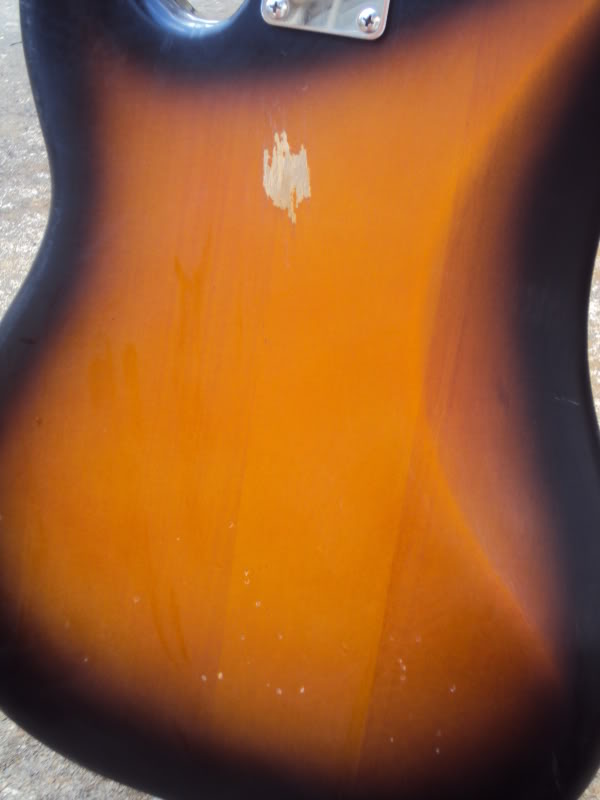
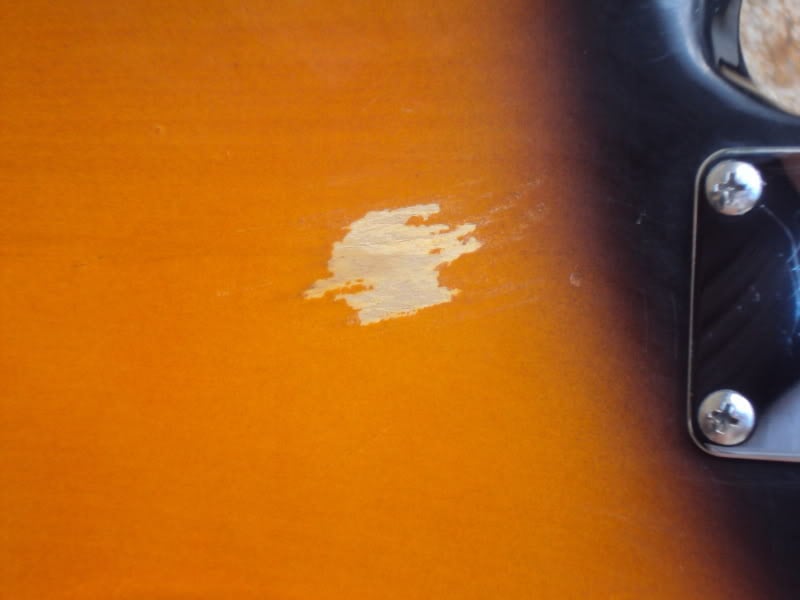
All that said, I wanted it to feel a little older and have a more vintage vibe cosmetically. I looked around at relic prices and then decided to give it a shot myself. Ive only done the body and pickguard so far. So the neck AND hardware is still ahead of me. I still have a good bit of final sanding (as you can see some sandpaper marks/swirls at times). Ill be working to buff those out this week. i did do a very light sanding to the gloss on the back of the neck and the smoothed out the "grab' of the gloss neck. Feels smooth and well played now. I also still need to darken the wood that Ive exposed, so add that to the whats left to do list.
You may think it sucks or that its dumb to relic an axe, but it gave me the feel I wanted, and I think I did good enough to make the bass look older.
Travis -
There are a few things that stand out to me - but first let me say that it is very TOUGH to make a poly finish look convincing. It can be done, but it's such a PITA that most experienced guys avoid it.
Please take this as constructive criticism, as it is definitely meant as such...and hopefully will help you in the future.
Obviously you haven't worked on the hardware or the neck, so I won't address those things.
Overall the "feel" is fine. The things that stand out to me are :
1) The dings are all of similar depth, look like similar objects caused them, and are in some places where "deep dings" normally don't happen because the bridge and knobs keep the body elevated even if it is dropped on its' face. They take the brunt of the blow.
2) Also, even if the finish is somewhat dulled (and vintage guitars are usually at least "semi-shiny"), the dings will typically be shiny inside. That is because the paint in the dings is somewhat protected. When the dings are dull inside, that's a dead giveaway that the guitar is a relic.
3) The back/ buckle wear - pretty good job there...nice restraint, and overall looks like it should.
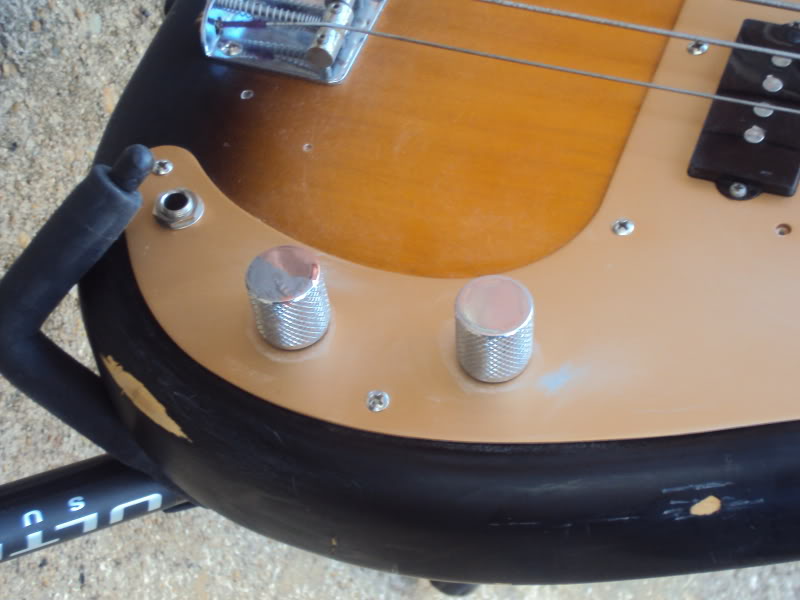
4) Pickguard - typically you won't have wear marks by the knobs, especially the tone knob. Wear indicates that it is a place that gets used/rubbed a lot, and bassists typically don't use their volume and tone knobs enough to wear down an anodized guard. The placement of the wear above the pickup is pretty good, though I personally use the corner of the pickup to anchor my thumb, as opposed to the screw mount...but that's a personal playing thing.
5) The area that you've "rubbed" along the bottom edge is a place that typically chips, not rubs. Dings happen there from setting the bass down, having it fall, etc... but you usually won't see rubs there that are similar to arm rubs.
So basically you have some good ideas, but since this is your first attempt, there are a few issues with the execution.
If it were mine and I didn't want to do a nitro refin, some things that I would do to make it more convincing are:
1) I would shine up the body. Use car wax and shine it to a nice semi-gloss.
2) Try to steam out/lift a few of the deeper dings. A wet/damp cloth over top and an iron can help raise them a bit so they aren't so deep.
3) I would add a few scrapes and dings (using different objects) along the bottom edge. Nothing big or drastic, but I would definitely (carefully and lightly)"chip up" the area that you've rubbed along the bottom edge.
4) Add a few shallow dings or grooves in the belt buckle wear area. Not much, but typically the paint doesn't wear smoothly there, and a belt buckle will usually cause a few deeper grooves.
5) Replace the anodized guard and only add a bit of wear in the place that my thumb actually "plants" when playing.
Tips for the future:
1) Take a look at how you play. Look at photos and see how and where your arm hangs, where your waistline is, where you hold your plucking hand, etc.
2) Formulate a "history" for the instrument. I do this before aging because it helps envision how the instrument will age. Who originally owned it and how was it played ? Was it stuck under a bed, or was it gigged ? If gigged, how often and by what type of musician ? Was it modded ? Etc, etc. Once you have a history/plan in place, you can begin aging.
3) When you think that you need to do "just a little more", that's the time to stop.
I hope this helps - this can be a really cool bass with a bit of planning, effort, and execution. In the end all that matters though is that YOU are happy with it !



This is honest play wear on a poly finish if you want to see what you might want to be aiming for:

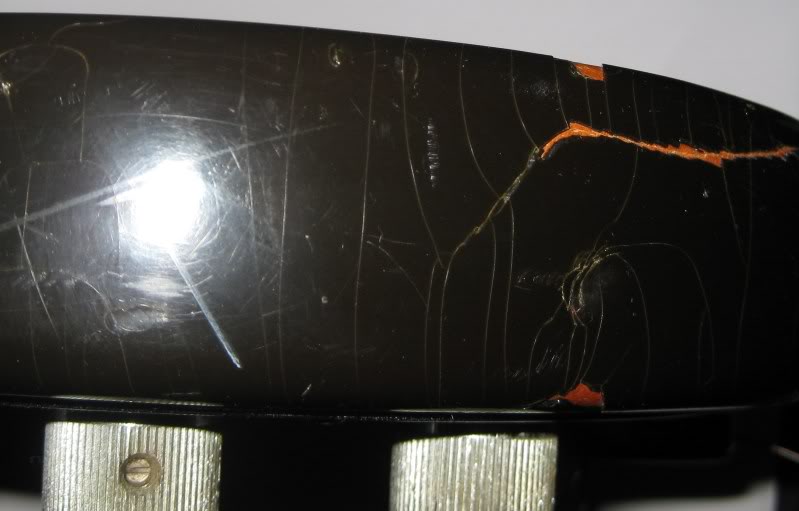
I've got poly basses I have been playing since the early 90's, and if you buffed em up a bit they would look almost new, aside from the discolored maple and ceiling paint on the peghead. Newer poly finishes are tough as hell, I don't think the sanded areas adds much street cred. *shrug* . The bass in the photo is one I picked up used. an 1980 G&L, the guy who owned it played the **** out of it. And the funny thing is there is much "play wear" asides from the fretboard.
I've got poly basses I have been playing since the early 90's, and if you buffed em up a bit they would look almost new, aside from the discolored maple and ceiling paint on the peghead. Newer poly finishes are tough as hell, I don't think the sanded areas adds much street cred. *shrug* . The bass in the photo is one I picked up used. an 1980 G&L, the guy who owned it played the **** out of it. And the funny thing is there is much "play wear" asides from the fretboard.

some advice i would get some very fine grit sandpaper and soften the edges on your sandjob to give it more of a worn appearance rather than a sanded look. also a buffing pad (shag carpet style not foam) and buff it out a bit.
the big stab like notches can be made to look less deep and more natural if you pack in a bit of light wood stain then wipe the surface clean. this will make the dents look more shallow with the appearance of natural dirt and grime that would typically accumulate in such a nick over playing time. fruitwood would be my suggestion.alos hitting those bare wood spots with it, letting it dry until its tacky and then buffing that will make the wood appear like its been expose much longer and has naturally darkened from exposure.
finally id take some super fine steel wool (like the kind you would use to clean windows) and hit those spots on the pickguard in small circles to soften up your edges on the sanding . also would be great to take some of that shine off of those pickup covers.
the trouble with relics is its SUCH a fine line to walk. too little or too much can look artificial. youre going for just right. study a bunch of naturally worb examples of basses and pick and choose the highlights but try not to over do it. please take my words as constructive criticism. a hair more elbow grease and you can make this look monsterous.
the big stab like notches can be made to look less deep and more natural if you pack in a bit of light wood stain then wipe the surface clean. this will make the dents look more shallow with the appearance of natural dirt and grime that would typically accumulate in such a nick over playing time. fruitwood would be my suggestion.alos hitting those bare wood spots with it, letting it dry until its tacky and then buffing that will make the wood appear like its been expose much longer and has naturally darkened from exposure.
finally id take some super fine steel wool (like the kind you would use to clean windows) and hit those spots on the pickguard in small circles to soften up your edges on the sanding . also would be great to take some of that shine off of those pickup covers.
the trouble with relics is its SUCH a fine line to walk. too little or too much can look artificial. youre going for just right. study a bunch of naturally worb examples of basses and pick and choose the highlights but try not to over do it. please take my words as constructive criticism. a hair more elbow grease and you can make this look monsterous.
my other advice is listen to dark horse... he was my yoda during my first relic and when i took it to my local music shop/luthier to make some minor adjustments i didnt feel comfortable with (read as i suck at soldering wiring) i had an amazing outburst of compliments from everyone in the joint. im still glowing from it but i owe a ton of the knowledge i gained while doing my own bass to DH.


This is honest play wear on a poly finish if you want to see what you might want to be aiming for:

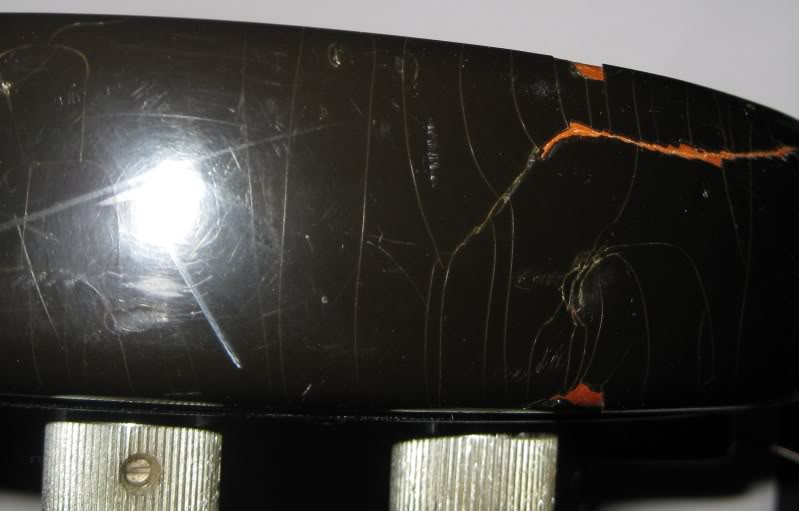
I've got poly basses I have been playing since the early 90's, and if you buffed em up a bit they would look almost new, aside from the discolored maple and ceiling paint on the peghead. Newer poly finishes are tough as hell, I don't think the sanded areas adds much street cred. *shrug* . The bass in the photo is one I picked up used. an 1980 G&L, the guy who owned it played the **** out of it. And the funny thing is there is much "play wear" asides from the fretboard.
That poly is THICK! I'm not sure what my Aria is finished with but its' very thin and it chiped and crackled very easily. Much of it had already started and I just helped it along. The finish on the neck flaked off rather easily as well. Not much work involved at all. I don't think the Matsumoku factory used nitro. Whatever it is, it was easy to work with. I'd hate to work with modern poly based on how thick and tough it is

You did a nice job. Don't sweat the "relic haters" out there. All that matters is that you dig it!
I would choose a non relic'd over a relic'd any day but this guy knew what he wanted and in the end he likes what he done. so problem? i don't see one.

I think it looks good. Not fantastic, but it's a good start. Listen to Dark Horse - the guy knows what he's talking about!