• TalkBass has been independent since 1998. Add your voice.
    Create a free account to reply to discussions, view embedded media, and browse with fewer display ads.
    Join freeLog in
    Want zero display ads or expanded classifieds tools? Compare plans.

Difference between MIA MIM MIJ ?

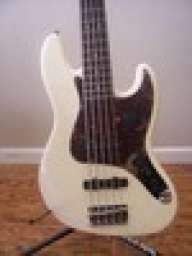
i've been heavily considering trading in my current bass for a Fender Deluxe 5 string active.

people have been throwing around 'MIA MIM MIJ'. i dont see these on the instrument names, could someone tell me the difference? i have a feeling it's very simple and i just cant figure out what the letters stand for. sorry for the noob question.
 
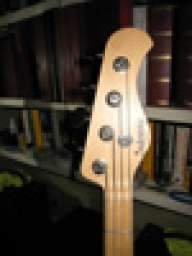
Usually it's printed on the back of the neck near the join... Mine says made in japan.

There is quite a big price gap, and different connotations for each... japanese fenders are quite divorced from the parent company as far as i know and are not allowed to be legally sold directly to the US. MIMs are usually around $500 IIRC and are pretty solid instruments, although Squiers are getting so good now that they rival MIMs in quality for half the price. Finally MIAs are considered top quality because apparently american workers are far better than other countries... They have more expensive components like badass bridges, better pickups, better fretwork etc. and run you around $900+ (or something, I've never really looked).

My next purchase will be a Squier TB Bass. :)
 
The MIJ basses are close to the USA basses in quality, and have very consistent QC. The MIA seem to hold their value better over the long term. MIM basses can be very good for a lot less money, but are somewhat hit or miss in build quality and playability. You might need to play a few to find a keeper.
 
I just received my new mexi 70's black jazz bass. I also have a Marcus Miller. They are pretty close in quality, specially the necks. If anything, Japan is a hair above. I was concerned about Mexi necks being too "whitey", like the squier VM's, because of those deceiving promo pics, but neck tint is fine. Mexi black finish looks a little cheaper than MM's natural ash finish, but black finishes aren't too posh IMO anyway. One thing is for sure: Reversed tuners in my Miller bass are CRAP, no fender stamping, REVERSED and too damn tight!!! I can't loosen them with anything, and the Mexi tuners are stamped, standard, soft, and HIGHER quality than the japs... just for the record.

as far as looks... well they don't look like they were built thousands of miles away

DSCN2213.jpg
 
One thing is for sure: Reversed tuners in my Miller bass are CRAP, no fender stamping, REVERSED

Well they are supposed to be)) They represent the older design rarely seen on current Fenders

To the topic:
There's also the CIJ , which stands for 'crafted' in Japan. There's a law in Japan under which the instrument has to be marked 'crafted' and not 'made', if more than half of it was made outside of Japan. I don't understand though how they measure: one thing is a guitar body, and quite another is a bridge saddle or even a screw.

One thing for sure: if you come across a MIJ, get yourself clear on the numbers. That is, a Jazz bass will be something like '75-90', where the first two digits refer to the model (same with the USA), and the 2 or 3 digits after the dash refer to how good the bass is supposed to be. They refer to the initial RRP, that is, the '90' was initially somewhere in the $900 range. The 100s and above are very, very good. The 130s are top of the line, as well as the Fender Japan Custom Shop items. There may also be a few letters in case with the top line instruments, like 'D' standing for 'DiMarzio', or 'V' or 'USA' standing for 'USA Vintage pick ups'.
I dare say, get a MIJ 100 or above, and you get the quality way more than 'a hair better' than a MIM.
 
i've been heavily considering trading in my current bass for a Fender Deluxe 5 string active.

people have been throwing around 'MIA MIM MIJ'. i dont see these on the instrument names, could someone tell me the difference? i have a feeling it's very simple and i just cant figure out what the letters stand for. sorry for the noob question.

I think it's the last two letters of each one.
 
One thing for sure: if you come across a MIJ, get yourself clear on the numbers. That is, a Jazz bass will be something like '75-90', where the first two digits refer to the model (same with the USA), and the 2 or 3 digits after the dash refer to how good the bass is supposed to be. They refer to the initial RRP, that is, the '90' was initially somewhere in the $900 range. The 100s and above are very, very good. The 130s are top of the line, as well as the Fender Japan Custom Shop items. There may also be a few letters in case with the top line instruments, like 'D' standing for 'DiMarzio', or 'V' or 'USA' standing for 'USA Vintage pick ups'.
I dare say, get a MIJ 100 or above, and you get the quality way more than 'a hair better' than a MIM.

I'm no experty, but where on earth did you come up with that!? Here's a helpful site that displays what the serial numbers mean on Fenders

http://www.guitarnucleus.com/fenderserial.html

The "P" model is between a 95-96...as you can see.
Basically, it just goes alphabetically..

JV + 5 Digits = 1982 to 1984
SQ + 5 Digits = 1983 to 1984
E + 6 Digits = 1984 to 1987
A + 6 Digits = 1985 to 1986
B + 6 Digits = 1985 to 1986
C + 6 Digits = 1985 to 1986
F + 6 Digits = 1986 to 1987
G + 6 Digits = 1987 to 1988
H + 6 Digits = 1988 to 1989
I + 6 Digits = 1989 to 1990
J + 6 Digits = 1989 to 1990
K + 6 Digits = 1990 to 1991
L + 6 Digits = 1991 to 1992
M + 6 Digits = 1992 to 1993
N + 6 Digits = 1993 to 1994
O + 6 Digits = 1994 to 1995
P + 6 Digits = 1995 to 1996
 
Well they are supposed to be))
There's also the CIJ , which stands for 'crafted' in Japan. There's a law in Japan under which the instrument has to be marked 'crafted' and not 'made', if more than half of it was made outside of Japan.

There was no law in Japan that changes the "Made in Japan to Crafted in Japan" on Fender Bass and Guitars. The reason for the change from MIJ to CIJ was due to the take-over of Tokai and Dyna Gakki over FujiGen Gakki in the manufacturing of the guitar. It partially started in 1992 but the official change from MIJ to CIJ started from 1997.
 
Taken from Fender Website

DATING JAPANESE-MADE FENDER INSTRUMENTS

SERIAL NUMBERS CIRCA
JV+ 5 digits 1982-1984
SQ + 5 digits 1983-1984
E + 6 digits 1984-1987
A + 6 digits 1985-1986
B + 6 digits 1985-1986
C + 6 digits 1985-1986
F + 6 digits 1986-1987
G + 6 digits 1987-1988
H + 6 digits 1988-1989
I + 6 digits 1989-1990
J + 6 digits 1989-1990
K + 6 digits 1990-1991
L + 6 digits 1991-1992
M + 6 digits 1992-1993
N + 6 digits 1993-1994
O + 6 digits 1993-1994
P + 6 digits 1993-1994
Q + 6 digits 1993-1994
S + 6 digits 1994-1995
T + 6 digits 1994-1995
U + 6 digits 1995-1996
N + 5 digits 1995-1996
V + 6 digits 1996-1997
Crafted in Japan A + 6 digits 1997-1998
Crafted in Japan O + 5 digits 1997-2000
Crafted in Japan P + 5 digits 1999-2002
Crafted in Japan Q + 5 digits 2002-2004
Crafted in Japan R + 5 digits 2004-2005