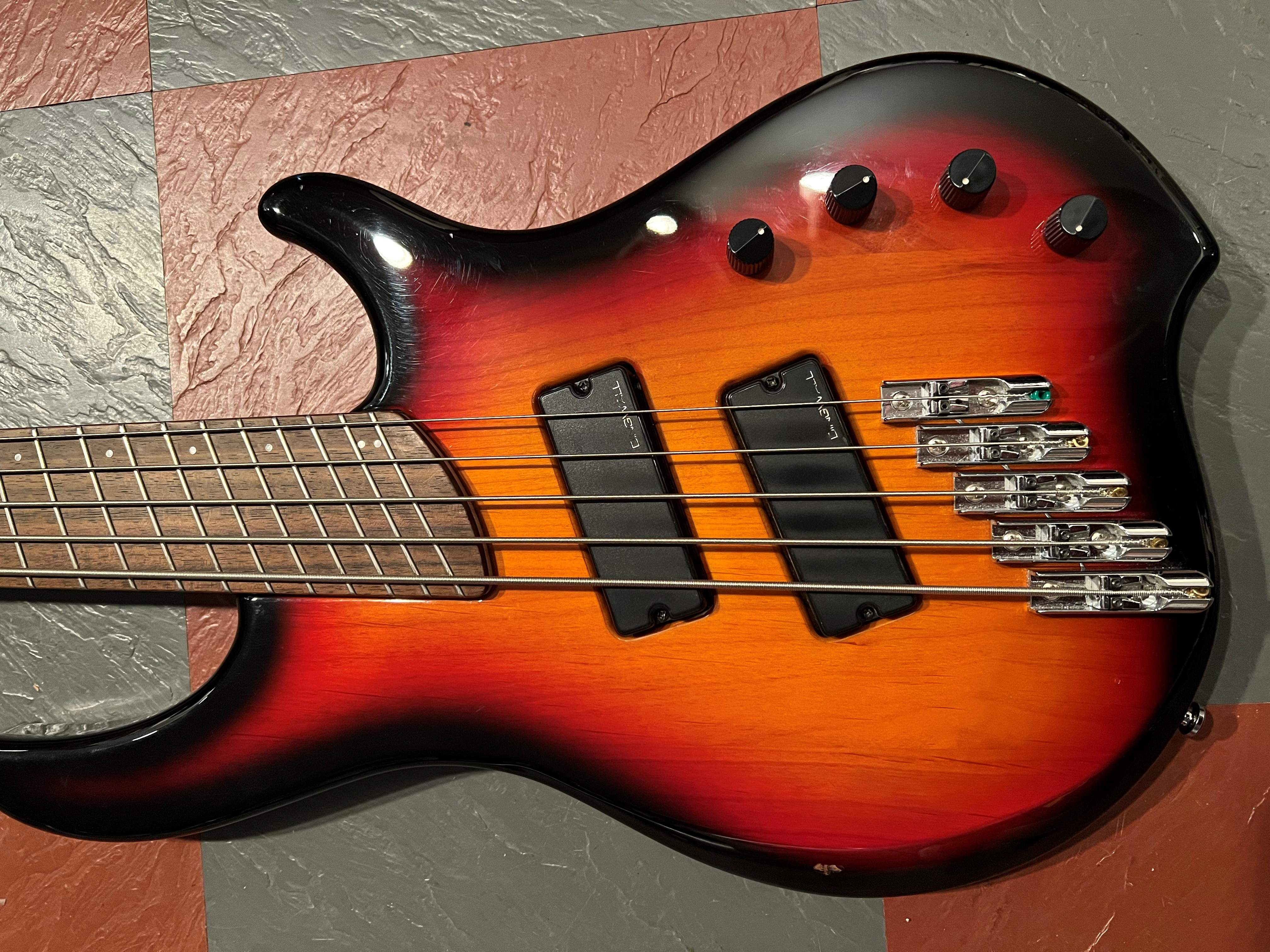
My Z2 has worse gig-wounds than this - get that bass out and play the poop out of it!
As far as minimizing the chips - it really depends on how much they bother you.
The professional answer would be to get the bass refinished.
But - if the damage is what gets you playing the bass out, where it belongs, where it can do exactly what it was created to do?
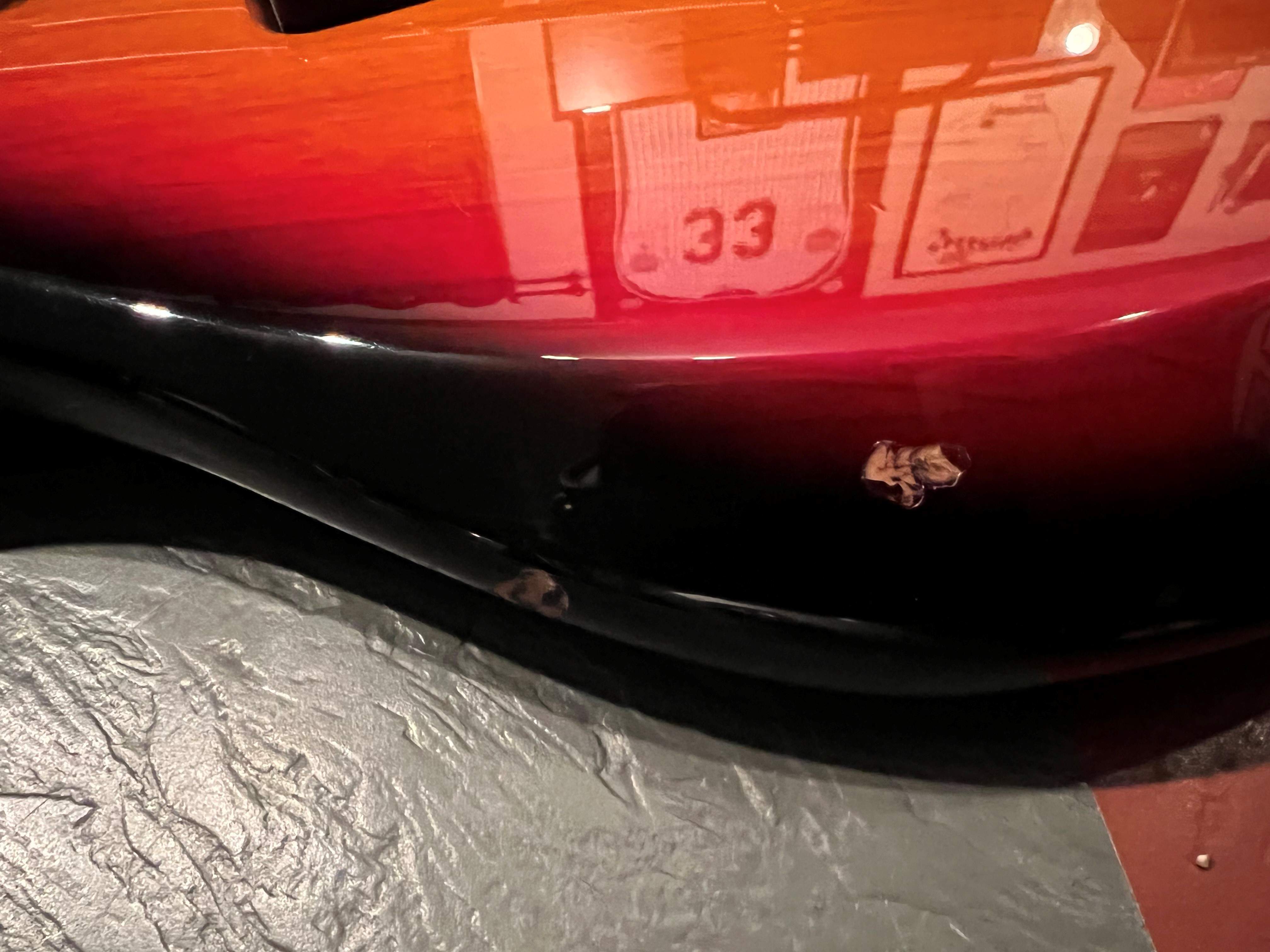
Then just do a cheap/easy fix to minimize the damage, and the only reason I'd go through the trouble is that gouge looks rough, and it seems likely to irritate the skin on your wrist.
(This is how I'd address the more severe divot; for the less severe one, skip to Step 5)
Step 1:
Put a drop of distilled water into the bigger divot.
This will swell-up the compressed wood fibers.
If it all soaks in, add another drop - repeat as necessary.
Step 2:
Heat up your clothing iron
Soak the tip of a washcloth in the distilled water
Put the wet area of the washcloth over that spot
Touch the iron to the washcloth over the ding just long enough to get the initial burst of steam
Repeat as necessary
Step 3:
Let it dry, completely
While it's drying, get a red and a black sharpie (possibly orange, but it looks like orange is out of the burst by that point)
Step 4:
Once dry, color in the whole spot with the red sharpie
Next, start at the outside edge and "feather in" with the black to match the blend of the burst
Step 5:
Once the ink is dry, put 1-2 drops of thin superglue into the divot
Once the glue is COMPLETELY dry, repeat until the superglue is level with the finish
Step 6 (optional - and approach with caution):
Once the superglue is fully cured (wait a day, at least) you can soak some very fine (600 grit or higher) sandpaper in water, then carefully wet-sand that area to blend it smooth.
This *WILL* leave the finish looking dull and matte in that area, so you would have to buff it out to make it shiny again.
Products for buffing an automotive finish would be suitable here.
It seems like a lot, but you're basically doing 5 minutes of work in each step.














 Or you could scuff those out with a slow Dremel tool to take down sharp edges which surely snag on something and become larger or paint over it in blk nail polish and clearcoat.