• TalkBass has been independent since 1998. Add your voice.
    Create a free account to reply to discussions, view embedded media, and browse with fewer display ads.
    Join freeLog in
    Want zero display ads or expanded classifieds tools? Compare plans.

Double Bass Do bridge adjusters need space (acoustically)

JBarz

On indefinite internet sabbatical
Supporting Member
Mar 6, 2015
1,970
3,274
Hey gang,

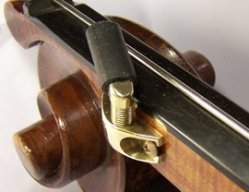
I know with my full circle and Yamahiko pickups they recommend a little space in the adjusters for maximum tone.

I am wondering if this just applies to pickups or if this is an acoustic phenomenon as well? Is there any dampening of the vibes or transfer of the bridge when the aluminum adjusters are tightly in contact with both sides?

 
In hindsight I wish I had just cut this bridge without adjusters because the Pfretz aluminum bass it adorns doesn’t seem to move with seasonal temp/humidity fluctuations, rendering the adjusters pretty functionally useless.
image.jpg


I’ve got the bass right where it wants to be in terms of string heights to balance the low spiro/high gut set and still have arco clearance — I don’t want to touch it if I don’t have to… but the adjusters are all the way compressed. If I take it down another mm or two to create some adjuster space, I’ll have to drop and recrown the bridge and don’t really want to mess with it again if not necessary.
 
Last edited:
Hey gang,

I know with my full circle and Yamahiko pickups they recommend a little space in the adjusters for maximum tone.

I am wondering if this just applies to pickups or if this is an acoustic phenomenon as well? Is there any dampening of the vibes or transfer of the bridge when the aluminum adjusters are tightly in contact with both sides?
I have read a theory that the lateral flexibility of a bridge with adjusters actually HELPS transmitting vibration to the top plate. If this theory is correct, then bottoming the adjusters would make the bridge laterally stiff like a non-adjuster bridge.

I suspect this is a very tenuous theory and I wouldn't make any significant decisions based on it.
 
I have read a theory that the lateral flexibility of a bridge with adjusters actually HELPS transmitting vibration to the top plate. If this theory is correct, then bottoming the adjusters would make the bridge laterally stiff like a non-adjuster bridge.

I suspect this is a very tenuous theory and I wouldn't make any significant decisions based on it.

Yes. Bill Merchant has installed more adjusters over his career than probably anyone else. He prefers 1/4" aluminum for this very reason. If the theory is sound, then having them 3 or 4 turns out probably increases the effect. Moser makes an adjuster where the unthreaded side simply rocks freely over a metal bowl. Interesting, but kind of dangerous?
https://images.app.goo.gl/4bQZySBei63fX96J6
 
  • Like
Reactions: JBarz
There are lots of philosophies about bridge adjusters, including not using them at all. Unfortunately for you and for me, almost all of these philosophies have been applied to wooden double basses, not to aluminum double basses. While yours does have a wooden interior structure and neck, I suspect the aluminum table contributes greatly to both tone and volume, so we're sort of in the same boat related to sound related trial and error. Not having a huge crowd of aluminum double bass players around us, we tend to have to simply try something first and see if we like it.

Unrelated to sound though, if it were me and I was bottomed out with my bridge adjusters, assuming everything is proper with the neck, I'd either adjust the bridge feet or the crown so there can be some space for downward adjustment; it just seems counter productive to have adjusters that can't adjust both ways. But I roll kind of obsessive about that kind of thing, and I wouldn't blame anyone for doing something different.

Of course I wish you the best with this!

-- Don
 
That Moser adjuster is wild! I would love to try one of those out!

I ended up taking down the crown and putting in a spare full circle pickup, but haven’t been playing that aluminum bass at all. Seasonally, both my carved and ply basses needed be to take the adjusters all the way back down but the aluminum bass didn’t budge from cold to warm.

Aluminum bass isn’t really rocking my world these days, mostly locking in with the carved Shen because I’m favoring a lighter touch. Seems like it takes more muscle to get the aluminum top moving.
 
  • Like
Reactions: Don Hergert
Seems like it takes more muscle to get the aluminum top moving.

Hmmm, maybe I'm lucky my Alcoa is the only DB I have, it either works or it doesn't. It sounds like your Shen may be very alive.

I have noticed interesting new resonance with my RH playing higher on the fingerboard, like almost up near the neck heel. I don't have to kick the strings quite so hard, but that also could be the strings too. So many variables, I guess that is what makes instruments interesting.
 
  • Like
Reactions: JBarz
I mean, I’m very much of the ‘love the one you’re with’ philosophy of instrument choosing. Having multiple axe’s to keep sharp is a double edge sword, if you can pardon my mixed metaphors. There’s nothing wrong with my Kay or my aluminum Pfretz, both setup with gut, but for the thing I’m going for right now I need super low action and Spirocore RM on at least the bottom 3 strings. Gut is just way muddier when playing chords. The Pfretz can be a powerhouse once you get that thing going, but it’s not the tool for the more delicate stuff I’ve been exploring. Next time I get called for a slappy-poppy bluegrass/country gig, I’ll bring it for sure, though.
 
  • Like
Reactions: Don Hergert