• TalkBass has been independent since 1998. Add your voice.
    Create a free account to reply to discussions, view embedded media, and browse with fewer display ads.
    Join freeLog in
    Want zero display ads or expanded classifieds tools? Compare plans.

Do You Play a Fender Because It's Expected?

Thank you for explaining Clearwave - what you say makes things clearer however.......

As a sound engineer that plays bass, I hope I can explain.

It's because of this- 90% of all recorded basses are Fenders

Not only do I disagree with your percentage, but if you change it to passive Fenders without signal boosting (incl outboard pre amp), the figure will drop significantly. In the mid 70s, the R and B players were playing in studios using outboard pre amps with their Fenders to fatten up the sound.

It's also worth remembering that the bass players in Cream and Free for instance - early pioneers of blues rock, played EB3s - it appears, to produce a fatter, grindy sound. A lot of modern blues uses active 5 strings. I don't want to argue the points on this with you, just that there is a broader picture - and certain generic sounds/mix styles come into fashion and go out again - an example is the 80s drum sound - as epitomised by Phil Collins.

 
This is important: It is lazy for me to want a guy to play a fender on a track instead of eq ing something else to sound like a fender? Maybe, but If I have to use a ton of eq, compression, reamping, etc. to get a bass to fit in the mix. I either have the wrong player, or the wrong bass. It should be easy. When you have to do all that stuff, it never really sounds right.

That actually always mystified me that recording eng's always say that, especially when I started doing my own recording a while back. Because that was always the stuff I had to do to Fenders to get them audible, at least on the type of thing I was doing. Compression or limiting to even out the dead string(s) and EQ to try to un-mud the sound and get rid of the clop clop clop. With my 4003 it was even worse.

But my Carvins and even the L2K, I don't have to do anything. The L2K I have to pad due to the very high output, but otherwise it was always just plug it in and it worked. The Carvins I can do everything I need at the bass.....

So I've never understood this. If were getting paid, I'd do what they say regardless, but I still wouldn't understand it...

LS
 
I know it is cliche, but I play Fenders because when I was young and impressionable, my idols did. Steve Harris, Geddy and my uncle Will. I wanted to be like them, so I got a 72 P at first. Got my 80 J-bass in my mid 20's (also got a my Charvel in 86).

Aside from the Charvel, the Fenders are the only basses I really knew due to playing my uncle's, and then my own.

As I grew older, I realized that other basses were good for their own reasons, and I occasionally GAS for a Ric every once in a while, but nothing has really ever moved me enough to pull away from my Fenders.

I guess you could say in the beginning I did it because I didn't know there was any other choice...in my past if it wasn't a Fender, it was just a toy...
 
Actually in pre '89 Poland everything was matched to an USA, and most of the bass guitars was customized to look like Fenders. This is my friend bass, that he got from his friend, who wanted to make it look like a PB (yes, its again Defil Lotos). Notice the customized headstock and a short scale.
attachment.php


Mostly here having a PB or JB (or its japanese copy) was just a try to show "how cool I am". The sounding was a second matter. One of Polish basists "Kapiszon" had a japanese Jazz Bass, and then he changed it to a Fender JB. Because he was so hateful to the stuff he had in Poland, he played one set of strings for lots of times, and after each recording/live show he boiled them. Nowadays his friends tell this story, like there was nothing to buy, but the truth was that he didnt wanted it. The strings for a full scale bass guitars had already existed, and were easy to buy.
For your interest listen to his japanese Jazz Bass from one of his first recordings. Its easy to hear, that the strings were in horrible condition:


Punk rock musicians, that didnt cared about their image used Polish instruments (but most of them also tried to show their cool style, and customized them), and also professional musicians - when they had a chance to buy a bass, their choices were mostly non-Fender basses.
 
Thank you for explaining Clearwave - what you say makes things clearer however.......


Not only do I disagree with your percentage, but if you change it to passive Fenders without signal boosting (incl outboard pre amp), the figure will drop significantly. In the mid 70s, the R and B players were playing in studios using outboard pre amps with their Fenders to fatten up the sound.

It's also worth remembering that the bass players in Cream and Free for instance - early pioneers of blues rock, played EB3s - it appears, to produce a fatter, grindy sound. A lot of modern blues uses active 5 strings. I don't want to argue the points on this with you, just that there is a broader picture - and certain generic sounds/mix styles come into fashion and go out again - an example is the 80s drum sound - as epitomised by Phil Collins.

Yeah the 90% estimate is a bit high. My bad.
 
Yeah, I have trouble with fenders in heavy rock stuff or metal. It can be hard to get them heard in a mix with lots of stuff (guitars) going on. Spectors are good for ripping through a dense mix.

I don't do a lot of heavy stuff. I guess much of it depends on the genre.

That actually always mystified me that recording eng's always say that, especially when I started doing my own recording a while back. Because that was always the stuff I had to do to Fenders to get them audible, at least on the type of thing I was doing. Compression or limiting to even out the dead string(s) and EQ to try to un-mud the sound and get rid of the clop clop clop. With my 4003 it was even worse.

But my Carvins and even the L2K, I don't have to do anything. The L2K I have to pad due to the very high output, but otherwise it was always just plug it in and it worked. The Carvins I can do everything I need at the bass.....

So I've never understood this. If were getting paid, I'd do what they say regardless, but I still wouldn't understand it...

LS
 
Spectors are good for ripping through a dense mix.

I'm not picking on you in particular but I am really bored of this myth of brand x being good at 'cutting through the mix'. It depends entirely on the mix and how you EQ your instrument.

People have said it about every bass ever made, usually because it's that person's favourite brand. It's total nonsense.
 
You're right, I should have worded it: My Spector bass is great at ripping through a mix.

Just for you.

One shouldn't have to eq a bass much.
I'm not picking on you in particular but I am really bored of this myth of brand x being good at 'cutting through the mix'. It depends entirely on the mix and how you EQ your instrument.

People have said it about every bass ever made, usually because it's that person's favourite brand. It's total nonsense.
 
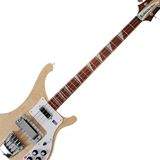
I'm with Buster! I have been playing Fenders and my Rick 4003 for years. My first decent Bass was an old Fender Musicmaster bought in 1972, a new Rick 4001 I got in 1978, a 1972 Precision I bought in 1979, a new Rick 4003 I bought in 1981, and my 1974/75 Fender Jazz Bass I bought in 1988. I like the way they sound and the way they feel. The Rick is my favorite stage instrument because playing it feels as natural and comfortable as breathing.
 
I'm definitely not a studio session veteran but rather just a regular guy who played in a few bands over the past 20 years. I've owned a lot of Fenders during this time. Overall, my heart was mostly devoted to being a Jazz Bass guy but I fought a lot with it and eventually switched to a Precision. Also, I used a Stingray a lot for about 10 years (mid-1990's through mid-2000's) but I still felt a pulling to my Fenders.

Eventually, I needed and wanted to move to 5-stringers and the Fenders I tried wasn't cutting it. This was when 5-string Fenders still had all 5 tuners on the same side of the headstock. I was really saddened by Fender's 5's B-string and was not happy that Fender didn't have 5-string P at the time. Needless to say I moved to other things and really haven't looked back.

Still, if I was a studio session musician and they wanted me to use a Fender 4, then it wouldn't be an issue.

I would not rule out going back to Fender 5's but I'm content with other brands too.
 

Latest posts