
Enjoy the benefits of a premium membership!
Upgrade Account
-
TalkBass has been independent since 1998. Add your voice.
Create a free account to reply to discussions, view embedded media, and browse with fewer display ads.
Join free Log in
Want zero display ads or expanded classifieds tools? Compare plans.
You are using an out of date browser. It may not display this or other websites correctly.
You should upgrade or use an alternative browser.
You should upgrade or use an alternative browser.
More options
Who Replied?
And yet, I can find you sealed cabs that do big lows, rear ported and sealed cabs with punch, and front ported and sealed cabs that are all around goodness. You can't generalize about cabs that way because you can design them to do whatever you want in any style you want.Sealed is mids.
Fronted ported is punch.
Rear is all round goodness.
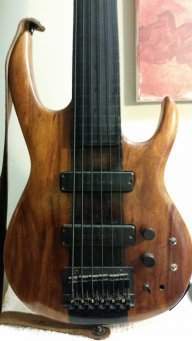
This is my first bass cab and my first that's ported, in the front, a 1x15.
To me, there's a transition in its voice, as I descend the E string for example, and the low E ends up sounding quite different. I don't mind that it sounds "open", as I said above; I do mind a little that it's inconsistent with the rest of the bass.
... so I'll have to try a sealed cab (or a driver suitable for this cab with the ports closed).
So, I had already noticed this five years ago. I really am a big dummy. :-(
I blew a LOT of money because I forgot this, or something. :-(
I'll tell you why I was looking through my old posts: I was looking for a good place to apologize to La Bella flats, because at some point I had also blamed them for a shortcoming in my cab that I didn't understand yet: the voice of a ported cab changes - above vs below its resonant frequency - and in almost all cases (almost all cabs marketed for electric bass) the fundamental of our lowest notes is left below, while the higher freqs on the same note are above.
I can't redo all of my flats testing, but I should revisit heavier La Bellas someday.
Never mind: I also revised and extended my remarks about flats five years ago, but forgot all about it.
Last edited:
At this time my answer would be: either sealed, or ported (but only if tuned lower than the fundamental of the lowest note I intend to play).I'm sure that this has been asked here before, but I'm curious what type of cabs people here on Talkbass prefer - Rear Ported, Front Ported or Sealed cabs - and why??
Thanks for your input!
Recently experienced my first rear ported cabs (for a home entertainment system). It didn't seem to matter.
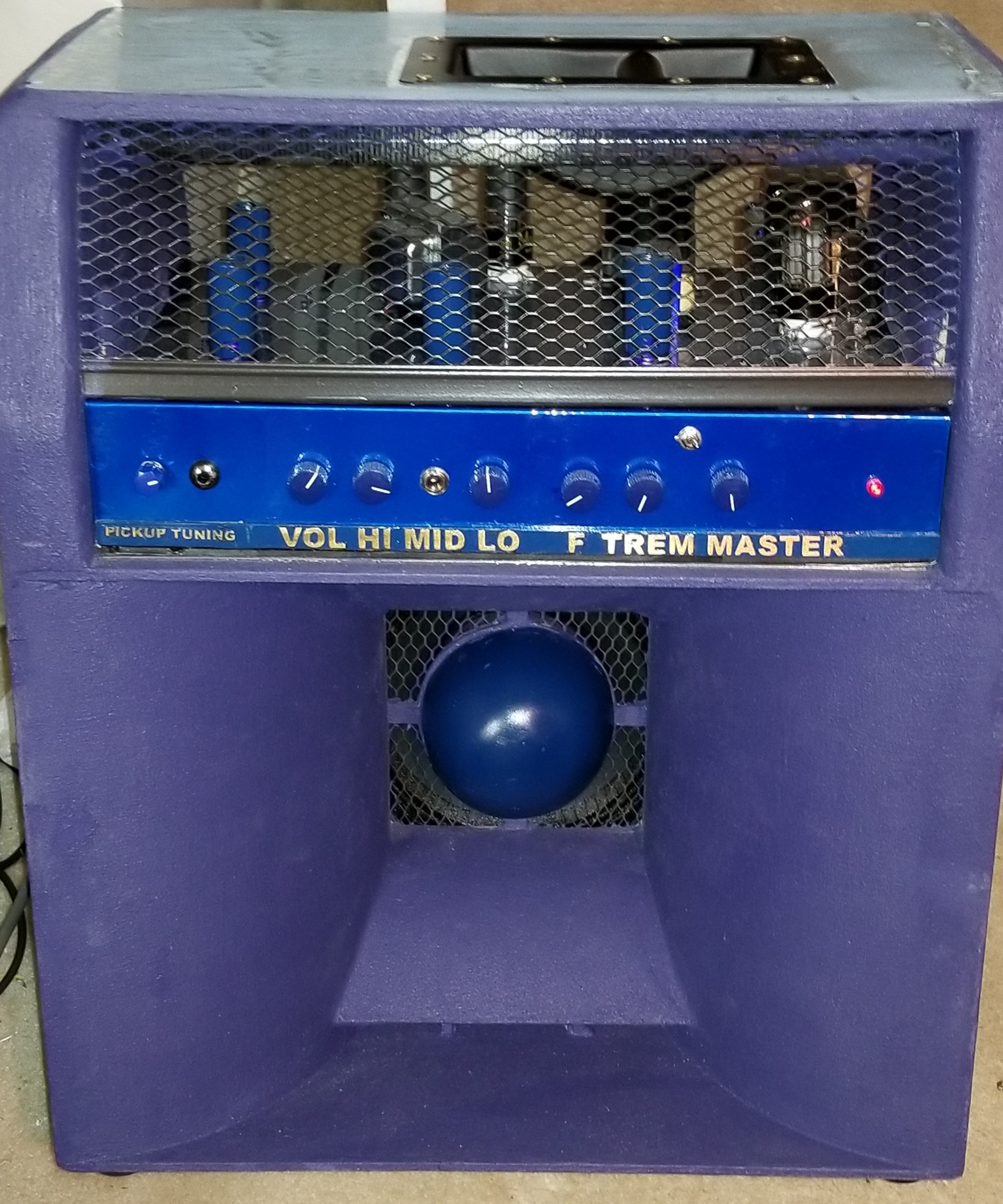
I prefer horns. My practice amp with a 10" horn will reproduce my low B with plenty of fundamental. My 15" version, the Jack lite 15, will do it at stage levels (Biamped with a 4x10" open back cab).
Last edited:



Sealed.
There's something about the response of a good sealed cab that I haven't found in the ported cabs that I've played.
There's something about the response of a good sealed cab that I haven't found in the ported cabs that I've played.

My 15" front ported cab is resonant
My 12" sealed cab is punchy
They sound good together
My 12" sealed cab is punchy
They sound good together


I'm not necessarily replying to @tvbop specifically:
Ported cabs sound bad below the cabinet resonant frequency.
In almost all cases (because "95%" of buyers want smaller and lighter), the fundamental of the lowest notes are left below this freq, and sound bad for *that* reason.
This is always conflated with the practical need to cut lows because of room acoustics, etc. So people will say they use a HPF to clean up their lows, but they never say it's because the cab sounds bad.
@tvbop: When you said "boom and mud", were your referring to room resonances that have to be dealt with (often made more convenient because the sealed cab is already rolled of in the lows), or were you blaming ported cabs (almost all of them) for sounding worse than sealed down there?
My VB-88 is tuned somewhere far below 41Hz. It is clear in these notes low E, F, F#, G Ab and I must have that.
Of course, my fridge is also clear down there, because it doesn't have ports (but it does have a little "extra" for other reasons).
Ported cabs sound bad below the cabinet resonant frequency.
In almost all cases (because "95%" of buyers want smaller and lighter), the fundamental of the lowest notes are left below this freq, and sound bad for *that* reason.
This is always conflated with the practical need to cut lows because of room acoustics, etc. So people will say they use a HPF to clean up their lows, but they never say it's because the cab sounds bad.
@tvbop: When you said "boom and mud", were your referring to room resonances that have to be dealt with (often made more convenient because the sealed cab is already rolled of in the lows), or were you blaming ported cabs (almost all of them) for sounding worse than sealed down there?
My VB-88 is tuned somewhere far below 41Hz. It is clear in these notes low E, F, F#, G Ab and I must have that.
Of course, my fridge is also clear down there, because it doesn't have ports (but it does have a little "extra" for other reasons).

If side or rear porting make a cab more practical, without compromising room filling ability, then I'm all for that.
I don't have a qualified opinion on sealed cabs yet.
I don't have a qualified opinion on sealed cabs yet.

I like them all , Sealed front ported and folded horn, which I guess qualifies as sealed


@jastacey, would you describe how your folded horn sounds? Are the lows extra clear? What brand/model is it?
No, I wouldn't call it sealed.
No, I wouldn't call it sealed.
I'd say the lows are pretty well defined, the thing is with the Ampeg V4-B cab you really can't hear the sound tone, when next to it, sure you can hear/feel it, but the full sound doesn't really develop, until about 20 feet away, this cab really throws the sound/bass out, this is the cab, that sound people really hate, as it will make the FOH sound unbalanced, I say it's a sealed cab, because the speakers/drivers are in a sealed compartment, I have listened to it while others have played through it and the sound is good, but lacking, in the highs, as a side note this cab was developed when the most you could get was a 100 watt bass amp,, sure the SVT was available at the time, but, most gigging bass players couldn't afford one, we either used a V4-B or a Traynor YBA-3 it's a pretty efficient cabinet@jastacey, would you describe how your folded horn sounds? Are the lows extra clear? What brand/model is it?
No, I wouldn't call it sealed.
We hear this about other cabs like this, with the two big openings, like the Acoustic 361 (I've never heard one in person)....the full sound doesn't really develop, until about 20 feet away, this cab really throws the sound/bass out...
I wonder if this does not apply to horns with only one opening?
EDIT: In another thread our Maestro O'Cabthreads said "In part it’s due to the midrange directivity, it has nothing to do with needing the distance for low frequency waves to “develop”." So I guess this could be true of those with only one opening, also.
Last edited:

- Apr 18, 2008
- 16,016
- 1
- 31,730
- Disclosures
- I'm highly opinionated and extremely self-assured
It’s not
If it were sealed, the air wouldn’t reach the horn, which would be pointless.I'd say the lows are pretty well defined, the thing is with the Ampeg V4-B cab you really can't hear the sound tone, when next to it, sure you can hear/feel it, but the full sound doesn't really develop, until about 20 feet away, this cab really throws the sound/bass out, this is the cab, that sound people really hate, as it will make the FOH sound unbalanced, I say it's a sealed cab, because the speakers/drivers are in a sealed compartment, I have listened to it while others have played through it and the sound is good, but lacking, in the highs, as a side note this cab was developed when the most you could get was a 100 watt bass amp,, sure the SVT was available at the time, but, most gigging bass players couldn't afford one, we either used a V4-B or a Traynor YBA-3 it's a pretty efficient cabinet
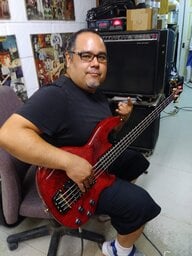
Front ported for me... Most of mine are.
I have a pair of 210's that are rear, but you have to space rear ported cabinets away from walls, and I've played some very tight or shallow stages that don't allow that.
I have a pair of 210's that are rear, but you have to space rear ported cabinets away from walls, and I've played some very tight or shallow stages that don't allow that.
What your not understanding, is the speakers are in there own chambers and there sealed, the front of the speaker fires into the horn portion of the cabinet, so I guess you can call it a hybrid type of cabinet, the acoustic 360 & 301, a long with some of the old JBL W cabinets use this concept, a sealed cabinet, the the speaker is mounted in, that fires into a horn, the layout plans shows how it works,ignor the top diagram as it's for a high frequency hornIt’s not
If it were sealed, the air wouldn’t reach the horn, which would be pointless.
Last edited:


