• TalkBass has been independent since 1998. Add your voice.
    Create a free account to reply to discussions, view embedded media, and browse with fewer display ads.
    Join freeLog in
    Want zero display ads or expanded classifieds tools? Compare plans.

Do you think thumb rests will ever come back in style?

The B string made the thumb rest obsolete.

Only if you never play it. If you do.... (look closely, it's there)

Holey.jpg
 
It’s not a matter of “style.” It’s a functional part.

If on the treble side, it obviously isn’t a thumb rest.

The rests have been available on at least one line of Fender basses continuously since 1951. They are cheap and easy to find, so plenty of people must be buying them.
 
Last edited:
  • Like
Reactions: vcs700s
It’s a little known fact that Leo put the so called “tug bar” below the G to prevent slap bass playing. He hated slap bass. It drove him nuts. When he sold Fender to CBS in 1965, Leo stipulated in the contract that the tug bar must remain below the G string as a slap guard for 9 years. Then, in 1974, having fulfilled their contractual obligation, CBS executives gave the long anticipated order to move the tug bar slap guard to above the E string to be used as a thumb rest. Finally, free of the restrictive anti-slap engineering control designed by Leo Fender, bassists started beating their instruments mercilessly with their thumbs. Much bass slapping ensued in the years since 1974. In the mid 1980s, the execs at Fender were surprised by research data showing the thumb rest was rarely ever used due to the preponderance of bassists slapping instead of plucking their basses, so the thumb rest was removed as a cost saving measure thereby saving the company from a most certain looming bankruptcy. Leo recognized he lost the “war against slap” years prior to Fender removing the thumb rest and had already designed the Stingray to cash in on the slap trend that he predicted would last until he invented punk rock the following year.

You’re welcome.
Is there a way to nominate this for TB post of the year? :D
 
  • Like
Reactions: Vinny_G and Wyrdlow
It's a thumb rest or tug bar, depending on bass or treble side.

I prefer to rest my thumb lightly against the pickup cover on a P, or pickup covers of a J. 'Don't have other basses currently.

I don't do thumb style - I can get thumb tone by changing the pluck angle with my index and middle fingers.

That said, I think tug bars look cool as **** on older Fenders.
 
  • Like
Reactions: vcs700s
I'm about ready to put a thumb rest on my Yamaha. I played it live for the first time last weekend. I am used to using the pickguard on the bass I usually use with this band. Sounded great, but I move around a lot when I play live, that's when the thumb rest (or anything) comes in useful. And considering the condition of the finish I'm not worried about drilling holes in it.
IMG_20230617_234708967_HDR.jpg
 
It’s a little known fact that Leo put the so called “tug bar” below the G to prevent slap bass playing. He hated slap bass. It drove him nuts. When he sold Fender to CBS in 1965, Leo stipulated in the contract that the tug bar must remain below the G string as a slap guard for 9 years. Then, in 1974, having fulfilled their contractual obligation, CBS executives gave the long anticipated order to move the tug bar slap guard to above the E string to be used as a thumb rest. Finally, free of the restrictive anti-slap engineering control designed by Leo Fender, bassists started beating their instruments mercilessly with their thumbs. Much bass slapping ensued in the years since 1974. In the mid 1980s, the execs at Fender were surprised by research data showing the thumb rest was rarely ever used due to the preponderance of bassists slapping instead of plucking their basses, so the thumb rest was removed as a cost saving measure thereby saving the company from a most certain looming bankruptcy. Leo recognized he lost the “war against slap” years prior to Fender removing the thumb rest and had already designed the Stingray to cash in on the slap trend that he predicted would last until he invented punk rock the following year.

You’re welcome.

Thank you...FTW...For the win

:laugh: :D :roflmao: :roflmao: :woot: :hyper:
 
I normally rest my thumb on the neck pickup of things like a Jazz Bass, or the only pickup on a bass with a pickup in the P-bass position. However, I have a couple of G&L Kilotons. They have a single pickup in more of a bridge pickup position, like a Sterling. On those, I added thumb rests. It's just easier for me. As far as I'm concerned, who cares if they're in style, as long as they work for you. They work for me, and I've been in style for 73 years.
 
  • Like
Reactions: vcs700s
I hope so. I see great utility in placing them between the pickups on a 2 pickup bass.

It's what is now called a ramp.

I honestly don't see the utility there on a two pickup bass when the pickups can be used as thumbrests already. No one out front is going to hear the difference on a thumb shifted 1/8" or 1/4" away from either pickup. Play up by the neck or play back by the bridge, sure. But to be miniscule millimeters between the pickups, no. IMHO.
 
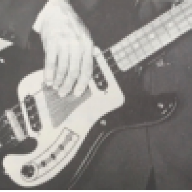
I have a 2013ish Mexican Standard P bass and it has had it's fair share of parts swapping. During the most recent one, i changed bridge, tuners, and all electronics. I also specifically requested to add a thumbrest. I also just ordered one for the space between my two jazz pickups :) I think they are nice (especially because I play the B string)
 
  • Like
Reactions: Wyrdlow
Some of the Fenders still come with one.
The “international color” basses do.
You can always add one.

Leo failed anatomy which is why he accidentally put the first thumb bars on the wrong side of the bass. Lots of otherwise smart TBers will say there’s another reason but they’re incorrect.
Monk Montgomery was one of the early adopters and may have influenced the location of the rest. Like his brother, Wes, Monk played the guitar with his thumb.

Larry Graham owned a Fender P-bass first and switched to a J by '66/'67. He began slapping soon after he began playing.
 
Last edited: