• TalkBass has been independent since 1998. Add your voice.
    Create a free account to reply to discussions, view embedded media, and browse with fewer display ads.
    Join freeLog in
    Want zero display ads or expanded classifieds tools? Compare plans.

Does a 1x15 have any advantage over a 1x18?

This has been a fun thread. Poor OP has probably taken up the Kazoo now and left bass forever. Or maybe on Amazon now shopping for strawberry flavored gun oil.

I also have to admit that I have a dislike for 18" drivers.

As much as I respect and care for my good friend Sir Paul, the 18 hater, I must say this: :spit::spit::spit:

Seriously, a great guy who is always willing to share his wisdom.
The SWR Big Ben is a great 118 cab -- quick and full range IME on the store floor. Always kind of wanted one. The older ones came with a Bag End driver.

Probably related to my now having found my bass tone happy place with two Bag End 115's

I believe my BE is the equivalent of the early SWR.

Does a 1x15 have any advantage over a 1x18?

It depends on who is carrying it.


And that person shall never be me. Unless you consider strapping an appliance dolly to it and wheeling it out to a shipping container lifting :D

The practical problem with using magnesium (aside from fire if the coil becomes intermittent or burns open) is ...

You know how you put out the fire on a magnesium transmission on a shipboard helicopter? Push it over the side and let God put it out.

On shore you tow it away from other aircraft and watch the show.

Things may have changed, and it's very uncommon for these to catch on fire.
 
  • Like
Reactions: beans-on-toast
Ugh, 1X18. It looks so good on paper...

Yes, you are MUCH better off with a 2X15, or even a 2X12. Your gut tells you so. Listen.

My 1X15 driven by around 350 SS watts at 8 ohms can pin my loud azz drummer's ears back.

Around 400-500 SS watts 2X15 4 ohms can absolutely own a large theater or outdoor stage.

How much volume do you need, mate?

I played for a number of years in a touring night club group back in the 70's. My Standel amp had a 250-watt powered speaker cab (that was a LOT of watts in 1971) utilizing two 15's and 4 huge round ports stacked vertically next to the 15" speakers. It was crazy loud. Always had to play with it turned down to 9 o'clock. I could actually put it up at 12 o'clock if we were playing outside, but it was just a monster - loved it. Was stolen in 1976 along with my 1965 Jazz Bass.

I've played with a number of 115's since and they just don't cut it by comparison. Much rather have 212's or even 210's than a 115. Currently I have a 410 by DNA that will knock down walls and I feed it with an 800-watt amp. It is much clearer and louder than my old 215 Standel was, but no question a 215 will "get 'er done!"

Here's a link to a limited edition Eden 215 called the P1515X
Invalid Link Removed

Of course you can always get two of their D115XLT's and stack them as needed.
Invalid Link Removed
 
  • Like
Reactions: electracoyote
2x15 was the basic standard for players
Get alot bang with a pair of drivers.

Single 15 might not have the oppphhh
And presence you liked with 2x15

Overall power handling and sensitivity is higher with 2 drivers.
 
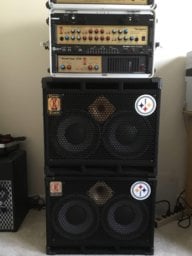
20131017-185320.jpg
 
  • Like
Reactions: knumbskull
Ampeg designed and built the B-18N as more powerful version of the
B-15N. It had twice the wattage and
a cabinet that had better low end response, but it was bigger and heaver than the B-15N. So players put the B-18N head on the B-15N cab. Lighter, more powerful, and good bass
response.

Duke LeJune built a TC-118 and a TC-115. He's currently redesigning the 118. The Thunderchild TC-112 has great low end and it's 30 lbs. Weight and size play
a very important part in bass cabinets.
 
Last edited:
  • Like
Reactions: dukeorock
I use a 4x10 stacked on a 1x18 currently. Recently I plugged into a friends 2x15 and thought it sounded incredible. This has me really eyeing a 1x15 to replace my 1x18 in my rig.

Is there any advantage the 1x15 would have over a 1x18?

I'm not real big on 18s or 15s to be honest. What you experienced was having more speaker area at work. A second 410 would work wonders, also increasing your speaker area over the 18, but with a much tighter low end. Keep in mind each increase in size losesmore that tightness and definition. But if your heart calls for something bigger, I would opt for 12s over the 15s.
 
Absolutely not picking on @dbsfgyd1 This comparison of NOMINAL hole size (i.e. the speaker size, 10", 15" 18") has been brought up many times in this thread regarding things like how much air can be moved, cone area, etc. and concluding one will have more output than the other.

Pages back I suggested the THREE DIMENSIONAL cone cannot be calculated by its diameter. You have to find the cone area on a spec sheet and multiply that by Xmax to compare. @Rick James later posted the same (or similar) with better terminology... displacement.

I suggest those seeking to compare speakers ability to "move air" look up ten speakers of their choice size on Eminence Speaker | Loudspeakers for Professional Audio and Guitar and Bass | The most trusted name in loudspeakers since 1966. Great upgrades for JBL, Celestion, Jensen, and Fane. or eminence speakers on parts express if you prefer. Check both the pro audio and bass class. Look at the specs and compare the displacement to the OP's 18. I love 15's and can't tell you exactly why. But those suggesting a 15 or 2 x 15 will kill his 18 based on nominal hole size might be surprised to find some 15's can have just over half the displacement of the OP's 18 (very little gain in a 2 x 15 as far as displacement), yet others may have more displacement, so even a single 15 to could gain some ground.

While you have the spec sheets up, also look at the mounting parameters and not the baffle hole size requirement. Even if the cones were flat, not cones, disks in fact, they can't be larger than the actual hole size, which can be quite a bit smaller than the nominal.

Of course there are so many other factors, some published and some not, some subjective and some not. If you look at the spec sheet and don't know what the parameters are, I think it would be best to learn those and their effects before making blanket statements about a certain size speaker will move more air. I'm not married to a speaker size. After a 12" open back geetar speaker project for my wife, my next bass project is a pair or two of neo 8's.

 
  • Like
Reactions: dbsfgyd1
Absolutely not picking on @dbsfgyd1 This comparison of NOMINAL hole size (i.e. the speaker size, 10", 15" 18") has been brought up many times in this thread regarding things like how much air can be moved, cone area, etc. and concluding one will have more output than the other.

Pages back I suggested the THREE DIMENSIONAL cone cannot be calculated by its diameter. You have to find the cone area on a spec sheet and multiply that by Xmax to compare. @Rick James later posted the same (or similar) with better terminology... displacement.

I suggest those seeking to compare speakers ability to "move air" look up ten speakers of their choice size on Eminence Speaker | Loudspeakers for Professional Audio and Guitar and Bass | The most trusted name in loudspeakers since 1966. Great upgrades for JBL, Celestion, Jensen, and Fane. or eminence speakers on parts express if you prefer. Check both the pro audio and bass class. Look at the specs and compare the displacement to the OP's 18. I love 15's and can't tell you exactly why. But those suggesting a 15 or 2 x 15 will kill his 18 based on nominal hole size might be surprised to find some 15's can have just over half the displacement of the OP's 18 (very little gain in a 2 x 15 as far as displacement), yet others may have more displacement, so even a single 15 to could gain some ground.

While you have the spec sheets up, also look at the mounting parameters and not the baffle hole size requirement. Even if the cones were flat, not cones, disks in fact, they can't be larger than the actual hole size, which can be quite a bit smaller than the nominal.

Of course there are so many other factors, some published and some not, some subjective and some not. If you look at the spec sheet and don't know what the parameters are, I think it would be best to learn those and their effects before making blanket statements about a certain size speaker will move more air. I'm not married to a speaker size. After a 12" open back geetar speaker project for my wife, my next bass project is a pair or two of neo 8's.

I don't mind being picked on if I'm full of gas. I should have been clearer on what I posted. What I should have said was it might not have been the diameter of the speakers that made the difference, but the combination of the design of the speaker and cabs. I'll still stand on my Eden 10s (probably made by Eminence) having a tighter more responsive bottom end than your fifteens, or any 18 on the market regardless of cabs, however.
 
  • Like
Reactions: BadExample
Duke LeJune built a TC-118 and a TC-115. He's currently redesigning the 118.
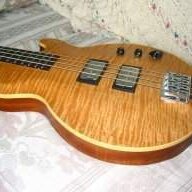
Actually I made two 118 cabs, the Thunderchild 118 and a Hathor 1855. The large horn needed for the Thunderchild 118 was discontinued and I haven't found a suitable replacement, and the Hathor 1855 was too labor-intensive to be practical. The Hathor-style 118 is the one that I'm working on revising now, while I hope for a good replacement horn to show up for the Thunderchild 118.

Dukeorock is doing a sealed-box 118 with dome mids that looks pretty sweet.
 
Last edited:
I don't mind being picked on if I'm full of gas. I should have been clearer on what I posted. What I should have said was it might not have been the diameter of the speakers that made the difference, but the combination of the design of the speaker and cabs. I'll still stand on my Eden 10s (probably made by Eminence) having a tighter more responsive bottom end than your fifteens, or any 18 on the market regardless of cabs, however.
I didn't feel like looking back for specific posts making claims on "pushing air" vs. diameter, so posting right after your post I thought might come off wrong :D

I've never done anything with bass/MI 10's, so last night before posting, I looked up a bunch of those and did rough rounded off in my brain math. It looked to me that his 18 could have as much displacement as 2 of some of the tens up to over 3/4 of four 10's. I didn't look at any of the other specs and didn't consider coupling, position, or any of the other factors as I was looking to dispel the common myth or blanket statement often post on TB that says something like "This number of size X will push more air than this number of size Y."

I brought up other parameters being important, but more importantly, you stated, "design of the speaker and cabs" and that is what will determine the tone, sound quality and performance (volume and actual wattage capacity). In the end, one the cab is on the floor and the buyer is playing it, the numbers no longer matter.
 
Dukeorock is doing a sealed-box 118 with dome mids that looks pretty sweet.
If I wanted to make a stand-alone 18" cab, that's exactly what I would do. Probably with an L pad for the mid(s). But I like a darker sound. It will be very cool to see where the @dukeorock 18 goes!

Sorry to hear the parts situation is harassing your 18" cabs Duke!
 
Sorry to hear the parts situation is harassing your 18" cabs Duke!

I have found solutions on the 18" Hathor-style cab, just juggling the tradeoffs now, and paying closer attention to build times than before.
 
If I wanted to make a stand-alone 18" cab, that's exactly what I would do. Probably with an L pad for the mid(s). But I like a darker sound. It will be very cool to see where the @dukeorock 18 goes!
!

I've sold a few and have hundreds of shows on my '1822.' I love it, but 18's are a tough sell since folks seem to hang onto strange ideas about every speaker size having a 'sound.' I'd love to hear one of Dukes 18 based cabs some day. Big fan of his cabs!
 
If I wanted to make a stand-alone 18" cab, that's exactly what I would do. Probably with an L pad for the mid(s). But I like a darker sound. It will be very cool to see where the @dukeorock 18 goes!

Yup, when I saw what he was doing with those two big dome mids + that new-generation Neo-magnet 18, it was a forehead-slap, why-didden-I-thinka-that moment. Imo it's a brilliant approach.

On the L-pad thing, I might make this suggestion: Use a 100-watt, 16-ohm L-pad, and don't connect the parallel leg. It's the parallel leg that burns out when you crank in maximum attenuation. So in effect it becomes a potentiometer, with less range of adjustment, but it's also much less likely to burn out.
 

Latest posts