
Would it? It seems that it would lengthen the low end scale in an unofficial way and perhaps therefore tighten up the B and E strings on 5 or 6 stringers and the low E on a 4 banger. What say ye?

TalkBass has been independent since 1998. Add your voice.
Create a free account to reply to discussions, view embedded media, and browse with fewer display ads.
Join free Log in
Want zero display ads or expanded classifieds tools? Compare plans.



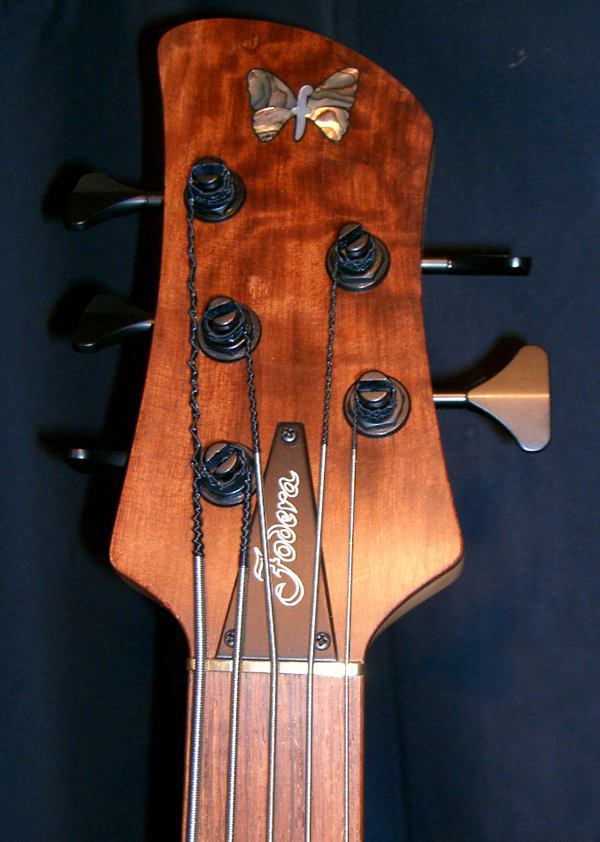
Fodera makes extended b headstock.
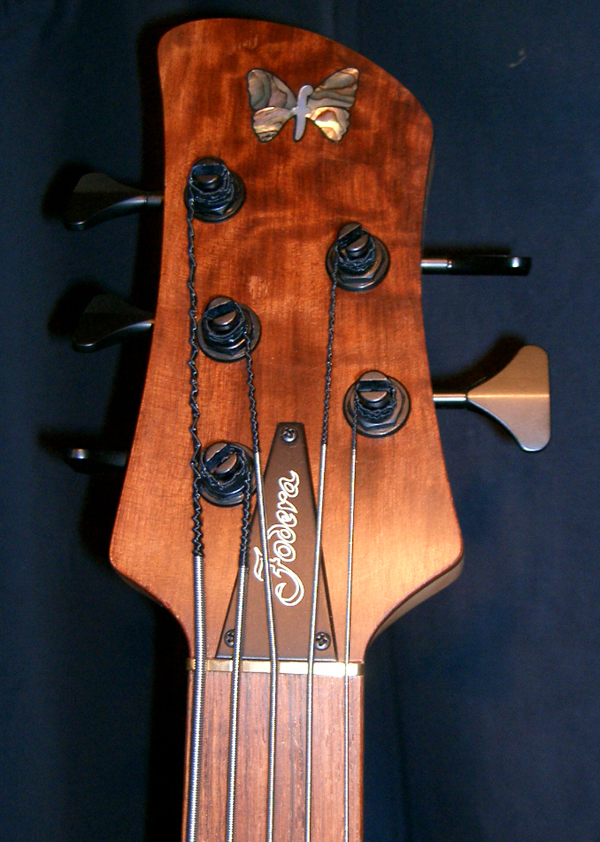


Fodera makes extended b headstock.
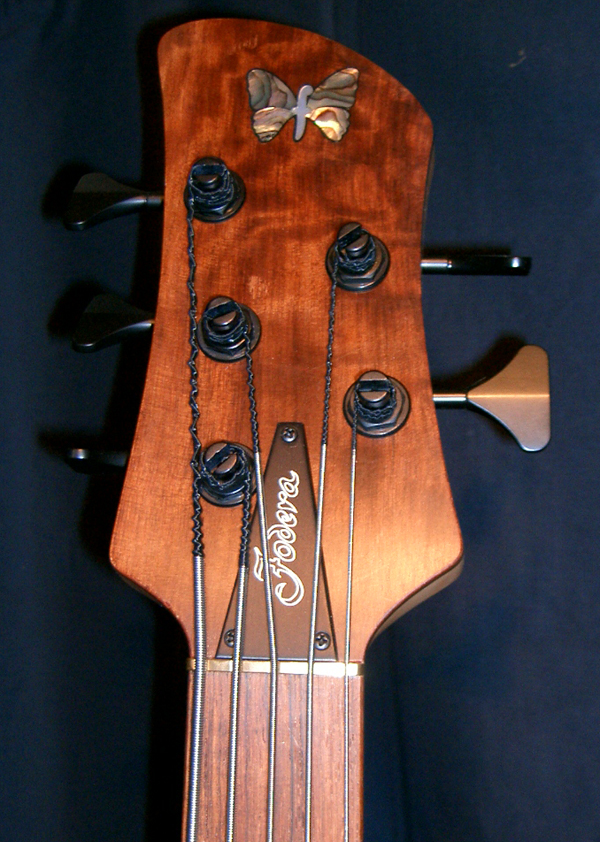

 But of course Fodera make those if a high paying customer demands it, I would too if it would make money. Its still as ridicilous as rotosound making coloured stringbindings because Jaco could hear the colours, so could the hobbits and Gandalf
Right; this is exactly what I'm talking about, so everyone is saying this doesn't do a thing to tighten up the B string. I don't understand why it wouldn't.


Hey, no dissing Gandalf!tunerposition doesnt matter for tension. On a 34scale bass the tension needed between nut and bridge too produce the right tone wont change.
Seeing people pay fortunes for stuff like that is just hillarious

In what way does buying a new bass with a longer scale length exacerbate the problem?As an aside, TBers are commonly wanting more tension in their B-string and they like to solve this by buying a new bass with a longer scale length. In a way this is exacerbating the problem. If we increase the scale length then we need more tension to maintain the same pitch. If you want more tension then the obvious thing to do is to get a heavier gauge string.
It doesn't exacerbate the problem - longer scale solves it - most folks are looking for more tension at a given pitch, not less. But yeah, 2 main solutions: longer scale and/or bigger gauge. I suppose other factors (like core and winding type and size) factor in as well, but those are the two main variables.OK so here goes ...
The scale length of the string is governed by the position of the nut and the bridge saddle. The string extends beyond the saddle and beyond the nut. But these sections do not affect the scale length. Tension in the string is created by tuning and tightening the string around the tuner post. For a selected string, let’s say 0.1” E string, there will be a certain tension in the string that will make the string give the correct pitch for the E note. Any other tension will create a different pitch but not the one we want. So Tension and pitch and thickness of string are all related:
Frequency = [(Tension/Mass)^0.5]/2 x Length
So if we fix frequency, i.e. the note E, and we fix length, i.e. bass guitar scale length, then we have: Tension/Mass = constant.
So, if we want more tension, we have to increase the mass (i.e. a thicker string).
I hope this explains the string physics.
As an aside, TBers are commonly wanting more tension in their B-string and they like to solve this by buying a new bass with a longer scale length. In a way this is exacerbating the problem. If we increase the scale length then we need more tension to maintain the same pitch. If you want more tension then the obvious thing to do is to get a heavier gauge string.
PS: I love floppy light strings. I like the feel.
Davo

My OCD refuses to let me play this bass. Not that I could afford it.Fodera makes extended b headstock.
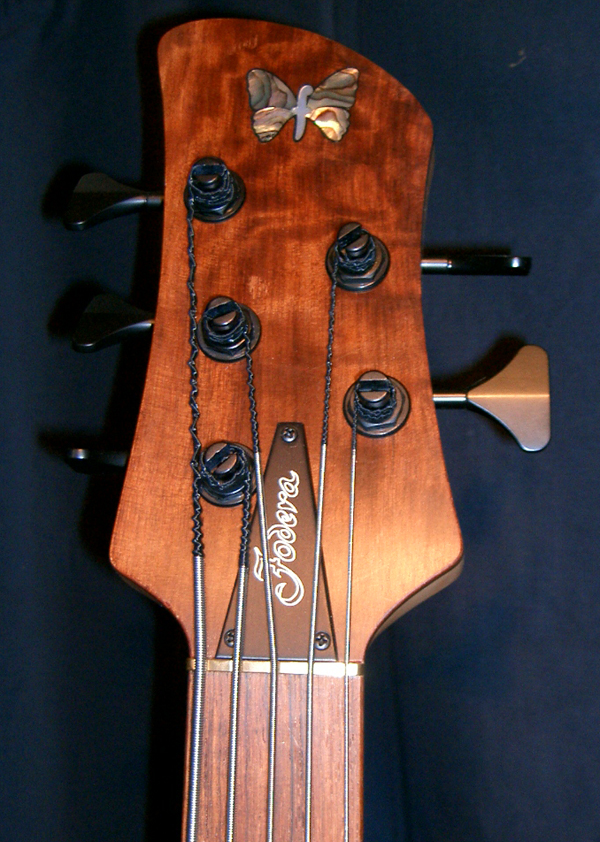

If you had given me this bass without strings it would have taken me a long time to figure out how to string it. Even after coming up with this method I would still feel like I was doing something wrong and there must be a better way.Fodera makes extended b headstock.
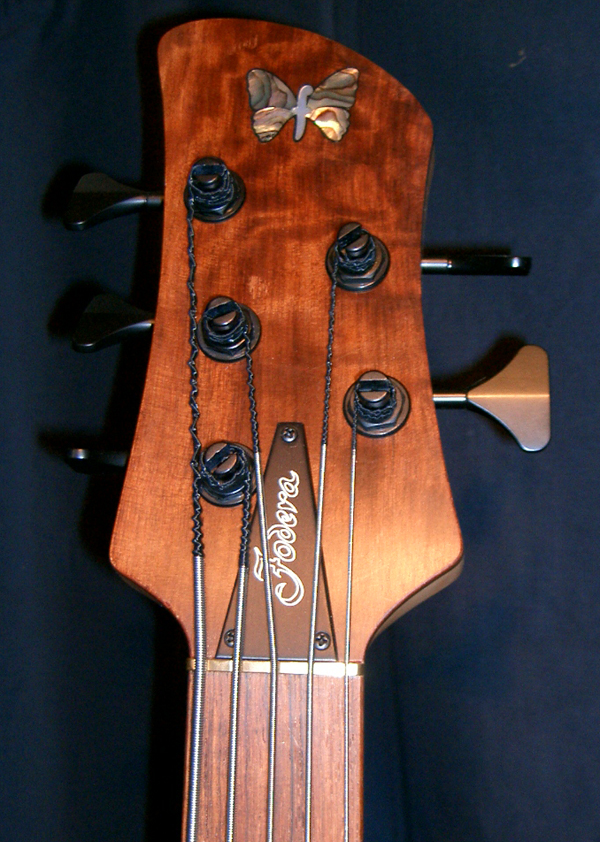

I'd see that and think I bought a lefty on accident. It looks like a kid strung that poopieFodera makes extended b headstock.
As an aside, TBers are commonly wanting more tension in their B-string and they like to solve this by buying a new bass with a longer scale length. In a way this is exacerbating the problem. If we increase the scale length then we need more tension to maintain the same pitch. If you want more tension then the obvious thing to do is to get a heavier gauge string.