110% correct... in the mix.110% correct.

Enjoy the benefits of a premium membership!
Upgrade Account
-
TalkBass has been independent since 1998. Add your voice.
Create a free account to reply to discussions, view embedded media, and browse with fewer display ads.
Join free Log in
Want zero display ads or expanded classifieds tools? Compare plans.
You are using an out of date browser. It may not display this or other websites correctly.
You should upgrade or use an alternative browser.
You should upgrade or use an alternative browser.
Does fretboard wood make a consistent difference in tone that you can hear?
- Thread starter Gorn
- Start date
-
- Tags
- difference fretboard tone wood
More options
Who Replied?

Absolutely correct. Personally I feel like the fretboard is responsible for tone but at the end of the day the difference pales in comparison to electronics. As far as the quality of wood rather than type, I believe that it matters but also that there is a point of diminishing returns. Like as long as its not a junk piece of wood, the others shouldnt sound any better/worseI think you can add 'in the mix' to any hypothetical gear comparison and the answer is No.

I generally agree with you but bring to the table that even similar densities of woods may resonate differently affecting the tone as well. There is of course, differences within the same wood type as we're working with organic materials.
Agreed. That's what I was referring to when I wrote....
Different combinations of woods deliver different results.
Identical combinations can deliver varying results, due to the vagaries of wood composition, glue up, mating surfaces, and 10,000 other factors.
So I'm suggesting that each neck is an "entity unto itself".
I have never heard a player where I thought - what a great Rosewood or maple sound. If they play well it doesn’t matter what the neck is made of. By the time you run the bass through any pedals you may have, pre-amp, cabinet, mixer EQ to FOH cabinets I don’t think it matters much. I’ve discussed this with my dog and she insists no Human can tell the difference when playing live. The more important issue is how the neck feels in your hand. Is it a comfortable shape and string height etc. Beyond that it is just a visual preference. I happen to prefer maple...but don’t think it’s a meaningful difference when gigging.
D
Deleted member 165050
Guest
THIS.
Wood just can't magically add something to the tone. It can only ABSORB.
When people say "Oh, I can feel this guitar strongly vibrates unplugged, it must be good!", they are actually wrong. In this situation wood absorb more energy from the strings and you will get less sustain, simple as that.
Actually it's not that simple. In acoustics/vibration there is destructive interference, which in basses generally makes itself evident in the form of dead spots, but there is also constructive interference which is why some notes on a bass can be louder than others. This interference is due to different parts of the structure the strings are mounted on vibrating either in or out of phase at different frequencies, and constructive interference can add up to 3dB if there is fully in-phase interference. So the wood structure can add to the tone as well as take away. But of course making the structure vibrate does absorb some of the original energy that you put into the string by plucking it. I'd personally say that a "dead" instrument that doesn't appear to vibrate will have less sustain because the more rigid structure is absorbing more energy by not vibrating, although presumably it's less likely to have dead spots.
Another thing to consider is that we are all after the different tones in our head so there is a strong bias with everything else. If maple is brighter.... it might be the reason that I roll my tone knob off a bit more on that bass vs a rosewood one. At the end of the day we're all bowing to the speaker in front of us. Thats the sound that hits my ears so the small differences in any woods will likely be gobbled up by eq and other controls. Even our fingers do it. If the bass is a bit warmer and I want some snap, Ill dig in deeper... maybe pull some low mids out and bump the treble a touch. If its too bright and forward, Ill adjust my fingers closer to the neck joint while using more of the pad of my finger to get that warm bloom.

Well, up to two weeks ago, I was a tonewood skeptic. Now, my opinion has changed slightly.
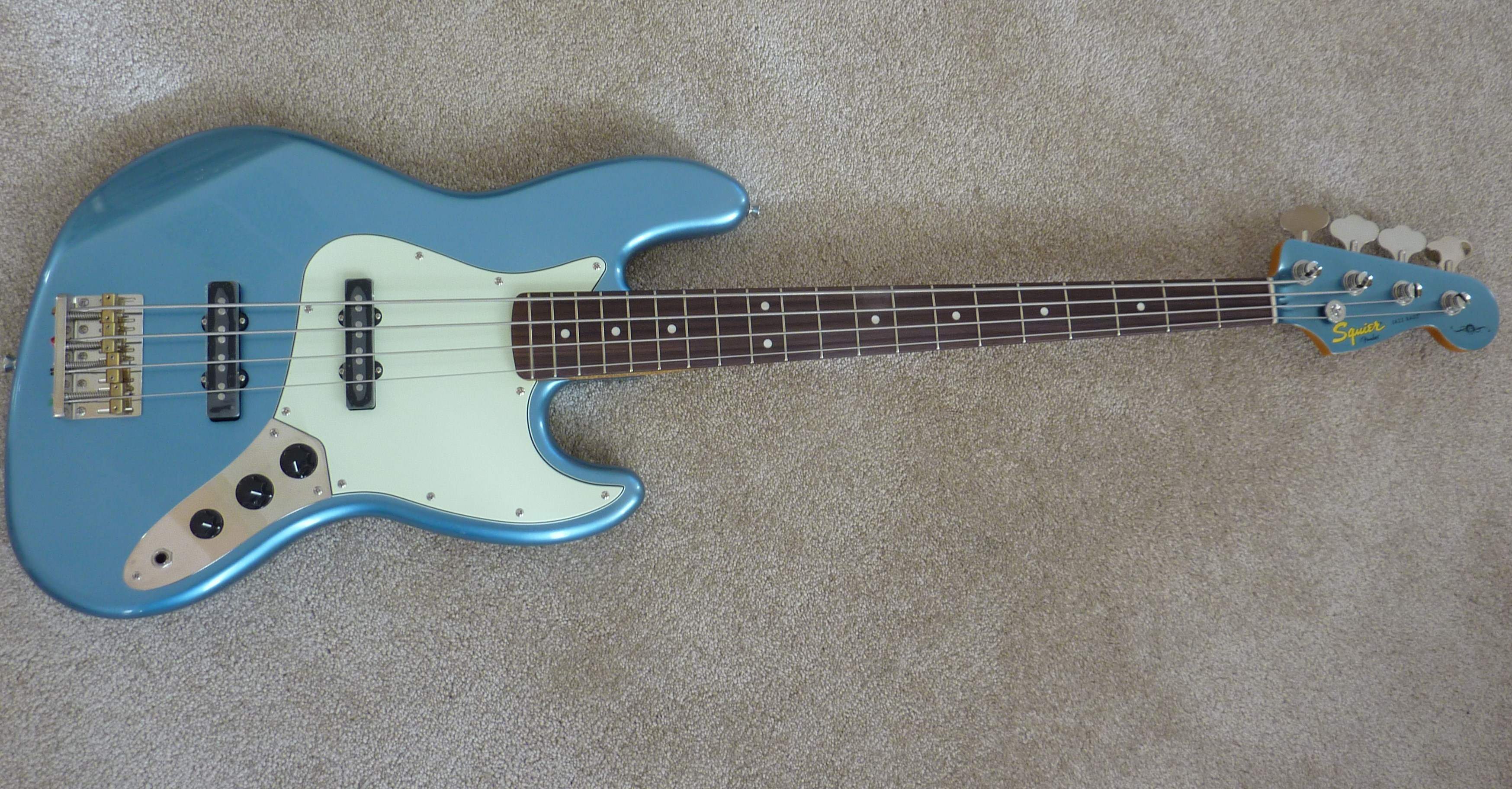
Two weeks ago, I made a neck swap. I took the neck of my Squier James Johnston Jazz Bass...
I swapped it with the neck on my trusty Fender Standard Precision...

The Jazz Bass has a surprisingly warm tone. I have put stainless steel Dunlop Super Brights on it and I am not getting that shrill Jazz Bass growl that I was expecting.
My Precision is golden. It is a clear tight sounding P-Bass that I have strung with TI Flats and it is righteous.
Surprisingly, the P-Bass with the Jazz Bass neck suddenly sounded darker and the Jazz Bass with the Precision neck sounded brighter.
Is it a Maple vs Rosewood thing? I am not sure. I think that the difference comes from those very specific pieces of wood. I think that the Jazz Bass rosewood neck sounds warmer because that particular piece of wood sounds warmer but not because it is a rosewood fingerboard.
I came to that conclusion because I also have a Yamaha BB714BS with a rosewood neck and that bass, with the split-coil pickup soloed, sounds brighter than the Fender Precision with the maple neck.
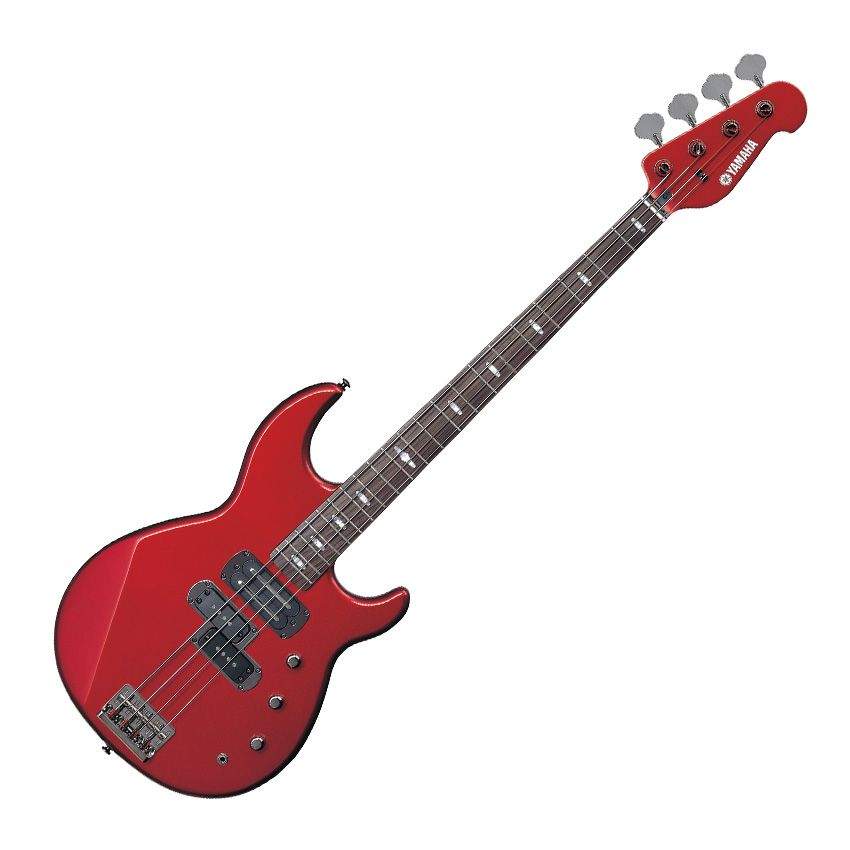
Although, when you judge the tone of an instrument, you have to consider the bass and all its components as a whole. To my ears, the split-coil pickup on the Yamaha is voiced brighter because next to it, there is a fat humbucker designed to provide the low end.
But still, I believe that it is not necessarily the essence of wood that defines the tone but that particular plank of wood combined with the other components of the bass.
Two weeks ago, I made a neck swap. I took the neck of my Squier James Johnston Jazz Bass...
I swapped it with the neck on my trusty Fender Standard Precision...
The Jazz Bass has a surprisingly warm tone. I have put stainless steel Dunlop Super Brights on it and I am not getting that shrill Jazz Bass growl that I was expecting.
My Precision is golden. It is a clear tight sounding P-Bass that I have strung with TI Flats and it is righteous.
Surprisingly, the P-Bass with the Jazz Bass neck suddenly sounded darker and the Jazz Bass with the Precision neck sounded brighter.
Is it a Maple vs Rosewood thing? I am not sure. I think that the difference comes from those very specific pieces of wood. I think that the Jazz Bass rosewood neck sounds warmer because that particular piece of wood sounds warmer but not because it is a rosewood fingerboard.
I came to that conclusion because I also have a Yamaha BB714BS with a rosewood neck and that bass, with the split-coil pickup soloed, sounds brighter than the Fender Precision with the maple neck.
Although, when you judge the tone of an instrument, you have to consider the bass and all its components as a whole. To my ears, the split-coil pickup on the Yamaha is voiced brighter because next to it, there is a fat humbucker designed to provide the low end.
But still, I believe that it is not necessarily the essence of wood that defines the tone but that particular plank of wood combined with the other components of the bass.


That’s why I posted my example about painting a room.Another thing to consider is that we are all after the different tones in our head so there is a strong bias with everything else. If maple is brighter.... it might be the reason that I roll my tone knob off a bit more on that bass vs a rosewood one. At the end of the day we're all bowing to the speaker in front of us. Thats the sound that hits my ears so the small differences in any woods will likely be gobbled up by eq and other controls. Even our fingers do it. If the bass is a bit warmer and I want some snap, Ill dig in deeper... maybe pull some low mids out and bump the treble a touch. If its too bright and forward, Ill adjust my fingers closer to the neck joint while using more of the pad of my finger to get that warm bloom.
I do have a specific sound in my head with my instruments. Everything I have in my signal chain is done to accentuate that sound.
I don’t want a snappy sound, so I avoid maple. If I had a maple boarded bass, the first step in my chain, would be to nullify the inherent sound of the instrument. That makes no sense to me.
I use rosewood on all my basses as my starting point. It has the warm character that I’m looking for from the start.

While all of you have wasted time arguing about tone woods, I've ascended to achieving true tone with the other part of the system that has no effect on electronics: tone callouses! Using a hardness tester and fine grit sandpaper, I have mastered the hardness of my fretting fingers. Bright tones come from years of callousing, but for ballads I'll sand them down to get that softer, mellow sound.
The audience can tell for sure.
The audience can tell for sure.

Not entirely true. See:
IME the tone wood makes a difference - even alder/maple/rosewood P and J basses sound different from one another. Listen to Roger and Michael, they're 110% correct.
I won't dispute their experience. They both have impressive resumes.
That said, if someone's business was to sell a fantasy at an inflated cost of the tangible real thing, do you think it's really in their best interest of business to flat out say that it makes no difference?
Am I saying either Sadowsky or Tobias instruments or designs are crap or fantasies? Not at all.
I'm merely stating that if it doesn't make as big a difference as some of you claim it does, it's not ideal for them to agree.
I use a different method for callouses....... but thats neither here nor there.While all of you have wasted time arguing about tone woods, I've ascended to achieving true tone with the other part of the system that has no effect on electronics: tone callouses! Using a hardness tester and fine grit sandpaper, I have mastered the hardness of my fretting fingers. Bright tones come from years of callousing, but for ballads I'll sand them down to get that softer, mellow sound.
The audience can tell for sure.


I must disagree with you.I'd personally say that a "dead" instrument that doesn't appear to vibrate will have less sustain because the more rigid structure is absorbing more energy by not vibrating, although presumably it's less likely to have dead spots.
It's just aginst the physics. The more rigid the construction of bass - the more sustain you will get. When you have great resonating bass unplugged that means that the body absorbs a lot of energy from the strings and ending result will be much less sustain. Because the energy is absorbed by the body itself. You just can't have more energy, when this energy is absorbed elsewhere. And when you have much less resonant body, it will have more sustain. Why ? Because body reflects energy from the strings. You can do simple test to prove it (but it will involve some hand constructions etc).
Get some very soft guitar nut and some soft guitar bridge (made of something soft and light). Pluck the strings open. Now change the nut to some metal like brass or steel and chenge the bridge to steel constructed or something. Pluck the strings. And than you will know what I meant.
But doesnt your test example skip what the nut and bridge are connected to?I must disagree with you.
It's just aginst the physics. The more rigid the construction of bass - the more sustain you will get. When you have great resonating bass unplugged that means that the body absorbs a lot of energy from the strings and ending result will be much less sustain. Because the energy is absorbed by the body itself. You just can't have more energy, when this energy is absorbed elsewhere. And when you have much less resonant body, it will have more sustain. Why ? Because body reflects energy from the strings. You can do simple test to prove it (but it will involve some hand constructions etc).
Get some very soft guitar nut and some soft guitar bridge (made of something soft and light). Pluck the strings open. Now change the nut to some metal like brass or steel and chenge the bridge to steel constructed or something. Pluck the strings. And than you will know what I meant.

Yes, I skipped it. My point was to prove that the more rigid construction = the less energy absorbed = the more sustain you get. The same principle aplies to literally anything, even the wood itself.But doesnt your test example skip what the nut and bridge are connected to?
Can you imagine bell of Big Ben built from very soft material like rubber ? It will not ring. End of story.
And now, I don't know from what is this bell constructed (correct me please), some metal I bet - the bell, the construction REFLECT the energy, not absorb it (of course some of it will absorbed but this is to be expected) and ring ass hell !
D
Deleted member 165050
Guest
I must disagree with you.
It's just aginst the physics. The more rigid the construction of bass - the more sustain you will get. When you have great resonating bass unplugged that means that the body absorbs a lot of energy from the strings and ending result will be much less sustain. Because the energy is absorbed by the body itself. You just can't have more energy, when this energy is absorbed elsewhere. And when you have much less resonant body, it will have more sustain. Why ? Because body reflects energy from the strings. You can do simple test to prove it (but it will involve some hand constructions etc).
Get some very soft guitar nut and some soft guitar bridge (made of something soft and light). Pluck the strings open. Now change the nut to some metal like brass or steel and chenge the bridge to steel constructed or something. Pluck the strings. And than you will know what I meant.
That's not quite how it works in my opinion as I don't think energy is reflected from a more rigid body, rather a more rigid body will simply absorb the energy that makes a more resonant structure vibrate, but without transmitting it to other parts of the structure and back to the strings.
Oh I agree with your statement.. I was just thrown off by that part.Yes, I skipped it. My point was to prove that the more rigid construction = the less energy absorbed = the more sustain you get. The same principle aplies to literally anything, even the wood itself.
Can you imagine bell of Big Ben built from very soft material like rubber ? It will not ring. End of story.
And now, I don't know from what is this bell constructed (correct me please), some metal I bet - the bell, the construction REFLECT the energy, not absorb it (of course some of it will absorbed but this is to be expected) and ring ass hell !
What would be interesting to me would be to build a setup with a standard bridge, nut, and tuner.. then stick a .105 low E on it and use a machine to give the identical pluck every time. Once thats done, you can swap the material theyre mounted to each time and measure the difference. Maple, Rosewood, Carbon, Graphite composite, aluminum, Ebony... all of em. Solid or hollow... both... whatevs. Id be curious to see the differences although lets also remember that most notes are fretted and remove the nut from the equation. Additionally Im willing to bed that the sustain isnt the only thing impacted.
Correct me if im wrong... but isnt the principle behind tone woods that the differences in grain, density, consistency.. all impact the string as it impacts them... hence those characteristics translate through the pickups? If that weren't the case I would deduce that any woods of similar density would be identical.


