Ok, I'm not seeing it. What's interesting for a nerd?
You're asking me, I take it?
Pickup is pretty close to the bridge?
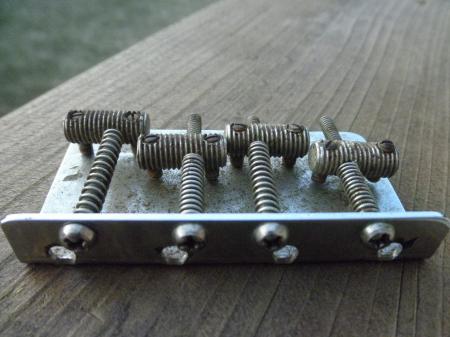
I just recognized some things... It's a late '50s bridge that's been modified on the base plate; a prototype for the revised version starting in 1960. They eased the radius at the corners more to accommodate Jazz bass bridge/bridge pu ashtray covers as the production Jazz bass was introduced in 1960.
Though none of the numerous pictures I've seen of '59 Jazz bass prototypes show/include a bridge cover mounted it goes to show that they must have been working out the details for that part when the photographed prototype was made. The screw holes for that ashtray are present in the photos.
Had they kept the form of the pickups they used in the prototypes then the ashtray cover as we know it would have only covered maybe half of the bridge pickup, whereas with the classic Jazz single coils we all know them are just about completely covered by the ashtray in the bridge position. That would have looked odd or poorly thought out from a design standpoint.
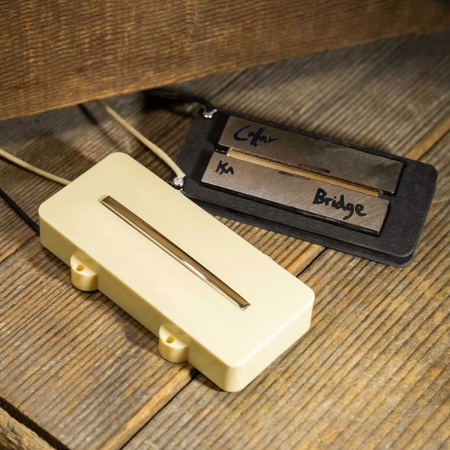
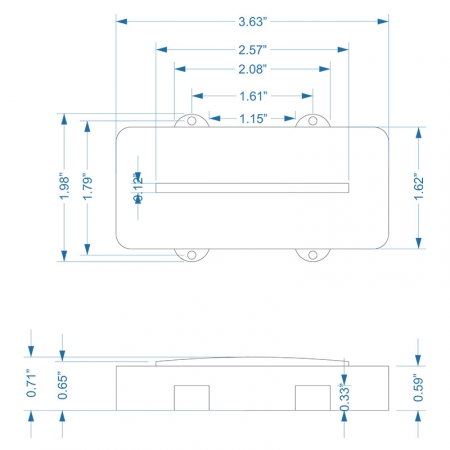
Perhaps this aesthetic consideration factored into why Leo Fender chose to change the dimensions of Jazz bass pickup coils to be roughly twice as tall and half as wide or long--compared to the prototypes--by the time they started production for the market, as we know them. The proto-neck pickup design was too wide side-to-side to neatly fit that pickup cover as well which further convinces me the pickup design change was driven by aesthetics and related practicalities.
Also, notice the magnet arraignments on the prototype pickups hint at what they were thinking about or working on. When they translated that intent to the revised coil and bobbin size for production that we commonly know they simplified by going with two pole pieces per string on bother the neck and bridge pickups.
Okay, enough of my blabbering.