• TalkBass has been independent since 1998. Add your voice.
    Create a free account to reply to discussions, view embedded media, and browse with fewer display ads.
    Join freeLog in
    Want zero display ads or expanded classifieds tools? Compare plans.

Does your bass sounds better when somebody else is playing it?

Not in my experience. Granted, it has been quite a while since anyone worth a damn as a bassist has played my gear other than me. I suppose I could be in for a surprise if I wind up friends with any other bass players anytime soon, but I doubt it.
 
I was only able to take 3 lessons from him due to the distance from my home and both of our crazy schedules, but Roy Vogt played my P Bass briefly during one visit to check my string action and to demonstrate a particular technique. It was intimidating but encouraging to hear its capabilities in a pair of extremely gifted hands.
 
If you record your voice it sounds different to how you perceive it when you are talking. When someone touches your arm, for instance, it feels different to when you touch your arm.

Same thing, when you are playing bass you are doing a lot of things, ie thinking about what you are going to play, deciding where to put your fingers, listening to what you played and deciding if that was what you wanted to play and sound like. When someone else is playing you are only listening, so your attention is focussed in a way that it isn't when you are playing. That makes it sound different, maybe even better.
 
And my thought when I posted this was , “ I’m amazed at how good my gear sounds” as opposed to being outplayed.
This holds true especially for the DB since I can never be in front of it and playing it acoustically unless I play to a corner.
 
Sometimes, but not always. There's more to it. I've found that preconception plays a large role.

Last week, I served as a roadie for a benefit concert. The drummer flew in from out of town a day before the show to accommodate a rehearsal, but the airline misrouted his cymbal case. The case was eventually located, but unfortunately it couldn't be delivered to his hotel until later that day, so I offered him my cymbals for the rehearsal. And wouldn't you know it? My cymbals sounded better when somebody else was playing them! However, I predicted that this would happen – he's a professional jazz drummer whose work I respect.
 
  • Like
Reactions: amper
I think a lot of it has to do with how close we practice with our amps.

It takes 24 feet for the sine wave of an E string to complete its first cycle. The sound that you hear close to your amp is different than the sound that you hear further away. You tend to get more bottom end when you are closer as well.

I recently rearranged my home studio moving my amps further away and had to re-eq everything.

#thingstoconsider

I always hear this in relation to bass amps and subwoofers that "X frequency takes Y amount of feet to fully develop, so if you listen less than Y feet away..." I don't get why that argument is relevant when it comes to the listening of low frequencies.
 
When it comes to my instruments, no. Most of the time people sound like garbage on them, because I use an unusual setup that works well with what and how I play. To this day I have not run into anyone that sounds, not even better, but as good as when play through my stuff. That said I do have an instrument that has a more "standard" setup that people sound like themselves when playing it.

My rig is also an interesting thing. Most people find it very vintage sounding when they play through it, but not when I do.
 
  • Like
Reactions: amper
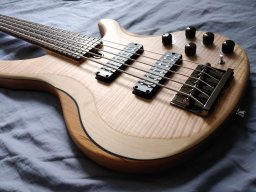
View attachment 3420755 Is it just me or does your gear sound better when your bass friends come over and play it.
I’ve gotten my gear down to a reasonable array where I never have to buy another bass and so far it’s been a real GAS killer.
4,5,6 string Jazz Basses, P bass, fretless , Acoustic bass and an upright.

Now the amp thing is a different animal.
So today my buddy came by and I got to sit back ,tweak and really listen.
I think it’s fixed...... lol!
EA Doubler 2 and Wizzy cab with Eminence Beta 10 for DB
EA Doubler 2 and (2) Aguilar SL112 for electric bass


Everything else is optional.

I would’t say better, but in some cases different.
 
No. It just sounds like someone else playing my rig. I do a couple jam/open mic nights with my band and I bring in both my P basses (AmPro and TF). I mainly bring the pro so other people can play it. The main thing I notice is inconsistency of touch with most of them. That said, I've had other people just use my amp with their bass at events I work sound on and it sounds just fantastic. Not better. just how I expect it to sound. I get lots of compliments on it.
 
Last edited:
  • Like
Reactions: PWRL
Only my Rickenbacker. I've never gotten the tone that I hear on records or demos. I would define a Ric as bright and growly, unless I am playing one.

I sold my 73 Rickenbacker. The guy who bought it played it and I thought, if I could make it sound like that it wouldnt be going. He just had a way with it that I couldnt get. I do miss it just because of who owned it before me, but it needed a home where it would get played, not displayed.
 
I wouldn't know...
soyer.jpg
 
It takes 24 feet for the sine wave of an E string to complete its first cycle.

There is a common misconception surrounding all this. Wavelengths are indeed important , and yes, the wavelength of a low E is pretty long - around 27 feet. But that doesn't mean you can't hear it close to the source. You ears hear pressure, not velocity - the fact that in ears work so well at low frequencies should be a clue as to all of this - half an inch from the source, everything is good. If your ears heard velocity, things would be very different, as the velocity of a sound wave goes to zero near walls or other boundaries. Anyway, the thing that makes our instruments sound odd up close is that we're not on axis - the short wavelengths at high frequencies means most speakers beam, and if the thing is aimed at the back of your knees, you don't hear the upper harmonics or the initial transient attack of the note.

But sound waves aren't sine waves, they're longitudinal pressure waves (in fluids, anyway, including air).

Sound waves are pressure waves, but if you look at the pressure distribution of a single frequency sound wave as it propagates, in time at a fixed point, or in space at a fixed time, it is sinusoidal. Sound waves (of one frequency) are sine waves.

And yes, my basses sound different when someone else plays it. I have gigs at one church where the "youth band" plays a song before the adults play, and to facilitate a quick turnover, the young bass player plays my bass (I have so far been nice and not brought a fretless or alternate tuned bass on those weekends). He sounds different to me, and I've gotten unsolicited comments from the FOH guy that "that bass doesn't sound at all the same when he plays it".
 
Last edited:
Cliche but it’s “in the hands”. I think we often forget that our hands and how we use them on the bass is as integral to the resulting sound as the bass itself, strings, amps, etc. So, different hands create different sounds.