

Enjoy the benefits of a premium membership!
Upgrade Account
-
TalkBass has been independent since 1998. Add your voice.
Create a free account to reply to discussions, view embedded media, and browse with fewer display ads.
Join free Log in
Want zero display ads or expanded classifieds tools? Compare plans.
You are using an out of date browser. It may not display this or other websites correctly.
You should upgrade or use an alternative browser.
You should upgrade or use an alternative browser.
Don't like PJ's?
- Thread starter JimmyM
- Start date
More options
Who Replied?
My Ibanez RS924. The Super-P & Super-J pickups in this sound amazing. I believe they are made by DiMarzio. The active circuit is fantastic too. Proper versatile bass. Bit on the heavy side though..
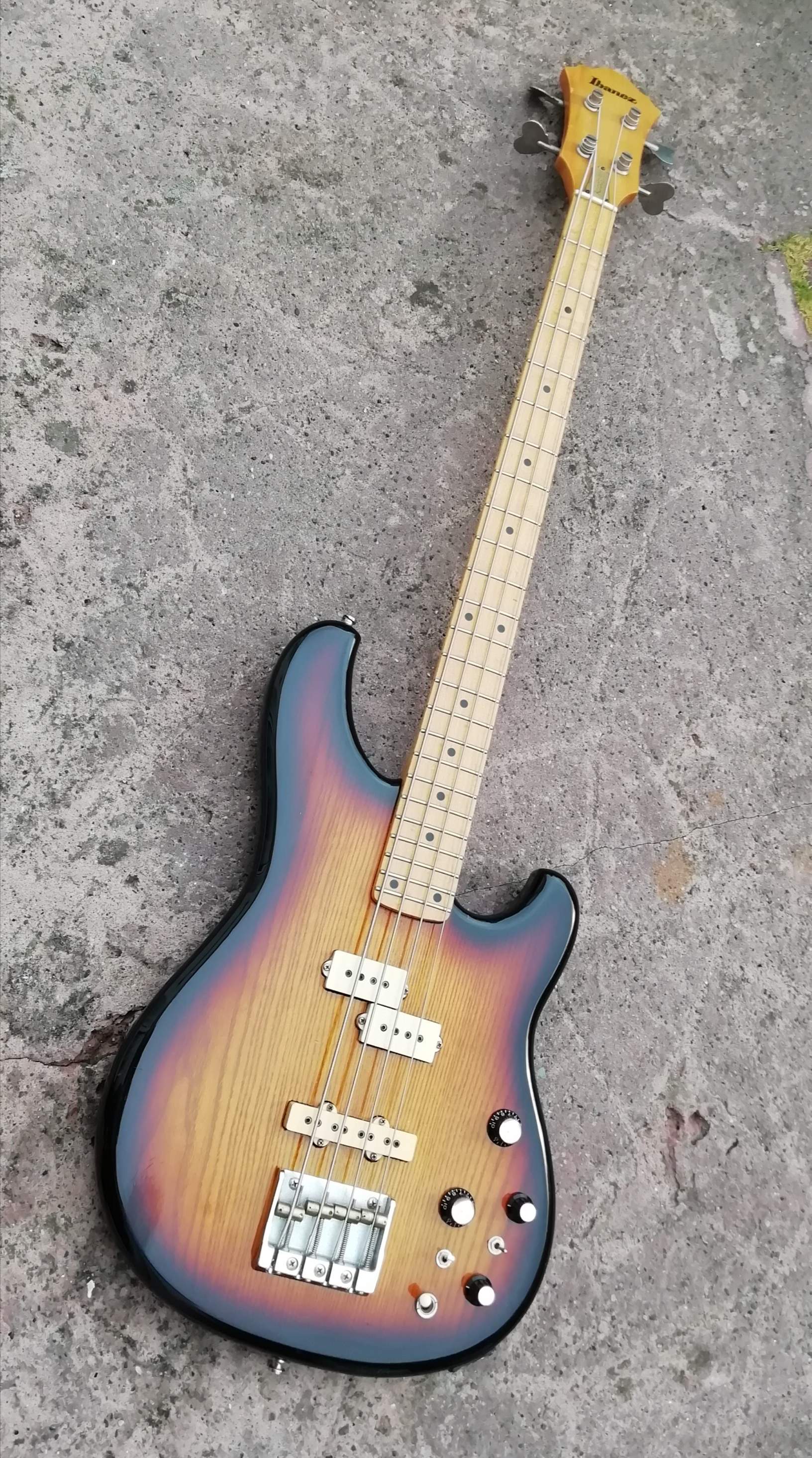

The famously awesome Ibanez P4/J4 pickups were Gotoh copies of the Dimarzio model P and J. Same with Peavey in the 80s: they copied the Dimarzios, but used Schaller to make them. TBH, both the Gotohs and Schallers sound pretty much identical to the Dimarzios. Great pickups!My Ibanez RS924. The Super-P & Super-J pickups in this sound amazing. I believe they are made by DiMarzio. The active circuit is fantastic too. Proper versatile bass. Bit on the heavy side though..
View attachment 4477196
The famously awesome Ibanez P4/J4 pickups were Gotoh copies of the Dimarzio model P and J. Same with Peavey in the 80s: they copied the Dimarzios, but used Schaller to make them. TBH, both the Gotohs and Schallers sound pretty much identical to the Dimarzios. Great pickups!
They did an amazing job on those pickups. So characterful. The J pickup does a great Larry Graham impersonation.. And considering its age (41 years), the active circuit still holds it own.
No question that the engineers and marketers at Ibanez were out to destroy the competition!They did an amazing job on those pickups. So characterful. The J pickup does a great Larry Graham impersonation.. And considering its age (41 years), the active circuit still holds it own.
I’ve had a few PJs over the years. All decent, none keepers.
I just got an SB2. The pickups sound great together- aggressive, growly, punchy, uniquely awesome. It’s giving my #1 P bass a real run for the money, and just might take the crown!
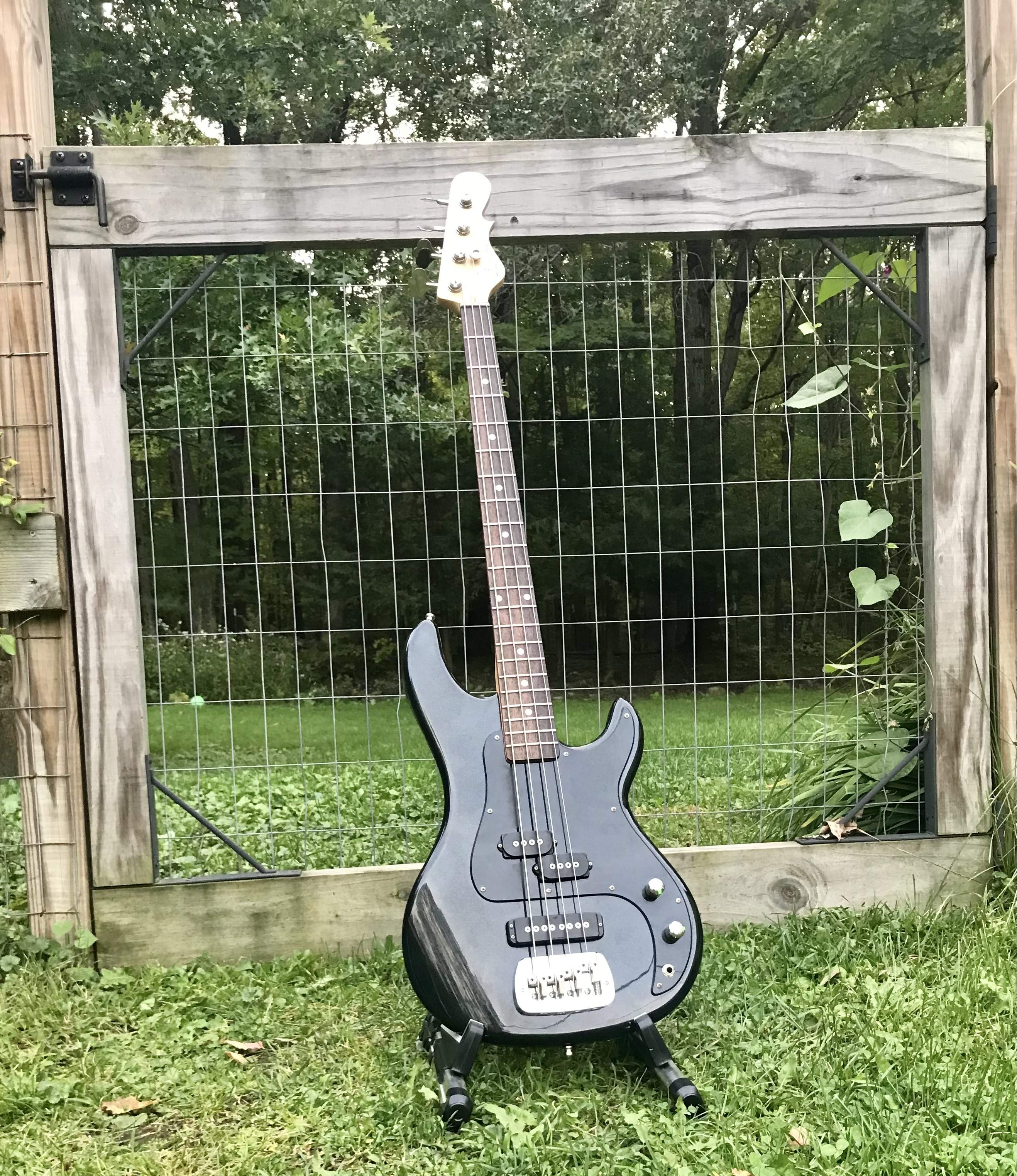
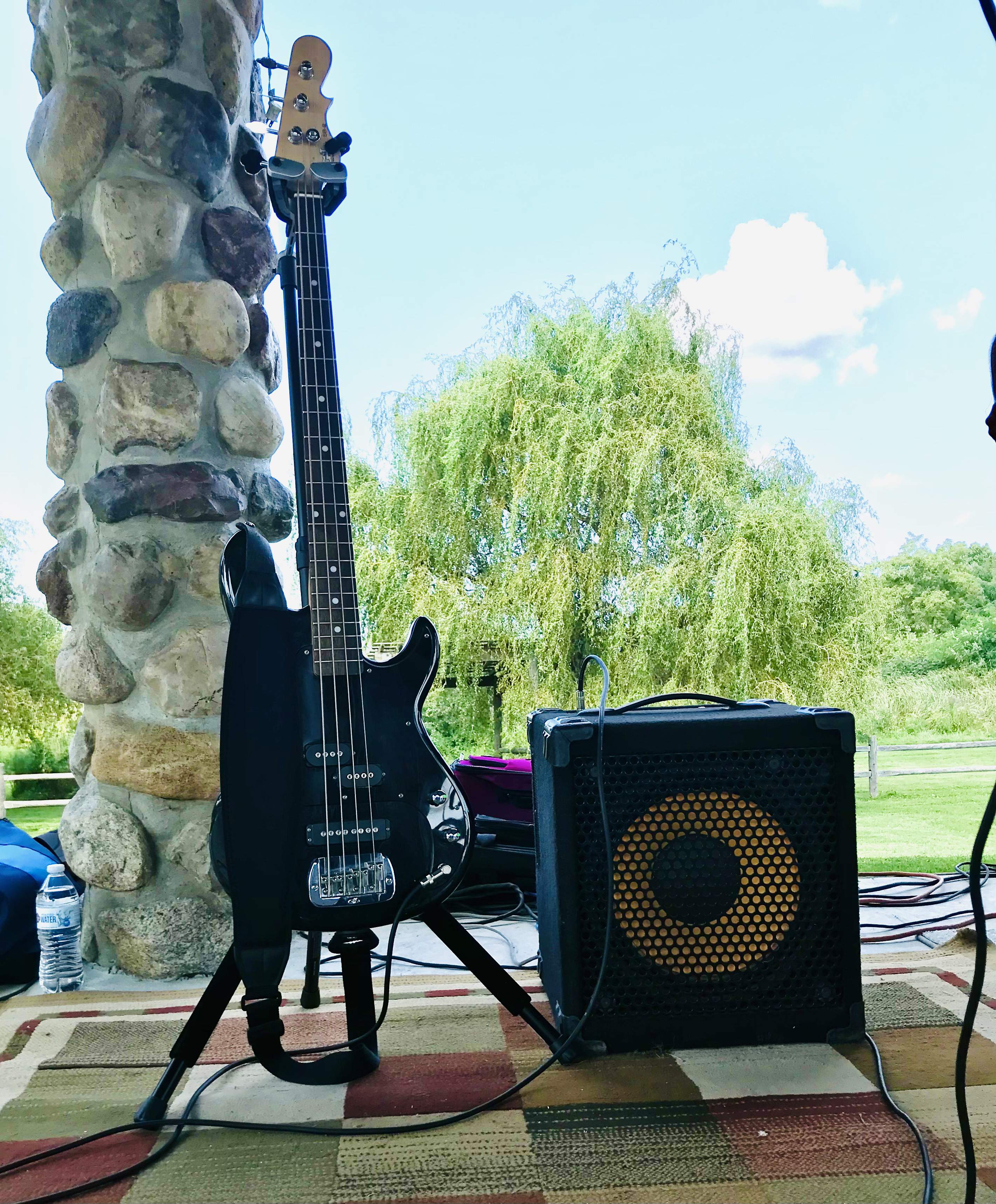
I just got an SB2. The pickups sound great together- aggressive, growly, punchy, uniquely awesome. It’s giving my #1 P bass a real run for the money, and just might take the crown!

The PJ helps the P become everything it should.

I’d guess then that the SB2 helps the SB1 be everything it could be, eh?The PJ helps the P become everything it should.

Here's why I do and don't care if you don't:
View attachment 4356771 View attachment 4356724 View attachment 4356726 View attachment 4356736
Actually, I just wanted an excuse to post some new glamour shots of some of my basses. But since we're here, I've noticed for the past few years that the venerable PJ combination has been slammed for being neither fish nor fowl, and I am here to say that it is, indeed, both fish and fowl.
Let's address the most common complaints:
---It doesn't sound as good when you solo the P pickup vs not having the J on a straight-up P Bass. 100% myth, poppycock, balderdash, and bovine waste products. If a $100 SX PJ with the P soloed can sound the same as a $100 SX P as long as they have the same strings, then there is no reason every bass in the world can't have PJ's that sound the same as a regular P when the P's soloed. I used to have sonic proof of this, but it got lost in a computer crash a few years ago.
---You don't get the best of both worlds with a PJ. OK, so let's assume the sound is so different that you'd rather stick with the J. Fine by me. But the sound is not completely different by any means. I've played plenty of Jazz basses and basses with J pickups in my day and I'm well familiar with what a typical Jazz sounds like. It's close enough for the few times that I go for a J sound that I'm not sweating what little difference there is in a good balanced set of PJ's. Throw pickups in there willy-nilly, sure, it probably won't sound all that great. Just might, though.
And to reverse the situation, a good J with the neck pickup soloed may not sound identical to a good P, but it will do a convincing job as well. I have a preference for a good split P pickup in that position, but I've heard plenty of convincing P sounds out of J's. The first Precisions are single coils, too, and I never heard anyone complain that they don't sound like P's.
---60 cycle hum or whatever frequency it is in your country. Can happen, but only on rare occasions is it an issue you can't do anything about. Many bass and guitar players use single coils with no hum problems all over the world. Granted, I prefer hum-cancelling pickups for both the P and the J, but to say that it can't work because the P's a humbucker and the J is single coil is myth.
So that's why I made PJ's my jam...preferring the split P neck pickup as my main sound, but needing a more scoopy J sound on occasion. And I get it, too, and any complaints that it doesn't sound like a real J are just nitpicking.
Totally agree, 100%. The magical thinking about a P pickup only bass somehow sounding different to a PJ with the Jazz pickup switched off is especially daft.
The PJ helps the P become everything it should.
I’d guess then that the SB2 helps the SB1 be everything it could be, eh?
Totally agree, 100%. The magical thinking about a P pickup only bass somehow sounding different to a PJ with the Jazz pickup switched off is especially daft.
100% agreement on all accounts above!
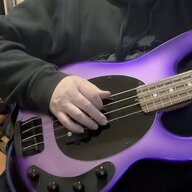
This is my only PJ at the moment. I’m not normally a huge fan of PJ basses. This one plays really well (love the neck!), sounds great and has a very low amount of 60 cycle hum. I may put a hot stack or stacked J in it eventually. However it does what I need and is a joy to play. I still prefer a straight up precision but will always take each bass on its own merits. This one gets gigged.

I have a couple of PJ's. I think they're fantastic. The player who first inspired me to be a bass player was a PJ player.

And here are mine:


And here are mine:

The thing I've found with single pickup instruments is they have a bark instruments with multiple pickups don't. At least at first blush. There is a magnetism thing going on, and you lose something when you add a pickup. I experienced this directly when adding a neck pickup to an electric guitar. The bridge pickup sounded much fuller before adding the neck pickup.
You can get that full sound back. All you need is volume and tone controls for each pickup. It exists somewhere around neck 30%/bridge 70%. Once you've got that figured out, the instrument has a much wider tonal spectrum. Whether you want or need that tonal spectrum is something else.
You can get that full sound back. All you need is volume and tone controls for each pickup. It exists somewhere around neck 30%/bridge 70%. Once you've got that figured out, the instrument has a much wider tonal spectrum. Whether you want or need that tonal spectrum is something else.

so now I officially have a P/J.
somebunny wired the output jack backwards, fubared some simple adjustments, but otherwise not a lot of major issues.
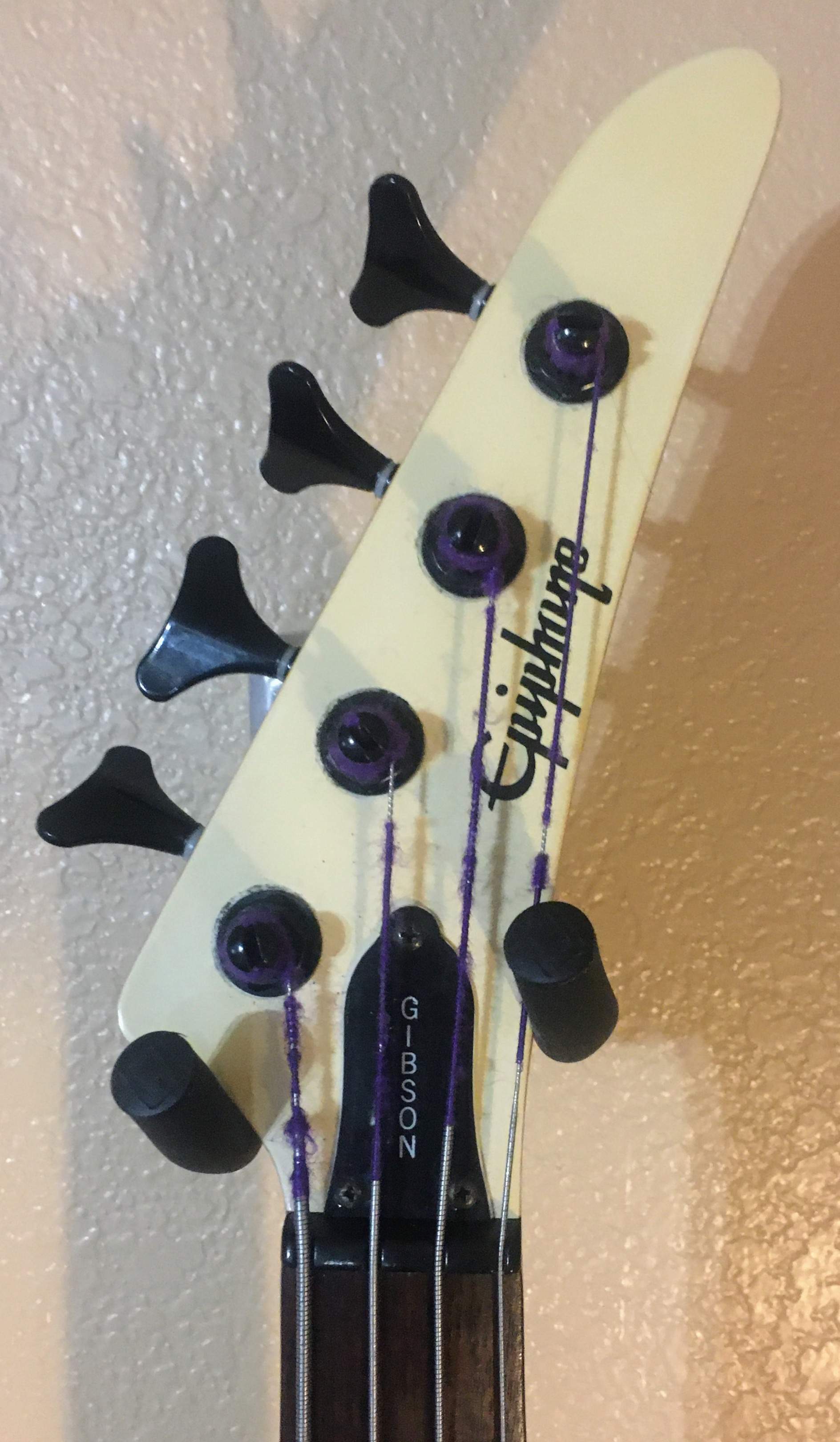


somebunny wired the output jack backwards, fubared some simple adjustments, but otherwise not a lot of major issues.
so now I officially have a P/J.
somebunny wired the output jack backwards, fubared some simple adjustments, but otherwise not a lot of major issues.
View attachment 4486722 View attachment 4486723
View attachment 4486725
OK PJ experts…
stock pickups read 13. something for the P and 8. something for the J. Is that normal for a PJ?
not positive if the pots were stock or not now, (I think they may be) but they were 500k. The jack was for sure a replacement, it’s a switchcraft.
I rewired it tonight with all 250k vol/blend/tone and a .022uf cap.
Damn she sounds beautiful now!
Under $135 invested.

No, I don't like PJs. Not at all! So what? -My likes are mostly one V and one T control for one passive PUP that's either a split coil or a humbucker. That gives good enough, often even great, sound for me... Why complicate my life with extra controls (plus extra weight and wiring, plus uglier, unbalanced looks) on a bass? If I should need more tone variety (which I usually don't), isn't that what the EQ controls on my very good amp are for???
Nice!OK PJ experts…
stock pickups read 13. something for the P and 8. something for the J. Is that normal for a PJ?
not positive if the pots were stock or not now, (I think they may be) but they were 500k. The jack was for sure a replacement, it’s a switchcraft.
I rewired it tonight with all 250k vol/blend/tone and a .022uf cap.
Damn she sounds beautiful now!
Under $135 invested.
Resistance for a typical, vintage-y split P is often in the 10-12.5K zone, a single coil J in the 6.5-8K range.
This is just resistance of the coil, which is not directly tied to output, which includes inductance and magnet strength to the equation. A lower wind coil (lower resistance) with strong magnets can have more output than a hot wound coil with weak magnets.
I find many inexpensive import instruments that have a humbucker to use 500K pots all around. It's probably to keep it simple for production and offset the loading from having multiple pots. 250K is Fender standard and the P and Js. I like to use a 500K tone pot with 250K volumes, it just gives a touch more range to dial in the 'air' to the tone. Once turned back to around 7-8, it sounds just like a 250K tone pot on 10. My P/J has a 500K tone and volume and a 250K M/N blend.
EQ controls on an amp cannot replicate the complex, phase induced comb filtering from having two pickups (let alone two different styles of pickups) interacting on different harmonic zones of the string.No, I don't like PJs. Not at all! So what? -My likes are mostly one V and one T control for one passive PUP that's either a split coil or a humbucker. That gives good enough, often even great, sound for me... Why complicate my life with extra controls (plus extra weight and wiring, plus uglier, unbalanced looks) on a bass? If I should need more tone variety (which I usually don't), isn't that what the EQ controls on my very good amp are for???
Perhaps a very detailed and deep EQ session on a DAW might get a P to sound sort-of like a P/J with both pickups blended.


