• TalkBass has been independent since 1998. Add your voice.
    Create a free account to reply to discussions, view embedded media, and browse with fewer display ads.
    Join freeLog in
    Want zero display ads or expanded classifieds tools? Compare plans.

Double Bass Drone Tone Practice

Just downloaded the chromatic version of this and it does a really nice job. I don't think of drones as a crutch at all, but rather as a tool. One of the things I try to impart to all of my students is that every interval has a "sweet spot" that can be heard but also felt through the hands and wherever else the instrument touches the body. Practicing with drones is a great way to heighten awareness of this sweet spot.

I also disagree with the notion that practicing pizz somehow "isn't practicing", but this debate is ages old and not necessary to have in every thread about intonation. Players obviously benefit from doing both. I use drones to practice pizz often, and find the exercise very useful.
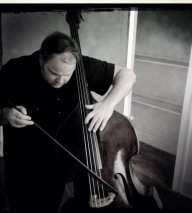
 
I also disagree with the notion that practicing pizz somehow "isn't practicing", but this debate is ages old and not necessary to have in every thread about intonation. Players obviously benefit from doing both.

I think that it is very important to point out that doing it and reccomending it are two separate things, as is doing and reccomending ONLY practicing pizz. Vs. some pizz. practice after heavy arco practice.

While there are a very few top living and dead international pros who have gone it the slower, less accurate and harder way (pizz only), even fewer would reccomend it.

Very few jazz players need to be reminded to practice pizzicato, so there is that on top of that!
 
Let's put the pizz vs. arco practice debate out of mind for this thread - if anyone wants to pursue it further, let's do it in another thread dedicated to that topic (feel free to start a new one or reopen an old one*). For the record, I recommend that people practice what works for them, and have never once recommended that anyone practice 100% pizz, even if that's what they play. I practice about 90% pizz these days, and that's what works for me. Everybody else gon' do what everybody else gon' do. :)


In the meantime, the drone practice with the new app is going beautifully and surprising me with observations that I never thought it would open. I've been practicing entire tunes and cello suite movements against a fixed drone - even when they modulate - and the results are beautiful and downright eerie in the spots where the music is in a different key. To me, it highlights how we subconsciously always keep tonic in our mind's ear when we modulate, and how the "distance" of the modulation creates tension in the big picture. In the micro sense, playing all of those dissonant intervals in tune is a wonderful exercise that I can heartily recommend anyone try whether they use human skin or horse hair to produce the sound.


* (Here's one, Here's another....)
 
I'm with the mob who feels that in-tune pizza requires playing the bass fizz-style.

All I have to do is listen and I hear the difference.

And I think auto correct sucks weenies.


Drone tone practice rocks. For me, it's done every time I hear sympathetic strings ring while I play too. There is such rich joy in playing in tune with others (not to mention playing in time) that it just seems natural to make it happen as much as possible...by hook or by crook...

I totally get the passion for it.
 
Thread cleaned (more contentious posts soft-deleted for now) as I have asked the other DB mods to weigh in, and will abide by the consensus.

Back on topic, another aspect of the drone training that I'm finding interesting is the "kinesthetic" aspect of intonation (more on this topic in this thread in the pedagogy forum) added to the idea of sympathetic vibration in the bass itself. One of the things I like about drone practice is the way it heightens awareness of interval purity in a physical sense. Since intervals are basically vibration ratios (interesting table can be found here), it makes sense that what sounds in tune to the ear should also feel in tune to the fingers and wherever else the body touches the bass. In practice, I've found this to be true when playing with a drone (i.e. - intervals that sound in tune also feel in tune; further, that when rolling the stopping finger, the body can feel when the vibration ratio for each interval is speeding up or slowing down, and that in every case to my perception, the "calmest point" vibration-wise that my finger/body feels when settling an interval is also perceived by my ear as the most "in tune" for that interval.)

Before moving on, I have two questions for the learned:
1) has anybody else experienced/noticed this?
2) given that this is what I notice when playing intervals against a fixed pitch, what tuning "system" would this mean I am hearing/feeling the intervals within?

Last, since basses have resonant frequencies, I can't help but wonder if part of what helps bassists bond to their instrument is related to this kinesthetic sense of intonation, where intonation becomes a "feeling" of vibrational calm as relates to the implied drone of the basic fundamental resonant frequency of the instrument? (not sure if I phrased that last part right, but I hope it wasn't too confusing)
 
I've read from Gary Karr the importance of the pad of the thumb for tactile feedback when playing the bass...that it assists the player in obtaining the richest sounds available.

I believe that, but I can't say I have consciously experienced this for myself. It's just easy to run with the idea so I use it.
 
Guess I've been missing out on the fun.
I've been practicing daily with drones for the past several months (the cello drone CD and the online shruti box). I split my time equally between arco and pizz, and my intonation has improved noticeably. When you're a jazz bassist, you spend a lot of time occupying a space in which subtle intonation discrepancies go unnoticed; it's not like sitting in an orchestra (which I've done as well). So the drones have really helped with that.

Did I miss some nonsense about not practicing pizzicato? 98% of what I play is pizzicato; how would I develop a tone if I didn't practice it? How can I produce a robust sound for four hours of unamplified pizz over a drum set and grand piano if I don't prepare myself for it? How can you use something you don't have?
 
  • Like
Reactions: Sheffey Gregory
Jeremy, thanks for these comments, and BTW, how the hell do you play unamplified over a drum set? WHO IS YOUR DRUMMER?!

And as always, Chris, your contributions enlighten. I agree about the kinesthetic aspect. I don't play a fully acoustic bass, but even at the volume I can manage on my Azola acoustic baby bass, I love to play without amplification, simply to feel the strings respond without any mediation between the bass and my hands and ears.
 
Chris Fitzgerald said:
Thread cleaned (more contentious posts soft-deleted for now) as I have asked the other DB mods to weigh in, and will abide by the consensus.

Back on topic, another aspect of the drone training that I'm finding interesting is the "kinesthetic" aspect of intonation (more on this topic in this thread in the pedagogy forum) added to the idea of sympathetic vibration in the bass itself. One of the things I like about drone practice is the way it heightens awareness of interval purity in a physical sense. Since intervals are basically vibration ratios (interesting table can be found here), it makes sense that what sounds in tune to the ear should also feel in tune to the fingers and wherever else the body touches the bass. In practice, I've found this to be true when playing with a drone (i.e. - intervals that sound in tune also feel in tune; further, that when rolling the stopping finger, the body can feel when the vibration ratio for each interval is speeding up or slowing down, and that in every case to my perception, the "calmest point" vibration-wise that my finger/body feels when settling an interval is also perceived by my ear as the most "in tune" for that interval.)

Before moving on, I have two questions for the learned:
1) has anybody else experienced/noticed this?
2) given that this is what I notice when playing intervals against a fixed pitch, what tuning "system" would this mean I am hearing/feeling the intervals within?

Last, since basses have resonant frequencies, I can't help but wonder if part of what helps bassist bond to their instrument is related to this kinesthetic sense of intonation, where intonation becomes a "feeling" of vibrational calm as relates to the implied drone of the basic fundamental resonant frequency of the instrument? (not sure if I phrased that last part right, but I hope it wasn't too confusing)

Hey Chris, have you ever checked out W.A. Mathieu's book "Harmonic Experience"? It's all about singing over a drone and feeling the pitches in your body. Definitely relates to what you are experiencing when playing.
 
Hey Chris, have you ever checked out W.A. Mathieu's book "Harmonic Experience"? It's all about singing over a drone and feeling the pitches in your body. Definitely relates to what you are experiencing when playing.

I have not, but after reading your post, I searched for the title and found that our music library has it. I will be checking it out at the earliest opportunity. Thanks!
 
Jeremy, thanks for these comments, and BTW, how the hell do you play unamplified over a drum set? WHO IS YOUR DRUMMER?!

I suppose it's less about the drummer and more about the style of music. In much of straight-ahead jazz, the texture is very well suited to an unamplified bass being heard in the context of a band. In anything calling on post-Elvin Jones w/Coltrane drumming, it gets impossible, especially when bass set-ups geared towards fleetness are concerned. But to steal a link from another thread, here's some unamplified bass in a pretty vigorous (if acoustic) straight-ahead jazz environment.
 
Before moving on, I have two questions for the learned:
1) has anybody else experienced/noticed this?

I am not learned, but I have noticed this. Until you pointed it out I hadn't connected the dots to the specific mechanisms at play. I just noticed when something "feels" right or not.

Years ago I started using earplugs. The change in aural perception created quite a challenge at the beginning but soon I could feel in my torso if my vocal notes were in tune or not.
 
Guess I've been missing out on the fun.

(...)

Did I miss some nonsense about not practicing pizzicato?

Me too. That's what you get for being busy with work and life all day long...

It's not always easy keeping the mod hat separate from the general TB hat. Chris does a very commendable job in that department -- far better than I. His record is long and extensive and un-marred by bad behaviour. Again, far better than I. With a record like that (and I see that some participants in this thread did resort to stating background and pedigree when justifying their point of view), I can't blame him one bit for not wanting to accept the accusation he's crossed the mod/participant line. In reading the thread now, I don't see he did, not at all.

On the participant side of things, any person who can read who has been around the DB side of TB for any length of time will know Chris Fitzgerald is a respectful, long-time dissenter to the majority opinion that only arco practice is really useful and pizz practice is not. His opinions have always been presented rationally and I doubt he's ever offended a soul by expressing them. His track record as a player and teacher is evident for anyone who cares to look and hear. So he took a shot on the participant side of things, too.

Essentially what I read here is one more episode among innumerable Internet episodes where the use of less-than-diplomatic langauage, where there is a want of delicacy and restraint, generates trouble and discord. This is not an appeal to politically-correct language, avoiding controversial topics, being wishy-washy and touchy-feely, etc. It's the basic idea that with free speech comes the responsibility of dealing with the consequences of your speech. You tick somebody off, you deal with the consequences. Doesn't matter who you are or where you come from. You do it repeatedly, you're dealing with the consequences repeatedly.

Purely on the basis of bass content, I don't think this thread needed to be adjusted at all. On the basis of cleaning up an unsightly mess: it was a good call. A civilized call. Too bad we had to go there at all.

BTW, I don't think we can tolerate an open discussion on the particulars of moderation in this thread. In the spirit of free speech, perhaps another thread in another forum might be appropriate on the general topic of moderator/participant line-crossing. But a re-hashing here of "he said she said" isn't going to happen. Jeremy and I are watching much more closely today.
 
IMO, pizz and arco are two different animals. They seem to resonate slightly differently, granted the resonation is harder to hear with pizz. Arco, it smacks you in the face if you're off.

Chris, I tried doing some of the body vibrations (even while standing) but haven't noticed any improvements. *shrug* However, I think I'm going to try to focus more on hearing and playing harmonics. You don't neccessarily need to feel it, but if you have a resonant bass, the sympathetic vibrations will ring out stronger - if you can't hear the diffs.

At the same time, I think music goes by way too fast to a look-and-see type of approach if you're on or off. I'm tempted to take up something like solfege or similar to try to train the mind to project the right intonation. If I think in tune, my playing will be in tune - or so goes my theory.
 
What I find most interesting about drone practice lately is if I set a drone and then place a line in different keys against the same drone my ears start to hear the line differently. I've been trying to 'stretch' my harmonic concept a bit and this is an interesting way to hear lines in different ways.
 
What I find most interesting about drone practice lately is if I set a drone and then place a line in different keys against the same drone my ears start to hear the line differently. I've been trying to 'stretch' my harmonic concept a bit and this is an interesting way to hear lines in different ways.

This is great--I accidentally did a similar thing: I had the drones going pretty loud upstairs and a Kurt Rosenwinkel album playing downstairs. It made the music sound very different; lines were different, fast tempos sounded relaxed in a strange way, slow tunes felt rubato. It was very ear-opening.
 
Hey Chris, have you ever checked out W.A. Mathieu's book "Harmonic Experience"? It's all about singing over a drone and feeling the pitches in your body. Definitely relates to what you are experiencing when playing.

I checked this out yesterday along with Mathieu's "The Listening Book". This whole concept of "physical hearing" has been creeping up on my for some time now, and it's good to find Mathieu's books at this time. I have the feeling that I'll have a new obsession to explore for quite some time now, and it's good to have an indirect tour guide of sorts. His writing voice seems to relate to me in terms of music the way Alan Watts' voice does to me in terms of philosophy in that it's about cutting the academic bull**** out of the equation and getting on with the subject in plain english. Thanks again for the heads up!
 

Latest posts