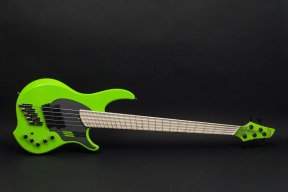
BUT, this is my serious question to Sheldon -
If you do believe that your dual density concept works, why not make a dual density neck instead of the body to make a bigger overall difference ? Or were you trying to create a difference at a very subtle level by implementing it at the body?
That's a valid question. The honest answer is it never occurred to me. In our climate neck stability is a real issue so I've been really conservative in our neck wood choices. This of course contradicts the fact that we have done a couple of dual density fingerboards. We monitored a test sample for stability for over a year before trying it on a neck. I predicted that the sample would twist all over the place. It stayed dead straight.
I think people are getting hung up on what defines a huge difference and what's a subtle difference. To an average listener I think the differences an onboard eq can make if you sweep the controls would be considered a "huge" difference whereas the differences in mechanical manipulation through woods or tone chambers would be hard for the average listener to discern. If anything this discussion proves that out even for bass enthusiasts.
So just to be clear: Within the confines of what you can achieve via mechanical means, the Sklar body woods make IMO a huge difference. Not as big a difference as between a 7 lb Elrick and an 11 lb Warwick but way more than the difference between lets say a maple and rosewood fingerboard.
In the end it's all BS if it doesn't inspire the player. I don't know of any test that can measure that.


 wonder what they feel about their accidental multiple density guitars