• TalkBass has been independent since 1998. Add your voice.
    Create a free account to reply to discussions, view embedded media, and browse with fewer display ads.
    Join freeLog in
    Want zero display ads or expanded classifieds tools? Compare plans.

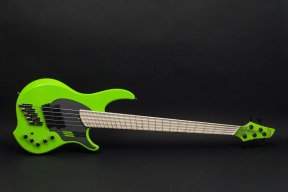
Dual density body ala Dingwall

Wow. A scientific study comes up that disagrees with the Flat Earthers and they throw it out based upon its flaws. I'm shocked. Shocked.

Yeah, its flawed in a lay sense. But is it measurable and repeatable? Pretty sure it is. You can damn the thing till the cows come home, but the proper way of disproving the study is to repeat the study and come up with different results and demonstrate how the flaws of the study lead to those results. If you don't come up with different results, I guess the things you thought were flaws were just unnecessary variables.

Again, that's how science works. Guitar building is not magic. It's science, and sometimes its art.
 
I've been reading up on some textbooks on the seasoning and material properties of wood. Turns out that hardwoods vary in density by up to 50 percent in the same species. If wood has has an effect on tone, you can be sure there is variation in intruments made from the same species of wood (and in fact luthiers, particularly in acoustic instruments where tonal quality is more dependent on the material properties of the wood, determining dynamic range and thus, regularly fit different woods together by tap tone alone, and also determine the woods qualities based on same). As for proof of woods affect on tone, there is, as far as i know, not made any tests, at least not published ones. However the amount of purely subjective evidence is staggering. I think most musicians out there can tell distinct differences between a mahogany and an alderbodied instrument. Van Halen mounts his pickups directly into wood (theoretically increasing vibration transfer, and thus increasing the microphonic effect of the pickup coil). Also doesnt it seem suggestive that the most renowned years of guitar production are the years in which pickups were not feedback damped, again increasing the microphonic effect.
i'm intent on making a scientific test documenting,this, and providing resources for better predicting the frequency response of an instrument made from pieces of lumber of which the material properties are known.
the amount of subjective evidence is however quite enough to give scientific credibility to wood affecting tone in electric instruments, so the research will be primed at answering in what ways it does it, and how much, rather than if.
but i'll be sure to publish it so we dont get any more of these discussions at talkbass xD (or well... We still will, that's the way of life)

:D

Subjective evidence lends no scientific credibility. A million people saying something is so for a million years does not make it so. Humans have notoriously imperfect perception capabilities. When did we discover the earth was round? And how long did it take for the guitar buying public to accept that fact? I'll give you a hint. About 10000 years.

Instruments built during the crap era of electronics are prized for their collectibility not their quality. They are collectible for the same reason coins or comic books or vintage cars are collectible.

EVH is notorious for mistruths, especially about his guitar building. That having been said, I'm pretty sure the instruments he's been involved in making are some of the best production electric guitars ever made. But have you noticed his instruments tend to have basswood bodies and whatever makes a pretty top? If tonewood mattered I'm certain EVH would have that and only that.

That having been said I would love to see your scientific study.
 
Also, the chart in the report are nearly useless because the x-axis is not plotted on a log scale. So, the region where there seems to be a difference between the traces is actually only above 5000kHz, which instead of taking up 1/5 of the width at the top end of the chart as it should be, is taking up nearly 2/3 of the graph. Plus it is happening at a level of -80 to -90 dB, and so is both greatly if not completely overshadowed by the lower order partials, and it is in the region of the background noise of the devices used.

(Edit) in fact, now that I think more about it:if we consider the energy in those upper regions to be primarily noise, and if we were to establish that the electrical noise capacity were identical for the two trials, then that noise would serve as a calibration standard--and if we then adjusted the levels of the two curves so that the noise matched, we would the. See a roughly 10dB difference in the energy of the main tone bands, proving that the plucking energy, or the pickup and action positions and dimensions had changed between trials.
 
Xaxxat, I feel a little bad that you've asked about the A string and glue line over and over. I can't really tell if you're truly interested or just poking fun but I'll assume the best.

With regard to a dual density or dual species body the A sounds and responds unremarkably. It just fits. You'd also asked about the b being affected more than the e. I'd have to say yes because the tone progresses evenly across the strings, not abruptly at the glue line.

If your question is more along the lines of how does the glue line affect the string above it in general. Then I'd say as long as the glue is good quality and it's a nice, tight joint, the effect on the string would be too small to be meaningful.

Sheldon, this is a serious question (as i have contemplated the virtues of Bi-density bodies in the past, although that was utilizing a neck-through design, and chambering in the Treble side to increase resonance and vibrational feedback, and heavy dense wood on the bass side to increase the high order harmonics on the bass strings--- IN THEORY)

I had considered the impact of increasing the surface contact and rigidity of the plank joinery, by using a tongue and groove scenario. Rather than a simple glue joint- as this would also "spread" the blending area between the two types of wood. This would diminish the "transitional" region between the woods by having a mini laminate zone - and have the added benefit of spreading the stress on the joint, and conceivably be a "press fit" joinery with little or no glue, simply enough of a film to create a simple surface tension adhesion effect...

what's your take?
 
The study you posted was cool but way too flawed to be any sort of evidence. The fact that I can pick up 10 different jazz basses all constructed of the same material, using the same strings and electronics yet sound different suggest the difference has to come from somewhere. Pickups, strings, and hardware are all pretty consistent within a given line so the only variable is the wood. I certainly believe that not every piece of alder sounds exactly the same but I believe there is a general tone to it that is pretty predictable with the tone being altered primarily from the weight differences. The weight and density of the same species is likely what causes two of the same species to sound different. When I play an alder body jazz bass that is heavy I can pretty much expect a bass with deeper lows and less mids than a lighter version.

Guitar building, I agree, is not magic but it's not exactly science either, rather it's more art when comes to a skilled luthier selecting wood. The art is finding a piece of wood, listening to the tap tone, consider the weight and then build the instrument and accurately predicting the tonal outcome. A builder with years of experience, who's built hundreds of instruments, with a highly developed ear and skill, has taken the art of building and I suppose can turn it into a science.
Wow. A scientific study comes up that disagrees with the Flat Earthers and they throw it out based upon its flaws. I'm shocked. Shocked.

Yeah, its flawed in a lay sense. But is it measurable and repeatable? Pretty sure it is. You can damn the thing till the cows come home, but the proper way of disproving the study is to repeat the study and come up with different results and demonstrate how the flaws of the study lead to those results. If you don't come up with different results, I guess the things you thought were flaws were just unnecessary variables.

Again, that's how science works. Guitar building is not magic. It's science, and sometimes its art.
 
The study you posted was cool but way too flawed to be any sort of evidence. The fact that I can pick up 10 different jazz basses all constructed of the same material, using the same strings and electronics yet sound different suggest the difference has to come from somewhere. Pickups, strings, and hardware are all pretty consistent within a given line so the only variable is the wood. I certainly believe that not every piece of alder sounds exactly the same but I believe there is a general tone to it that is pretty predictable with the tone being altered primarily from the weight differences. The weight and density of the same species is likely what causes two of the same species to sound different. When I play an alder body jazz bass that is heavy I can pretty much expect a bass with deeper lows and less mids than a lighter version.

Guitar building, I agree, is not magic but it's not exactly science either, rather it's more art when comes to a skilled luthier selecting wood. The art is finding a piece of wood, listening to the tap tone, consider the weight and then build the instrument and accurately predicting the tonal outcome. A builder with years of experience, who's built hundreds of instruments, with a highly developed ear and skill, has taken the art of building and I suppose can turn it into a science.

You realize that a pot can be 10% off of its value and still be in spec right. I have seven (time to reorder) high quality 500k pots. I measured.the resistance on all of them and they ranged from 436k to 527k. This can make a very noticible difference between two basses with the same electronics.
 
Sheldon, this is a serious question (as i have contemplated the virtues of Bi-density bodies in the past, although that was utilizing a neck-through design, and chambering in the Treble side to increase resonance and vibrational feedback, and heavy dense wood on the bass side to increase the high order harmonics on the bass strings--- IN THEORY)

I had considered the impact of increasing the surface contact and rigidity of the plank joinery, by using a tongue and groove scenario. Rather than a simple glue joint- as this would also "spread" the blending area between the two types of wood. This would diminish the "transitional" region between the woods by having a mini laminate zone - and have the added benefit of spreading the stress on the joint, and conceivably be a "press fit" joinery with little or no glue, simply enough of a film to create a simple surface tension adhesion effect...

what's your take?

Hi Mephisto, I've only built a couple of neck throughs so my advice isn't worth much. My expectations are that the core block would dominate the tone and response. I'm not sure how much of an affect the wings would have.

I've looked into various joints in the past. Settled on a wavy joint for our top end model mainly because the core is thinner than normal and you can't trust top and back woods like spalt or buckeye to carry any load should the joint become stressed.

I see what you're saying about spreading the tone change. IME the tap tone on our bodies changes smoothly across the width with a simple butt joint. I wouldn't go to the trouble of a T&G joint for tone's sake but it might be worth pursuing for a unique look. I'd be interested to see what you come up with.
 
Hi Mephisto, I've only built a couple of neck throughs so my advice isn't worth much. My expectations are that the core block would dominate the tone and response. I'm not sure how much of an affect the wings would have.

I've looked into various joints in the past. Settled on a wavy joint for our top end model mainly because the core is thinner than normal and you can't trust top and back woods like spalt or buckeye to carry any load should the joint become stressed.

I see what you're saying about spreading the tone change. IME the tap tone on our bodies changes smoothly across the width with a simple butt joint. I wouldn't go to the trouble of a T&G joint for tone's sake but it might be worth pursuing for a unique look. I'd be interested to see what you come up with.

With the two different body woods have you had any problems with the glue lines becoming visable through the finish when the basses suffer a climate/humidity change? It seems they could possibly expand/contract at different rates. Did you take measures to counteract this? I have had this problem before on a non guitar related project.
 
Hi Mephisto, I've only built a couple of neck throughs so my advice isn't worth much. My expectations are that the core block would dominate the tone and response. I'm not sure how much of an affect the wings would have.

I've looked into various joints in the past. Settled on a wavy joint for our top end model mainly because the core is thinner than normal and you can't trust top and back woods like spalt or buckeye to carry any load should the joint become stressed.

I see what you're saying about spreading the tone change. IME the tap tone on our bodies changes smoothly across the width with a simple butt joint. I wouldn't go to the trouble of a T&G joint for tone's sake but it might be worth pursuing for a unique look. I'd be interested to see what you come up with.

To clarify:
I meant T&G for the joinery of the 2 body planks, running lengthwise of the contact surface. ( not perpendicular) so the only visibility of the joint would be at the butt ends of the body seen edge wise.
92145-04-200.jpg


Strength and the thought that less "glue" involved in the bonding surface, and would make the 2 wings/halves a more co-cohesively BLENDED unit (more as-one) so to speak.
I can see (although it would be minimal) that there would be a contribution to the overall tonality, as the contact surface would be increased and the bond between the 2 materials would be more mechanical, rather than depending entirely on a bonding agent's surface tension and shearing properties. How much of the subtleties would be lost (or gained) by modifying the traditional way of plank joinery in guitar building. I will explore it with my inaugural build ( and will share the results)_

I have FWIW decided against the neck-through design for various reasons. Including materials selection and "single minded" tonality being constrained by (in part) the mechanics of the "stick" build. VERSUS tonal properties of neck woods combined with body woods.
 
With the two different body woods have you had any problems with the glue lines becoming visable through the finish when the basses suffer a climate/humidity change? It seems they could possibly expand/contract at different rates. Did you take measures to counteract this? I have had this problem before on a non guitar related project.

That will happen even with two blanks cut from the same board. The tighter the joint the thinner the glueline, the less it can swell. No matter what you do though, you'll still see the joint telegraph through the finish if the humidity changes enough.
 
That will happen even with two blanks cut from the same board. The tighter the joint the thinner the glueline, the less it can swell. No matter what you do though, you'll still see the joint telegraph through the finish if the humidity changes enough.

Right, but its not that bad when each part of the blank comes.from the same board.
 
The day I heard and played one of those luthite body basses, I realised that the body being made of wood does make a big enough difference in a good way. Although the difference between two different body woods would be difficult to tell, but it should make a measurable difference, if not audible to all.

Being on the topic of dual density basses, I'm sure Sheldon knows what he's talking about as a consistent manufacturing line will make consistent instruments, where each instrument in the same model will sound almost identical. Changing even one constituent will make a difference that can be felt and heard. Even if the difference is towards the better to a microscopic degree, it would make sense to implement it. Also he mentions that his factory has built several of ash, swamp ash and ash/alder basses, that itself is the good base for testing each one out, which I'm sure he would have done. BUT, this is my serious question to Sheldon -

If you do believe that your dual density concept works, why not make a dual density neck instead of the body to make a bigger overall difference ? Or were you trying to create a difference at a very subtle level by implementing it at the body?

Im sure Mr. Sklar may have also played a role in deciding upon the details of the instrument, so at the end of the day, Dingwall also has to give a ear to that and respect the artist
 
Wow. A scientific study comes up that disagrees with the Flat Earthers and they throw it out based upon its flaws. I'm shocked. Shocked.

Yeah, its flawed in a lay sense. But is it measurable and repeatable? Pretty sure it is. You can damn the thing till the cows come home, but the proper way of disproving the study is to repeat the study and come up with different results and demonstrate how the flaws of the study lead to those results. If you don't come up with different results, I guess the things you thought were flaws were just unnecessary variables.

Again, that's how science works. Guitar building is not magic. It's science, and sometimes its art.


Well I read the article, and if it does prove anything it is that the wood did matter. Their conclusions are clearly wrong. Those kind of differences in (admittedly flawed) freq charts would make an enourmous sonic difference if they would describe a cab or amp. I doubt these guys knew what they were doing. The microphone setup makes no sense too (why point the mic at the center of the strings if you want to measure the resonance of the body?) Nevertheless the measurements for the pickup show a similar difference for all strings of about 6 to 10 db over a large part of the spectrum. I wonder how acurate the mounting of the pickup was though.

I have to say this article is no absolute proof for either side of the argument but is mostly not supporting the anti-tone wood argument.

And for the record: I'm a tonewood agnostic (and agnostic is not the same as atheïst).