It's because it's a custom build and the cost of £3000 that I am thinking so hard about it. There isn't one which has everything, each offers positives. In the end I'll be delighted either way that's for sure. I need a collection yours I reckon. Bit of everything.Decisions, decisions. I wouldn't stress about It too much. Obviously you like both the maple and ebony.. If I was going custom build, Im going with what I know I like everything about. No room for taking chances.

Enjoy the benefits of a premium membership!
Upgrade Account
-
TalkBass has been independent since 1998. Add your voice.
Create a free account to reply to discussions, view embedded media, and browse with fewer display ads.
Join free Log in
Want zero display ads or expanded classifieds tools? Compare plans.
You are using an out of date browser. It may not display this or other websites correctly.
You should upgrade or use an alternative browser.
You should upgrade or use an alternative browser.
EBMM StingRay Special Club
- Thread starter MultiScaleMale
- Start date
More options
Who Replied?

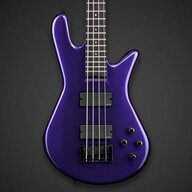
Just found this comparison of the fretboards. For the first riff I love the open E and the notes on A string giving that growl on the maple board. However on the slap riff I'm liking the tightness/compression of the ebony which is what someone suggested yesterday. Tough choice right now. My active Flea bass being maple and super aggressive (sounds like it has a 1000v active circuit in it) is steering me towards ebony so I then have a maple, ebony and rosewood bass but then again the first riff in the video with the maple is. Think Ebony looks better with the lavender sparkle as well.
Cool video. But honestly, I just don’t detect much difference at all between those three examples (they all sound great)…I currently own 4 basses, and they each have a different fingerboard. My stock Stingray Special has the maple (kind of a light roasted); my new custom Stingray Special has ebony; my Fender JB has rosewood; and my G&L JB has maple (a pale maple). All that to say - string choice is where the tonal differences occur (to my ears). So my recommendation (FWIW) to your choice dilemma: pick the one that looks best to you, that is most aesthetically pleasing. Tone-wise, you can find what you’re after with string choice with all three.
Thanks for your advice! Maybe this is very noob of me but I've never really explored strings properly. Just tend to get EB Super Slinky's by default.Cool video. But honestly, I just don’t detect much difference at all between those three examples (they all sound great)…I currently own 4 basses, and they each have a different fingerboard. My stock Stingray Special has the maple (kind of a light roasted); my new custom Stingray Special has ebony; my Fender JB has rosewood; and my G&L JB has maple (a pale maple). All that to say - string choice is where the tonal differences occur (to my ears). So my recommendation (FWIW) to your choice dilemma: pick the one that looks best to you, that is most aesthetically pleasing. Tone-wise, you can find what you’re after with string choice with all three.
One can easily fall down the rabbit hole of the string adventure!Thanks for your advice! Maybe this is very noob of me but I've never really explored strings properly. Just tend to get EB Super Slinky's by default.

It's because it's a custom build and the cost of £3000 that I am thinking so hard about it. There isn't one which has everything, each offers positives. In the end I'll be delighted either way that's for sure. I need a collection yours I reckon. Bit of everything.
Have you gone in to any instrument shops, and spent some time playing StingRay Specials with both maple, and rosewood fingerboards?
I'd be less concerned about tonal variations, than playability factors, such as navigation, and feel.
Admittedly a big part of the reason I prefer maple, is dependent on nicely figured maple, but from a practical standpoint a maple board with black dots is much easier to read in poor lighting conditions, than a rosewood / ebony board with white dots (particularly top lighting, especially at certain flicker frequencies, where the oscillating strings create a silvery blur, obscuring the white dots, which appear silvery too).
Of course we're talking nanoseconds of difference in terms of cognitive delay, but it can enough to cause you to actually have to think, and derail things.
The thing is, the EBMM roasted maple necks actually have a lower contrast ratio between the darker board, and the black dots, than traditional maple - so you may find that you find it easier to see white dots against a dark board.
Like you say, it's a lot of money, so you want to make the right decision : I'm just bringing up that it not all about the sound, the effects of which are negligible in a full mix - whereas your playing experience is very much influenced by the feel of the instrument, and by how easy (or hard) it is to navigate; which has a direct bearing on how good (or bad) it sounds.
Side dots are all that matter in gig situations, as the player isn't looking at the fretboard straight on. Wouldn't matter if there are no dots at all.
Side dots should be highly visible. That's what I would focus on personally.
Side dots should be highly visible. That's what I would focus on personally.
Side dots are all that matter in gig situations, as the player isn't looking at the fretboard straight on. Wouldn't matter if there are no dots at all.
Side dots should be highly visible. That's what I would focus on personally.
And unless the instrument has a white binding with black dots, or is maple with black dots, the same problem occurs with top lighting.
As I said, EBMM is a little different in this regard, because the dots are HUGE (like comically huge on the front of the fingerboard, when you swap between a Fender, and an EBMM), and the side dots on rosewood boards are completely embedded in the rosewood, as opposed to straddling the join between the rosewood board, and maple neck - all of which makes EBMM necks easier to navigate in bad lighting conditions, but maple is certainly more navigable than rosewood / ebony under such conditions.
Last edited:
There is a company called ChromaLabel that makes dots you can put on the side of your instrument that are highly visible even at night. If I was a gigging musician I would for sure use those. I learned about them about a year ago:
There is a company called ChromaLabel that makes dots you can put on the side of your instrument that are highly visible even at night. If I was a gigging musician I would for sure use those. I learned about them about a year ago:
Yeah, there are also glow in the dark options, from luminescent stickers, to fibre optic electronic packages, or replacement inlays as a middle ground.
Those have proven to be lifesavers for a lot of people (luminlay are very popular round here), but personally I don't want the feel of stickers, nor the inevitable gunk management over time - and besides not really liking the look of luminescent inlays, despite the practical benefits, there's no way I would want to modify my basses with replacement inlays, let alone fit an electronic light system - but at least these options are available for those who want them.
I'd sooner just get the instrument that works best for me, out of the box.
I concede that stickers aren’t the most elegant option but they will solve a problem in a pinch.

No Tiffany Blue?!You matched your wardrobe very well to that bass. Love that gold sparkling
on stage !!! That strap is icing on the cake
!!!
Black white and gold were my wedding colors !!


Nah …. No purple either.No Tiffany Blue?!

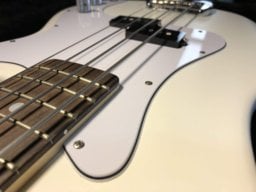
Stingray special owners who own a particularly light version (around 8lbs even), who does it balance? I’m considering a light one but really find neck dive both annoying and uncomfortable on the shoulder. My experience with Fender Shaped Objects is that 8lbs is about the lightest I can go without neck dive issues. I’ve even seen the new Stingray Specials in the low 7lbs range. Gotta believe neck dive issues an issue there. Anyone with experience with these lighter ones?
Last edited:

My 7.6 lb Stingray Special was perfectly balanced. It surprised me!Stingray special owners who own a particularly light version (around 8lbs even), who does it balance? I’m considering a light one but really find neck dive both annoying and uncomfortable on the shoulder. My experience with Fender Shaped Objects is that 8lbs is about the lightest I can go without neck dive issues. I’ve even seen the new Stingray Specials in the low 7lbs range. Gotta believe neck dive issues an issue there. Anyone with experience with these lighter ones?
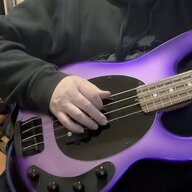
My Special is 7.9lbs and balances perfectly for me. Much better than my Fenders.Stingray special owners who own a particularly light version (around 8lbs even), who does it balance? I’m considering a light one but really find neck dive both annoying and uncomfortable on the shoulder. My experience with Fender Shaped Objects is that 8lbs is about the lightest I can go without neck dive issues. I’ve even seen the new Stingray Specials in the low 7lbs range. Gotta believe neck dive issues an issue there. Anyone with experience with these lighter ones?

I don't think there's such a thing as a Stingray Special with a balance problem. I have three and no balance issues.

Brandon Shea
Commercial User
Mine is right around 8lbs and balances perfectly on a basic strap. It’s super comfortable. The lightweight tuners seem to help a lot.

7lb9oz or 3.45kg (maybe less) and balances perfectly.Stingray special owners who own a particularly light version (around 8lbs even), who does it balance? I’m considering a light one but really find neck dive both annoying and uncomfortable on the shoulder. My experience with Fender Shaped Objects is that 8lbs is about the lightest I can go without neck dive issues. I’ve even seen the new Stingray Specials in the low 7lbs range. Gotta believe neck dive issues an issue there. Anyone with experience with these lighter ones?
It does have a higher deadspot... Where my fenders are all around C/C# this is around D/EB.
I absolutely love it.
Glad to hear everyone has ones that balance great. I’m considering one that is 7lbs 3oz, lighter than anyone has yet posted in response. I had a G&L LB-100 that was 7.2 lbs once and I had to use a 1/2 lbs weight on the strap near the bridge to get it to balance well. This is part of why I’m asking. Would love to hear if anyone here has one under 7.5lbs.


