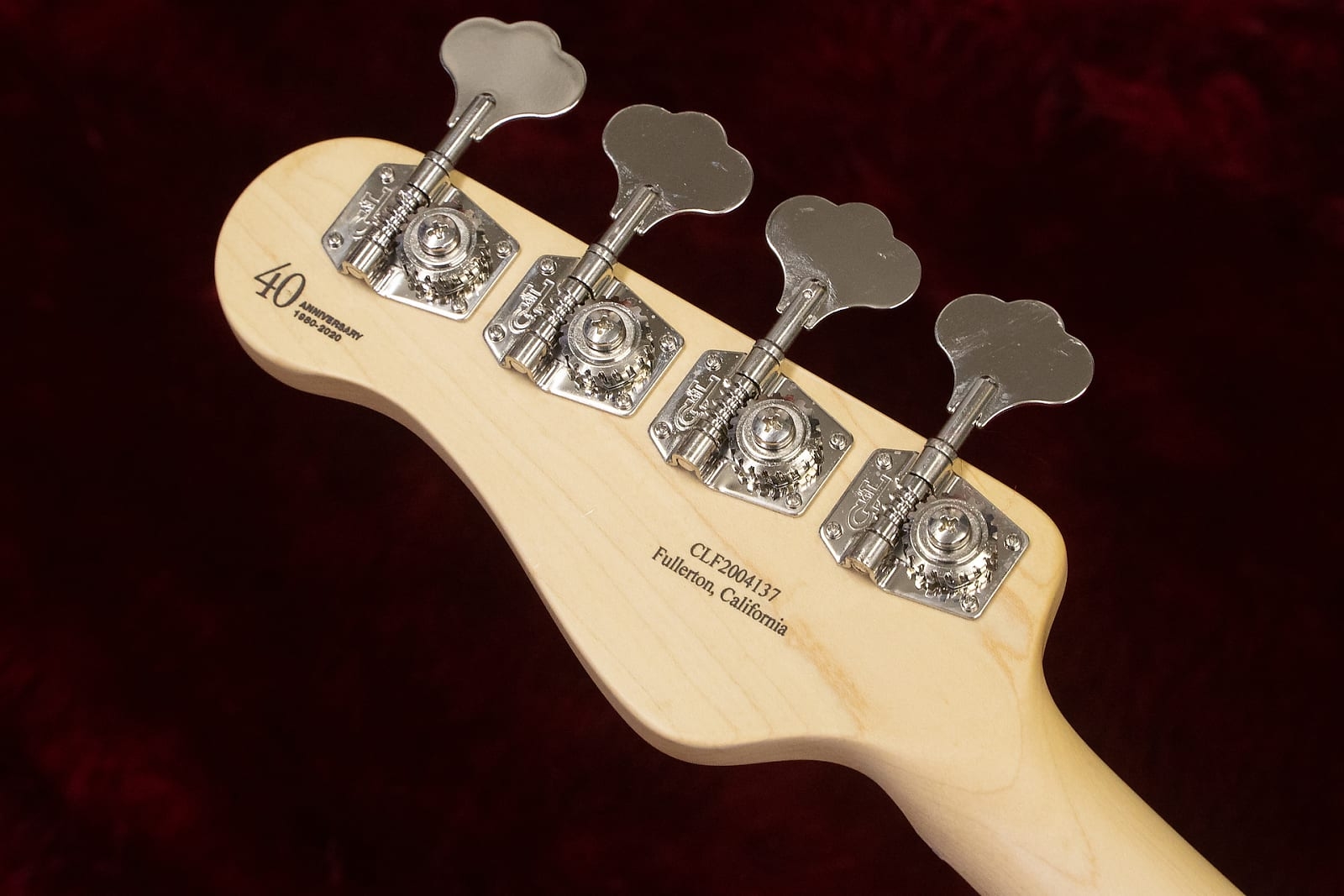
Part way through ‘83 is when the new headstock started being used on the L-1000, L-2000, and F-100. El Toro was introduced that year, and always had it.
The first headstock mass produced with a horn/point/tit/whatever was the S-500 in 1982, with the big headstock. A smaller version of this headstock came along shortly thereafter, for the F-100s, and later, it was used for the Skyhawk (originally the Nighthawk). In 1985, the Broadcaster was introduced with a narrower horn/point/tit/whatever headstock. This was transferred to the ASAT when that model moved in to replace the Broadcaster in 1986, and this headstock is still used on ASATs. The second style S-500 and its headstock were 1988. These shapes were also used for the Legacy and 3rd style Comanche, both introduced in the early BBE era. These shapes are still used today on all three models.
In the late ‘80s and early ‘90s, there was a period in which the Skyhawk used the sickle headstock first used on a few rare models several years earlier. There was also a bass version of the sickle, used primarily on L-5000s, but also rarely on the SB series and Interceptor Bass (the standard Interceptor Bass headstock was similar, but it had a horn/point/tit/whatever, and a slightly kicked out point, in addition to the sickle shape).
The SB and SC series (entry level models introduced in 1982) had smaller versions of their respective L series and F series hornless headstocks. These remained until the BBE purchase. BBE discontinued the SC series, and gave the SB series the same headstock as the L series.
The standard Fender style neck attachment on guitars started in ‘97. Similar for the basses, except the newer neck attachment system was six screws with inset ferrules, not a Fender style neck plate. (This six screw mounting evolved from the six hole neck plates used on L-5500s and early L-2500s.) However, three hole neck plates and neck tilt continued on the ASAT Bass, SB-1, and SB-2 till about 2005-2006 (most of these “extended run” 3-hole neck plates have a smooth black coating, not the usual crinkle coating). There was nothing wrong with the early G&L style neck attachment. It’s just that people didn’t comprehend its significant setup advantages, didn’t know how to use it right, and the market in general was heavily biased against it. Quite a shame, as the instruments with 3-hole neck plates set up much faster, and they encourage people to use neck angle, which greatly improves setups.
It should be noted that none of the G&L hardware is made in the USA, or by Schaller, any more. So there are differences in that regard, as well as the specs changes discussed above.