• TalkBass has been independent since 1998. Add your voice.
    Create a free account to reply to discussions, view embedded media, and browse with fewer display ads.
    Join freeLog in
    Want zero display ads or expanded classifieds tools? Compare plans.

Epoxy as a grain filler

I could put this in my build thread, but I thought it would get a quicker answer on it's own. I am using Zpoxy for filling grain and strengthening a redwood top. The body has a walnut core and a cherry back. I plan on using the Zpoxy on only the redwood, I'd tape off the rest of the body then blend the Zpoxy on the front into the walnut in the middle with sandpaper after it's dry.

For those of you that have used epoxy like this, does this make sense? I don't think I need to do the whole body, but wanted to check with someone who has actually used this before.

 
I've tried a couple of different kinds of CPES, zPoxy, West Systems, and several varieties of System Three products and they all pretty much work equally well for grain filling. I've also used locally made epoxy designed for boats and that worked well too. Comes down to ease of use, how much they lay down (hence ease of sanding), colouring of the wood, etc. As long as it's workable, they all will work for smooth grain filling. :)

I should add that in nearly every case, things improve with heat in the workspace while they are curing. When I glue up with epoxy glue, or do a seal coat, I crank the heat up to ~30C (~85F) for the night. :D
 
  • Like
Reactions: Jisch
So... Trowel it on, scrape back with an old credit card, let cure, sand it smooth? One coat, or as many as needed to fill end grain?
Basically that's it. I go across the grain to get it in there, and usually can get away with one treatment. Sometimes I do two coats, depending on the wood. I scrape it down thin and smooth out any drips, bumps or waves. I use a bondo scraper/applicator for flat surfaces, and my nitrile gloved hands for curves and cutaways. I get the scrapers in packs for cheap, and cut in half to get more of them. I'd rather go through the trouble of doing another thin coat than have to sand out drips, bumps or waves. :D

After it cures (brands vary, 12-48hrs) I can typically get away with going directly to 220 to smooth everything out, and if it looks good, I go 280 and 320 to get it really smooth before finishing.

My other tips include:
* using wax paper to lay down on the work surfaces to help with cleanup
* mixing up only what you need and estimate on the low end - it's easy to just mix up more
* use disposable things for ease of use - wax paper, masking tape, nitrile/latex gloves, 1oz mixing cups, scrapers, paper towels, toothpicks and/or skewers for mixing, and an open garbage can at the ready :D

I'm sure others will have other processes, but this generally works for me :smug:
 
The only thing I'd add is keep a propane torch handy in case there are any stubborn bubbly areas.

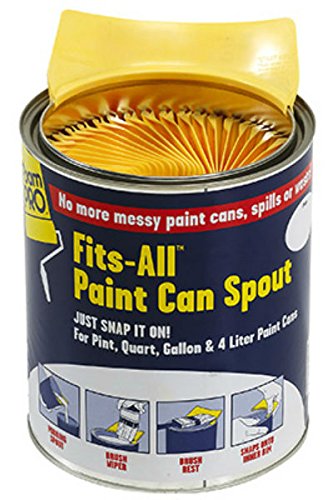
For scrapers to apply and smooth, I like to get those paint can pouring lips (the flexible yellow plastic ones that are meant to clip on the lip of a gallon paint can) and cut them in half. They're really soft and bend to contours very well. Plus they're cheap.

51s1q9YPbJL.jpg
 
Pretty much everything @Beej said; I use wooden coffee stirrers I get at the market for mixing/helping the expoxy out of the mixing cup.

I used ZPoxy finishing resin full strength for the initial grain fill application(1 or 2) followed by a coat thinned with 1/3 denatured alcohol wiped on as a final sealer.

Gonna try this on an MIM P refin coming up.
Is this the one you were asking about the teal for?
 
@Jon Clegg
Yep! My son stripped it a little.... enthusiastically. Gone be a little bondo work to get it back to contour in the worst spots. It’s his bass, so I let him do the stripping grunt work, but I’m going to finish it with the Createx teal and Ultimate Varathane. It’s a 4 piece alder body, and he took off all the original primer/sealant, so grain fill mandatory.
 
  • Like
Reactions: ELG60
If you're using actual bondo I would be careful about grain filling with epoxy. Bondo is basically polyester resin, polyester and epoxy don't always play nice together. You could just make your own epoxy based bondo by mixing in your favorite sandable filler.