• TalkBass has been independent since 1998. Add your voice.
    Create a free account to reply to discussions, view embedded media, and browse with fewer display ads.
    Join freeLog in
    Want zero display ads or expanded classifieds tools? Compare plans.

EQ / Compressor Assistance

Hi, new here..hope i'm posting in the correct forum.

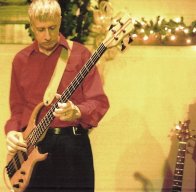
I"m one of the volunteer sound engineers at our church, and our lead bass player just bought this gorgeous Roger Sadowsky 5 string J bass. I run an MH3 Soundcraft board, and he is running direct through an avalon tube preamp to the board and I've inserted an ACP88 compressor/gate.

I feel like I have him dialed in reasonably well, but I'm not quite there yet. It sounds good, but not "tasty". I realize that room acoustics, speakers, and so forth play a huge roll in how to eq and compress bass guitars, but I was hopeful that someone might have experience with this particular bass guitar and have some helpful tips on EQ settings and compressor/gate settings that typically bring out the best in this particular instrument.

"Back in the day" I used to play an stereo Rick and still have a huge love for bass guitar sound.

Thanks everyone, appreciate any insights. I just wanna make him sound as good as I can.

-Mark
 
[font=comic sans ms,verdana,arial]Wow, a soundman who cares! My hat’s off to you!

Don’t know if I can help with that specific instrument, but I can give you a few general pointers, being a soundman/bass player myself. :D

I used to keep the volume knobs of both pick ups wide open, but recently I’ve found that dialing back a little on the neck pickup reduces low-end "boom" and lets the instrument’s texture and tonal quality shine through. You might lose a little of the extreme lows, but you can pick them back up with your EQ, assuming you can sweep for an ultra- low turnover frequency (like 40 Hz or so). Just don’t overdo the “re-EQing” or you’ll be right back where you started!

Further regarding EQ, get him to play for you sometime when everyone else is out of the room, from the lowest notes to the highest. If you find there any “weak spots,” like the high notes in the second octave of the neck for instance, EQ accordingly. During full-band rehearsals, have him get all over the neck so you can make sure everything from the lowest to the highest notes is cutting through the mix.

Something else you can check for, if you have an RTA handy: With the mic at the mix position, have him play from the lowest notes to the highest (again, with everyone else out of the auditorium). You should see the display follow him up and down the scale. I’ve seen some systems where no matter where on the neck the bass was played, the RTA gave the same reading! If you see this, you have a “one note response” thing happening, so you need to EQ to flatten out that static hump you’ll see on the display. Typically it will be centered in the 80-125 Hz range.

Speaking of equalizers, a parametric EQ dedicated to the bass channel can do wonders. You can tweak the bass with surgical precision. I have mine set up at our church to boost the lowest notes a little (the lowest fundamentals of a 5-string are lower than most subs can do), cut some “bloom” my bass has in the 100 Hz range, and give it a little boost in the 400 Hz range, to help the second-octave high notes cut through the mix. You can’t get three dedicated bass filters from a console’s EQ!

Finally, make sure any compression is in-line before the EQ. Otherwise you’ll be compressing away your EQ changes.

Regarding the gate, don’t go overboard with it. I’d set it with minimal sensitivity, just enough to shut out any background noise he may be sending your way. If his signal is sufficiently quiet, I’d skip the gate altogether.

Hope this helps.

Regards,
Wayne A. Pflughaupt
[/font]