• TalkBass has been independent since 1998. Add your voice.
    Create a free account to reply to discussions, view embedded media, and browse with fewer display ads.
    Join freeLog in
    Want zero display ads or expanded classifieds tools? Compare plans.

Exercise you fingers or not?

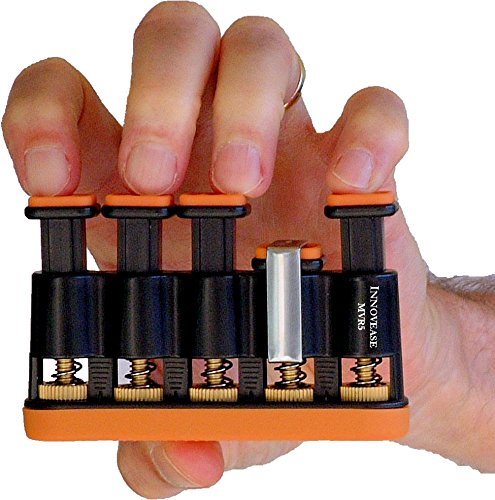
I'm looking through one of my BassPlayer mags and noticed an ad for a finger exerciser. I don't think I need it, in fact I think it could overstress my older fingers, but I don't know. I know good technique shouldn't take a lot of finger strength, but I'm interested in your opinion. If one of this things has helped you or hurt you, please let us know.:)

51M%2BeJ62kaL.jpg
 
Strength is probably the least needed element in playing bass, unless you've got very high action. I believe it was Gary Willis who pointed out that you have all the strength you need to play bass in your hands by the time you're three or four years old. Stamina and dexterity are what's needed- that device won't aid in either unless you can turn off the resistance and just wiggle your fingers on it for longer and longer periods of time.
 
I have one very similar to that. I think the concept is similar swinging a weighted bat in the on deck circle. Warm up with something more difficult. When you switch to the real deal, it's comparatively effortless.
 
I have one very similar to that. I think the concept is similar swinging a weighted bat in the on deck circle. Warm up with something more difficult. When you switch to the real deal, it's comparatively effortless.

The thing about that though is that it shouldn't take any effort in the first place. If it takes effort, your setup is probably bad or your hands aren't warmed up. There are advantages to swinging a bat harder and with more force- those advantages aren't there with playing bass, and in fact there can be negatives from it such as hand cramping and repetitive stress issues.
 
I hear you, Bryan. Haven't used mine in years. I found it to be particularly tougher on my thumb. Several factors hold the neck still when playing. With the finger exerciser I was relying solely on the thumb, because I held it the same way a neck sits in my left hand. I could put it in the heel of my hand. But, I think the purpose is to hold it as closely as possible to how you hold a neck to emulate the same motion. The only cramping I experienced was muscle cramping. When I used it excessively, my thumb meat and inside forearm were sore for 3 days - muscle soreness. The benefits are that the exerciser requires more motion and has more tension than a bass. Going from that to the bass makes the bass seem much easier.
 
  • Like
Reactions: 70'sRockChild
In a nutshell...that device is not necessary when playing the bass. As has been already mentioned, minimal strength is required to fret a note. This strength is present in all healthy people, form a very early age. No need for further development.

What has NOT been mentioned is that what is required is to develop the tendons that facilitate the opposite to gripping, i.e. the opening of the hand. From a bass playing perspective, this renders the device useless.

Dexterity and stamina are the things to aim for...not strength. Think... the gymnast versus the weight lifter. ;)
 
I've had one for a long time (a Gripmaster, to be specific). When I first got it I was learning upright, and I over-used the device so I started having wrist pain and stopped using it for several years. Recnetly, I threw it in my car and use it in short bursts while waiting at red lights, drive-thrus, etc.

I've found it helpful in the fretting hand for improving left-hand tapping and other percussive techniques, but honestly, I've found the most benefit in the other hand.

My band has several long sections of fast eigth notes where I'm using three fingers, and I often struggle if I don't keep up my practice routine. When I first put the gripmaster in my car I was pretty busy and didn't have as much practice time as I wanted, but I did practice the right hand motions on the device in the car throughout the week. When I got to rehearsal, the parts were more effortless than they ever had been in the past. I've been sold ever since.
 
  • Like
Reactions: 70'sRockChild
I look at it this way: you'll strengthen fingers and get better at bass by just playing. Strengthening your fingers with a device may make them stronger but it won't directly apply to your playing and you'll still have to spend time learning patterns, etc. Why not do both at once and save a few bucks in the process?
 
Years ago when I started playing upright bass I bought a device similar
to the one pictured. It seemed to help my 21 year old fingers and hand.
My bass teacher, John Repucci from Berklee told me the best training for hands
was to play the instrument. He did not recommend the device.
 
So it looks like it's not needed, but it is usefull to some people under certain conditions, but could also be overdone. That sounds like a lot of things in life. More is not always better, unless your talking about basses;).
Baseball batters warm up with weights on the bat, Football players lift weights, they just don't practice to get better but bass is different, so it makes you wonder if a product like this could be usefull. I could find out for my self for a few bucks if i didn't injure myself, but I like this place and discussion from all over the world. I think everyone that posted has a valid point but everyone is different, in different circumstances and even different insturments and string tension. Thank for the success stories, warnings, and personal opinions.
FYI : I think the product pictured had an optional rubberband to exercise the fingers in the opposite direction for balance which is a good point. I don't own it or use one like it. I will probably try it if my fingers get weaker and stiffer at some point, (get a nervous habit and need something to do with my fingers or use it to start a conversation and impress chicks in a bar, "do you play guitar?, "no, bass", "oh:yawn:")
 
A teacher told me last year that just playing in and of itself is enough and that speed is often limited by insufficient precise power/speed in lifting fingers off of the string. If any thing, use a light rubber band to resist lifting fingers from thumb, one at a time. Do this a Little if you want but it doesn't take much. Probably better of running multi-octave arpeggios. Check out Berklee chord studies for bass book. $12. It shows you fingerings and the exercises force you to use all fingers and takes the gueswork out of it (and after you figure out theirs, you are also encouraged to work out your own ....in addition to being practical musically. I wish I had this book years ago. Less than a week in and already aha moments, and I was more than a functional bassist before I started this. I was told to spend a month just on C Major and minor exercises alone...
 
I was taught that your finger should move up and down on the strings behind the frets (much like the hammer on the strings of a piano). I noticed that my 4th finger has calloused on the outside of tip of my finger (away from the 3rd finger). I believe this is indicative of bad technique. I am working on correcting this by very deliberate fretting exercises watching the 4th finger for correct movement while practicing scales and arpeggios. I also keep a racketball with me at all times and when I have an opportunity, I squeeze down on the ball using correct form. Hopefully, these measures will correct my bad form and put the callous on the tip (rather than the side) of my 4th finger.

You could probably accomplish the same exercise (and results) using the "Gripmaster" which you show in your image.
 
I practice every day, that works out my fingers enough.

I have the Planet Waves version of the grip trainer. I don't see it making me play bass any better. I might be able to crush walnuts with my hand better though.:)

paulie_walnuts.jpg