• TalkBass has been independent since 1998. Add your voice.
    Create a free account to reply to discussions, view embedded media, and browse with fewer display ads.
    Join freeLog in
    Want zero display ads or expanded classifieds tools? Compare plans.

Expensive vs cheap pickups?


Hi All,

I came across the above video on youtube...

What are your thoughts and experience in general with regards to the above video demonstrating cheaper vs expensive electronics?

Does changing stock pickups to aftermarket ones really make a huge difference if you use a lot of preamp and amp eq/drive?

Cheers,
 
With not watching the video and not really having a discerning ear for bass tones, I'll still weigh in.

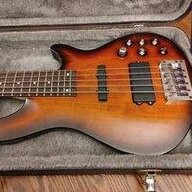
I have one point of reference that may prove useful: I upgraded my '04 Schecter CV-4 from the stock Duncan Designed pickups and preamp to a set of Lakland LH-55 pickups and the matching preamp. LH-3? I don't recall. It was an expensive upgrade that cost almost double what I paid for the bass used on the buy and sell.

The original pickups were dull and the bridge pickup was somewhat thin sounding. The neck pickup was noisy and somewhat boomy. I also had very few tones to choose from since the original set up was B M T, Volume, Blend, with the single coil neck and the bridge HMB. The treble boost / slap toggle switch did not sound like it worked.

The upgrade required a bit of woodworking and some foam to fill gaps, but the result of swapping the pickups and preamp was dramatic. The new pickups have WAY less noise, being dual and quad coils. They're thick, meaty, crisp, and really chewy sounding. The toggle switches between the N coils, both coils, and the B coils in the HMB which yields far more tones. The tones between the N and B pickups balances far better, and the toggle allows for J tones, MM tones, among others. Not a bad sounding combo.

The old preamp was soldered poorly and the wires were falling out of the tabs as I removed the old preamp. I really believe that the preamp was as important as the pickups for contributing to the over tone of the instrument but man, it was a night and day difference.

I should note that I upgraded from the stock hipshot bridge, which was good, to a KSM bridge. This made a MASSIVE difference in tone and sustain, somewhat comparable to switching pickups. The bone nut was a slight change, mostly for open strings. I know the KSM bridges aren't cheap but I can't say enough about how awesome they are.

I would say that when upgrading a project bass, all the string anchor points are important for producing tone.

Comment on the natural tone / wood of the bass: It is helpful to compare the CV-5 with a Lakland Skyline since both basses now have the same pickups and electronics. Lakland skyline basses are really bright, and poppy with a very pronounced, and loud ringing midrange. This Schecter has a duller tone with more focus on the core fundamental of the sound. I found this to be the case with many Diamond series instruments from this vintage. Almost like the wood is not as resonant. After replacing the bridge and nut, the only thing left to replace is the wood itself and the density and resonant quality of the wood does affect tone.

I'd say that the bridge was such a massive difference but the pickups and preamp are even bigger. My friend has a skyline and, seeing as this bass has the same pickups and preamp, I'd really love to compare them both on the same amp with the same settings.

I'd say that the stock pickups were satisfactory for live playing and the bass sounded and played great, even stock. But for recording, having high end pickups is pretty critical.

Beyond my personal experience on this upgrade, I should mention that my friend has a squire affinity J-Bass that he converted to a fretless. The stock pickups may not be as hifi and 'produced' sounding as my upgraded CV-5 but the bass doesn't sound objectively bad and it has a cool vibe to it. When deciding whether to upgrade, it is best to consider what the current pickups and electronics are lacking and what would stand to be improved with an upgrade.
 
As usual, "it depends".
Squier Bronco basses have an ultra cheap single coil guitar pickup as stock, which I don't think sounds like a bass pickup at all. The bass in general was very noisy, as there wasn't any shielding in the pickup or control cavities. I installed a cheap dual rail humbucker pickup and it was markedly better sounding and suffered much less noise. I'm certain it would have been even better sounding if I'd done the shielding and had invested in a better pickup.
 
"Upgrade" gets tossed around a lot in pickup threads, especially with respect to aftermarket pickups being put in cheap basses, but it is probably the wrong word to use. It implies there is some sort of obvious hierarchy or level-up capability, where if you have X then you can swap it for Y and things will be better.

"Change" is probably a better word to use. Changing pickups can change the tone of the bass. Sometimes just a little, sometimes more. Whether or not that change will be an improvement or not is really dependent on your taste and what you're using the bass for.
 
As you get older you begin to realise that tone really is in the fingers. I've swapped PU's over the years for this and that and I could have saved a ton of money if I'd just sat down and practised more on my finger technique. Currently play a CV 70's P and swapping PU's would be totaly unneccessay, and Im gonna say it. In my hands this 'cheap' old Squire sounds very good indeed.
 
The point of diminishing returns is found early in mass-produced electric guitars. It’s an old canard that an expensive anything will be better at what it supposed to do than a less expensive one.

Build quality, robustness and durability are other factors. Will the Squier Jazz Bass hold up as well as the American Standard Jazz Bass after a couple of decades being played?
 
  • Like
Reactions: Artman and Drawoh
I installed 2 Oripure split coils in a glarry bass body…. Super cheap and they sound great!!

i installed 2 Wilkinson mm style humbuckers in a $90 jazz bass body… super cheap and they sound great!!

i installed a Wilkinson mm style humbucker and an oripure split coil in a Harley Benton shorty….. super cheap and it sounds great!!

i bought a set of dragonfire jazz pickups and a PJ set for a couple basses. The dragonfires were not cheap compared to the Wilkinson or oripure but they were cheap compared to other major brands.
I have removed the dragonfires and even gave a set to another TBer…..I personally didn’t care for either set, just too mellow for my taste, not enough bite.

i have EMGs, Seymour Duncans and fender originals in other basses and they are great too.

no point here, just a sharing experience’s.
 
The biggest difference I’ve ever noticed among all the pickups I’ve changed in my basses and guitars over 20 years of swapping is in the overall output and the contour of the mid content.

Its not really a matter of cost though. Some of my favourite pups that I’ve installed are super cheap (like $50 GFS pickups) and others have been relatively expensive (like $250 Delanos). People with a lot of money to spend will tell you that “you get what you pay for.” Everybody else will work within their budget and find pickups that sound great regardless of price. There are a wealth of options out there… try a few in your price range and I guarantee you’ll find something you like.
 
My experience is that the diff in PUs is small but noticeable. I have played DiMarzio Ultra Jazz, Area J and Model J. The differences are noticeable enough to me to keep me from using two of those. Others around me have no idea. Audience? We're lucky if they can even hear the bass.

I swapped single-coil Carvin J PUs for Nordstrand split coil J pickups. The hum disappeared but the tone didn't please me as much. Went back to the Carvins.

In the end, I think the biggest difference with a pickup swap is the hum elimination of single coils to split or dual coil. The tone changes are subtle at best and 100% masked in a mix for everyone but the bassist.
 
Probably not that big for an average Joe to notice. But the overall process of fiddling with the bass upgrades us something that provides joy on its own!
This. Messing around with basses is fun and rewarding even if the tone is barely 'upgraded'. Playing an instrument you've modified is twice the fun even if the tone change is minimal.
 
My experience is that the diff in PUs is small but noticeable. I have played DiMarzio Ultra Jazz, Area J and Model J. The differences are noticeable enough to me to keep me from using two of those. Others around me have no idea. Audience? We're lucky if they can even hear the bass.

I swapped single-coil Carvin J PUs for Nordstrand split coil J pickups. The hum disappeared but the tone didn't please me as much. Went back to the Carvins.

In the end, I think the biggest difference with a pickup swap is the hum elimination of single coils to split or dual coil. The tone changes are subtle at best and 100% masked in a mix for everyone but the bassist.

This. Of course there's a difference and no one cares if the audience will notice it or not. Talking about albums and recordings, everything matters. Pickups matters, guitars, strings, basses, drum heads, cymbals, drums, room acoustics, recording gear, console, microphones, engineer etc. This all matters and affect the outcome, it's like a puzzle.

If you leave out the insulation from your house, 10 of 10 people won't notice it if look at your house. The outcome.. that's a different story. :)
 
This. Of course there's a difference and no one cares if the audience will notice it or not. Talking about albums and recordings, everything matters. Pickups matters, guitars, strings, basses, drum heads, cymbals, drums, room acoustics, recording gear, console, microphones, engineer etc. This all matters and affect the outcome, it's like a puzzle.

If you leave out the insulation from your house, 10 of 10 people won't notice it if look at your house. The outcome.. that's a different story. :)
Right - recording vs live is two very, very different worlds and the subtleties are much less subtle in the studio.