Has anybody ever heard of one of those rubber washers/strap combos failing? I'd be interested. I do check my equipment periodically to make sure nothing comes loose. I get a little paranoid after reading things like this. 

TalkBass has been independent since 1998. Add your voice.
Create a free account to reply to discussions, view embedded media, and browse with fewer display ads.
Join free Log in
Want zero display ads or expanded classifieds tools? Compare plans.

I run a small repair shop out of my garage and this happens ALL the time. I don't understand why people install these upside down, the U shape is meant to catch the button.

I run a small repair shop out of my garage and this happens ALL the time. I don't understand why people install these upside down, the U shape is meant to catch the button.
Has anybody ever heard of one of those rubber washers/strap combos failing? I'd be interested. I do check my equipment periodically to make sure nothing comes loose. I get a little paranoid after reading things like this.

Just wanted to address this point- the screw is more likely to come out of the top horn with a strap lock(particularly Schaller style) than without. The reason for this is that the horn is usually sharply curved there, so the button ends up screwed down against this curved surface, with only a line contact supporting it. This of course exists with a regular strap button but when you add the extra length of the locking button/latch assembly you end up with a considerable overhung load which works like a pry bar to pull the screw out. To avoid this I always relieved the area around the button very carefully with a file to create a flat surface for the button to rest on. This eliminates the screw pullout problem.Even the screw coming out of the wood is on the user; it's totally preventable with routine inspection, and this could just as easily happen without the strap locks ......
This of course exists with a regular strap button but when you add the extra length of the locking button/latch assembly you end up with a considerable overhung load which works like a pry bar to pull the screw out. To avoid this I always relieved the area around the button very carefully with a file to create a flat surface for the button to rest on. This eliminates the screw pullout problem.
At the location in question, it is a large amount of force. The damage doesn't happen all at once but incrementally. It's not the shear that loosens it, it's the tension of the button rocking upward on the curve. A little at a time until it starts ripping the wood out. You'll rarely hear of this happening on the rear peg, because it's flat there. Many basses do put more weight on the horn button but that's not the reason for the failure.

Just wanted to address this point- the screw is more likely to come out of the top horn with a strap lock(particularly Schaller style) than without. The reason for this is that the horn is usually sharply curved there, so the button ends up screwed down against this curved surface, with only a line contact supporting it. This of course exists with a regular strap button but when you add the extra length of the locking button/latch assembly you end up with a considerable overhung load which works like a pry bar to pull the screw out. To avoid this I always relieved the area around the button very carefully with a file to create a flat surface for the button to rest on. This eliminates the screw pullout problem.

I run a small repair shop out of my garage and this happens ALL the time. I don't understand why people install these upside down, the U shape is meant to catch the button.

Ohhh, my kids would love this! "The Kragle!!!!!"...I fixed that with a drop of crazy glue on the threads...


it's the "you would notice" part that people are failing at!Yeah, in theory, it makes sense. Still, I'd imagine it's pretty rare, and not much more frequent than with a standard pin at the horn. If it's incremental, I'd think before it rips a chunk of wood out you would notice it rocking loose a bit.
it's the "you would notice" part that people are failing at!
like @David Jayne says, it's not so much that the strap gets ripped out as it gets worked out of the hole by the increased leverage from the strap being further away from the guitar body.
people who are oblivious to the workings of their instrument are the ones who get surprised on stage by a lock going upside down or a button working its way loose from the body.

Like, maintenance...right?Never had a Schaller failure - but I check and tighten all things twisty including straplocks, tuners, pickguards, input jacks, etc on a regular basis.

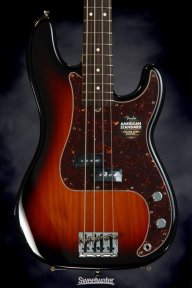
At my last gig the Schaller straplocks failed multiple times during songs. I couldn’t believe it!Um...to say the least my heart stopped! I was playing at a gig last night. Just before the show started I was talking to a friend at the edge of the stage. BAM!! My beautiful Fender American Deluxe Precision hits the stage. Very nice dent in the body. Of course knocked completely out of tune. The input jack was knocked loose.
Thankfully it wasn't in the middle of a song. I bought Schalers to prevent this. Has anyone had this happen? Did Schaller fix their instrument?
Do the rubber washers work when you throw the bass around?StayLow said it better than I could. I used them for awhile until I discovered plain old rubber washers work better. Like, way better. I had all the usual failures and dealt with them for years, until the night that the locking pin and its spring shot off into the darkness, forcing me into duct tape mode immediately before the first song. That was it. They are, to me, the answer to a question that nobody asked.


Apparently the nut wasn't tightened up.At my last gig the Schaller straplocks failed multiple times during songs. I couldn’t believe it!
The cup has rotated round so it was upside down and only the pin held the bass on the strap. Unfortunately I have a heavy as hell Thunderbird 5 string, so that pin couldn’t do the job.
The next day I removed the Schaller straplocks, threw them in the bin, and fitted a set of Dunlops. I am never going back.