• TalkBass has been independent since 1998. Add your voice.
    Create a free account to reply to discussions, view embedded media, and browse with fewer display ads.
    Join freeLog in
    Want zero display ads or expanded classifieds tools? Compare plans.

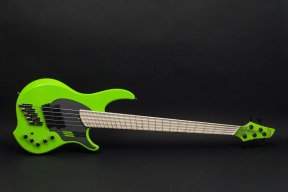
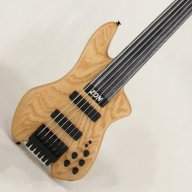
fanned frets.. what the freak?

I'm not saying the differences aren't real, I'm just saying they're not really practical for many players and audibly in most situations even less so.

For the "low C# theory" or slapping the low B through a 2x18 it might make a big difference, at least for the player in a tactile sense. For covering AC/DC through a 1x12, not so much, or if an instructor has one that's teaching kids that own a Squier starter pack it might just make it tougher.

For some people and some applications it's possibly "better", for some it ain't. No universal right or wrong. Despite the original post's sentiment, we can have some balance. I'm suggesting that "balance" includes not pretending the piano is really a valid direct comparsion, though it's a great way to illustrate the concept.

Ya know, with the amount of detuning going on in music, I'm surprised that fanned frets aren't more popular. I've heard more than my share of bands tuned to dropped A and I don't think any of the bassists really sound that good.

 
I've played the fanned frets. I was surprised how easy it was, notes way down low and chords up high the exception.

One interesting thing about the fanned frets is that it makes some chord fingering impossible in the high register, but makes some that are impossible on a regular bass easy. Whether this is an advantage/disadvantage probably depends on personal preference i'm sure.
 
I've had the same experience as SMASH on occasion where I don't really hear anything too different live between one of our basses and a standard parallel fret.

I will say that the majority time, I do hear a difference though. Not so much a difference in tone, but a difference in clarity of the low notes. In most cases when I've taken a bass out for someone to try I'd hear the bass pitch, but not so much the notes being played when they were playing their own bass. When they switched to one of our basses to try, I'd be able to hear the pitch plus I'd hear individual notes much more clearly. Sometimes the difference would be subtle (a Hamer 12 string comes to mind) but usually the difference was pretty noticeable.

My ears are tuned to the sound of our basses so my perception is obviously skewed to a certain extent. However I've been hearing similar comments from musicians and non-musicians consistently for 15+ years.

Studio-wise, I don't get to meet that many engineers and producers, but I've been lucky enough to meet a handful of really talented local-level guys and a few "star-level" guys that have recorded our basses. They've all gone out of their way to tell me how easy our basses are to record. YMMV
 
I've had the same experience as SMASH on occasion where I don't really hear anything too different live between one of our basses and a standard parallel fret.

I will say that the majority time, I do hear a difference though. Not so much a difference in tone, but a difference in clarity of the low notes. In most cases when I've taken a bass out for someone to try I'd hear the bass pitch, but not so much the notes being played when they were playing their own bass. When they switched to one of our basses to try, I'd be able to hear the pitch plus I'd hear individual notes much more clearly. Sometimes the difference would be subtle (a Hamer 12 string comes to mind) but usually the difference was pretty noticeable.

My ears are tuned to the sound of our basses so my perception is obviously skewed to a certain extent. However I've been hearing similar comments from musicians and non-musicians consistently for 15+ years.

Studio-wise, I don't get to meet that many engineers and producers, but I've been lucky enough to meet a handful of really talented local-level guys and a few "star-level" guys that have recorded our basses. They've all gone out of their way to tell me how easy our basses are to record. YMMV

thanks a whole lot. that's all i wanted to know. sorry for calling you companies idea stupid, at the time it just seemed useless to me. this thread and mostly your post, made me rethink my opinion. now i actually want a dingwall but i can't afford it so i guess i'm beat until my tour is over! [=
 
I've had the same experience as SMASH on occasion where I don't really hear anything too different live between one of our basses and a standard parallel fret.

I will say that the majority time, I do hear a difference though. Not so much a difference in tone, but a difference in clarity of the low notes. In most cases when I've taken a bass out for someone to try I'd hear the bass pitch, but not so much the notes being played when they were playing their own bass. When they switched to one of our basses to try, I'd be able to hear the pitch plus I'd hear individual notes much more clearly. Sometimes the difference would be subtle (a Hamer 12 string comes to mind) but usually the difference was pretty noticeable.

My ears are tuned to the sound of our basses so my perception is obviously skewed to a certain extent. However I've been hearing similar comments from musicians and non-musicians consistently for 15+ years.

Studio-wise, I don't get to meet that many engineers and producers, but I've been lucky enough to meet a handful of really talented local-level guys and a few "star-level" guys that have recorded our basses. They've all gone out of their way to tell me how easy our basses are to record. YMMV

Cool.

If the audience can't hear the longer scale, you certainly will feel the improvement anyway, and that's a great benefit (tighter low strings). On the other hand, i don't mind high tension on my higher strings as well, so i probably won't be going with the dingwall idea, but just have a much longer scale on my basses, maybe 36".
 
Actually, I could see something that looks so odd potentially costing the occasional gig.

I love my Dingwall, but I have to agree with everything Smash has said about disadvantages. (Not being able to buy suitable strings everywhere is a nuisance, but I knew that going in. Strings are available, just not at the local mom-and-pop stores.)

I have an audition this weekend, and the Dingwall will be staying at home. I'm considering taking my 4-94, but its likely I'll walk in the door with a Fender. Like it or not, an MIA Fender establishes a level playing field - the audition becomes about you, not the bass. The Dingwall is definitely a source of distraction.

Sheldon is right about the clarity, thing, though. My Dingwall works effortlessly in the mix EVERY TIME. I can lay back or step up front with my hands, and not rely on turning knobs. Can't tell you I could pick Sheldon's fanned frets out of a blind test, though, but I promise you I'd think it sounded good.

I got my Dingwall because 5 string basses in general weren't working for me. I'd tried 34" and 35" with different string spacings and hadn't found a winner. Throw in a little wrist pain, and I rolled the dice and came up a winner on a sight-unseen Dingwall.

I'm guessing I'd have been a winner with a number of other quality basses, too, but as I've said before, the fanned frets are icing on the cake. There's lots more going on with Dingwall basses than just that.
 
I love my Dingwall, but I have to agree with everything Smash has said about disadvantages. (Not being able to buy suitable strings everywhere is a nuisance, but I knew that going in. Strings are available, just not at the local mom-and-pop stores.)

I have an audition this weekend, and the Dingwall will be staying at home. I'm considering taking my 4-94, but its likely I'll walk in the door with a Fender. Like it or not, an MIA Fender establishes a level playing field - the audition becomes about you, not the bass. The Dingwall is definitely a source of distraction.

Sheldon is right about the clarity, thing, though. My Dingwall works effortlessly in the mix EVERY TIME. I can lay back or step up front with my hands, and not rely on turning knobs. Can't tell you I could pick Sheldon's fanned frets out of a blind test, though, but I promise you I'd think it sounded good.

I got my Dingwall because 5 string basses in general weren't working for me. I'd tried 34" and 35" with different string spacings and hadn't found a winner. Throw in a little wrist pain, and I rolled the dice and came up a winner on a sight-unseen Dingwall.

I'm guessing I'd have been a winner with a number of other quality basses, too, but as I've said before, the fanned frets are icing on the cake. There's lots more going on with Dingwall basses than just that.


That's a refreshingly balanced post. Respect to you. So too to Sheldon Dingwall.

"There's lots more going on with Dingwall basses than just that."

I agree, which is why I maitain a strong interest. The differences could also account - perhaps in majar part - for some of the differences in clarity people are heaing, not just the fret system. Great & unique build/pickups/electronics/etc.

Easily among the clearest recorded tones I've ever heard. Kudos to producer, engineer, and player too of course. Here's a couple of good examples -
 
That's a refreshingly balanced post. Respect to you. So too to Sheldon Dingwall.

"There's lots more going on with Dingwall basses than just that."

I agree, which is why I maitain a strong interest. The differences could also account - perhaps in majar part - for some of the differences in clarity people are heaing, not just the fret system. Great & unique build/pickups/electronics/etc.

Easily among the clearest recorded tones I've ever heard. Kudos to producer, engineer, and player too of course. Here's a couple of good examples -


You're dead on here. If Sheldon ever decided to make a line of parallel fret basses, I'm sure they'd play, sound and look great too. Unless pickups, wood selection, construction, etc. have nothing to do with the Dingwall sound.

Between you and me, I'm glad he doesn't make a parallel fret bass. I don't really need to be buying another bass right now.

EDIT: Wide Mouth Mason. Never heard of them. VERY cool stuff. (Thanks for pointing me that way!) Recorded with a Dingwall? Anybody know anything about the white fanned four string with the black pickguard that Earl Pereira plays?
 
Bandleader after the audition: "Well, we liked your playing Mr. Smash but we can't deal with those crooked frets. Sorry."

Bah, people listening with their eyes. :spit: You're probably better off without them.
My band has made a point of telling me they prefer the fanfret bass. It does have one of the best low E's I've ever had on a bass. When I flip that Drop-D, they go nuts.
 
Not so much a difference in tone, but a difference in clarity of the low notes.

That has been my personal experience and the biggest advantage to Dingwall basses. The ergonomics, string to string balance, feel and exceptional build quality also seal the deal.

While getting strings that will fit may be harder, the odd stretch more difficult and upper register chords "different", for me it's worth it.
 
While getting strings that will fit may be harder

DR Strings makes an extra long scale Hi Beam that fits Dingwalls and also the spectacular LeCompte TRX multi scale basses.

TRXRedwood400.jpg


TRX400.jpg
 
DR Strings makes an extra long scale Hi Beam that fits Dingwalls and also the spectacular LeCompte TRX multi scale basses.

There are several sets that will fit, but not every store carries them. DR, Ken Smith, Fodera, GHS (in Long Scale Plus), Dingwall (of course) plus a few others will fit, but most mom and pop shops will likely be carrying D'Addario, Fender and Ernie Ball.

Luckily, I am always a set or two ahead so I always have a fresh set waiting to go on. :)
 
There are several sets that will fit, but not every store carries them. DR, Ken Smith, Fodera, GHS (in Long Scale Plus), Dingwall (of course) plus a few others will fit, but most mom and pop shops will likely be carrying D'Addario, Fender and Ernie Ball.

Luckily, I am always a set or two ahead so I always have a fresh set waiting to go on. :)

I bought a box with 5 sets of Dingwall strings. I'm good for a while!
 
I just got my DW AB five string after fighting fan fret GAS.

1st: The clarity of the low B and fretted low notes are second to none using fingering or thumb technique IMO

2nd : Chording above for me 15th fret is an adjustment but after practice I think will be no problem. IMO

3rd: Sheldons workmanship is 1st class including his PUs ie electronics. I was thinking of adding a preamp to this passive bass but after playing it through my rig, none needed.IMO

I had a very serious left elbow injury/ rebuild and was worried that the reach on the lower frets low strings would bother me but honestly it feels much more ergonomic than my 35" bass I used to own. IMO

I think I will stay on the FanFret wagon and see were it goes.