• TalkBass has been independent since 1998. Add your voice.
    Create a free account to reply to discussions, view embedded media, and browse with fewer display ads.
    Join freeLog in
    Want zero display ads or expanded classifieds tools? Compare plans.

Feel Like Quitting After Successfully Completing My First Soldering Project

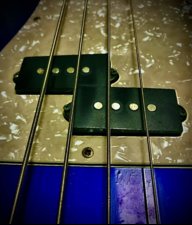
So over the course of the last few days I've successfully completed a shielding and solder project with a cheap P Bass copy I decided to get practice on. I changed all electronics minus the stock pickup.

The bass sounds good...but I want to say that this project took me about 7 hours to do. Thats with a lot of trial and error, taking my time, and using helpful hints/videos along the way.

The thing is, I don't feel too accomplished. For what I spent in buying a good iron, tools, parts, and lost time... I feel a bit disappointed that I goofed up so much and took so long. Plus my soldering still needs work so its neater and less mistakes along the way.

Before I started the project, I was excited, because I thought it'd be easy and quick to always be able to make custom changes/fixes to my instrument myself. But this was a difficult task and I almost wanna give up and just pay a luthier in the future.

I generally love DIY...I build my own PCs, I replaced several body parts on my car after an accident...but this soldering thing was harder than I expected. And I kinda feel dumb that I didn't save in both time and money with this particular DIY project.

Anyone else feel a bit discouraged when they first started soldering? Any tips for getting over the noobie hump?
 
  • Like
Reactions: alanloomis1980
Novices don’t stay novices for long. You’ll be soldering all kinds of things before long, now that your feet are wet or tinned maybe.

Just two hints to making you future soldering happier. Get a decent iron an let it warm up properly before starting. Use flux: every time, every point of connection.
good point a good iron makes a big difference and the proper size tip. like anything you get good with practice
 
Soldering is a pain when you don't know what you're doing. You get better with practice. Imagine playing a concert on the first day you picked up a bass. That is what soldering this time was like.

My first time, here were my problems, mostly because I scrimped:

I bought a $15 soldering iron kit. It didn't get hot enough or have an indicator to tell me what temperature it was. I think 600 degrees is a good temperature to work with minimum. But a quality soldering iron like this one: X-Tronic Model #3020-XTS Digital Display Soldering Iron Station -https://www.amazon.com/dp/B01DGZFSNE/ref=cm_sw_r_cp_apa_GeObCbP60036P

Having something to hold the components in place is also helpful. If you are going to get into this, but a soldering clip stand. The components can get pretty hot. This protects your fingers.

Learn and practice good technique. Heat up what you are soldering, not the tin. Tin the tip of the iron first. Tin your wire tip. Tin your lug on the pot. Then heat up the lug, it will melt quickly. Put the wire through the lug. Let it cool. This connection should take a couple seconds to make.

It is harder to ground on top the pot. You may need to scratch the surface. Ultimately, you have to heat up the pot a lot more than a little too make it work. This is where a clip stand is helpful.

Lastly, make sure you understand what the potentiometers are doing and then a wiring diagram is not confusing so you wire everything correctly the first time.

 
As an Amazon Associate, TalkBass may receive commissions from qualifying purchases made via links on this site.
soldering isn't overly difficult, but you need to understand the process. The metals to be joined need to be clean; clean means no oxide (Which isn't always visible to the eye). This is the function of flux, to clean away the oxide allowing the solder to flow and bond to the metal surface.

You need the right amount of heat; not enough and the solder won't flow properly. Too much heat will cause the work pieces to oxidize too quickly and the solder will simply roll away rather than flowing into place. The right amount of heat applied to clean metals will cause the solder joint to wick the solder into the joint, just like water into a sponge.
Getting better at soldering
 
  • Like
Reactions: Drummer1120
As an eBay Associate, TalkBass may earn a commission from qualifying purchases.
One more thing...I noticed a few people mentioned flux. I have some but didn't use it because I thought rosin core solder had enough in it.

So now moving forward I will use added flux as well. How do you all normally apply at? I've read that I can use a small painter's brush to apply it to parts. I have a clean new one in the house but what do you guys do?
 
So over the course of the last few days I've successfully completed a shielding and solder project with a cheap P Bass copy I decided to get practice on. I changed all electronics minus the stock pickup.

The bass sounds good...but I want to say that this project took me about 7 hours to do. Thats with a lot of trial and error, taking my time, and using helpful hints/videos along the way.

The thing is, I don't feel too accomplished. For what I spent in buying a good iron, tools, parts, and lost time... I feel a bit disappointed that I goofed up so much and took so long. Plus my soldering still needs work so its neater and less mistakes along the way.

Before I started the project, I was excited, because I thought it'd be easy and quick to always be able to make custom changes/fixes to my instrument myself. But this was a difficult task and I almost wanna give up and just pay a luthier in the future.

I generally love DIY...I build my own PCs, I replaced several body parts on my car after an accident...but this soldering thing was harder than I expected. And I kinda feel dumb that I didn't save in both time and money with this particular DIY project.

Anyone else feel a bit discouraged when they first started soldering? Any tips for getting over the noobie hump?

I have a similar story, did a P bass, sheilding, even left the stock pick up too. Ok, i practiced on another bass doing new pickups and alternate wiring, but i still feel like a beginner. The difference for me is im sad i dont have another bass to rewire!
 
No one is a virtuoso on any instrument overnight. Not even a soldering iron.

Every skill worth learning is hard at first. The fact that it is hard is what keeps everybody from being able to do it, which is why it's worth learning.

If it's a skill you really want, don't even think about giving up on it.
 
One more thing...I noticed a few people mentioned flux. I have some but didn't use it because I thought rosin core solder had enough in it.

So now moving forward I will use added flux as well. How do you all normally apply at? I've read that I can use a small painter's brush to apply it to parts. I have a clean new one in the house but what do you guys do?


Q-tip or toothpick or whatever disposable pointy thing I can find laying around.
 
One more thing...I noticed a few people mentioned flux. I have some but didn't use it because I thought rosin core solder had enough in it.

So now moving forward I will use added flux as well. How do you all normally apply at? I've read that I can use a small painter's brush to apply it to parts. I have a clean new one in the house but what do you guys do?

For something big, like the back of a pot, I'll put a little flux on and tin. Tin the wire and solder. For applying the flux I usually use a toothpick. The other time I use some is reattaching a wire to an old connection. Dab a little flux on and solder.