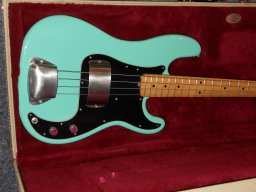
I have two Fender "team built" CS basses, both are fantastic, but neither cost me $8,000 like the OP's examples. Seems to me that's about twice the price they should cost even for a masterbuilt bass.

TalkBass has been independent since 1998. Add your voice.
Create a free account to reply to discussions, view embedded media, and browse with fewer display ads.
Join free Log in
Want zero display ads or expanded classifieds tools? Compare plans.
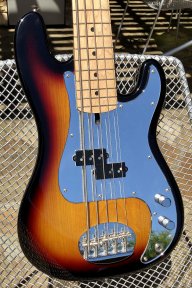
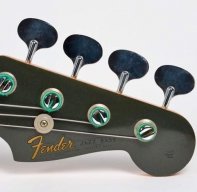
Lots of great responses! My main point in the OP was just that the replicas, no matter who built them or how they were built, should never be considered as (or more) valuable than the real originals they are replicating, IMO. Simply because they are replicas. And I'm comparing the CS basses to vintage basses that are in great functional condition - not some vintage bass that went through a hurricane 25 years ago - I'm talking about solid, 100% original vintage basses that sell for less than the replicas of the same year, with the same appointments.
I know a lot of you guys have thought the same thing, see my point and agree. But I'm sort of surprised at how many people don't see any problem with this picture. When the prices get to the point that they are upside down like they are now, there is definitely something wrong as I see it. It makes me a little bit sad to see that real honest history sometimes loses out to the notion that a bass was built by some master ninja Fender employee.


Whats with all the complaining over multiple body pieces? If you cant see it under the finish and it sounds good, why would anyone care? Also the new thinner necks have extra graphite support rods which the old basses did not.

Whats with all the complaining over multiple body pieces? If you cant see it under the finish and it sounds good, why would anyone care? Also the new thinner necks have extra graphite support rods which the old basses did not.
My main point in the OP was just that the replicas, no matter who built them or how they were built, should never be considered as (or more) valuable than the real originals they are replicating, IMO.
That would depend entirely on what forces are driving the market price of each instrument. We're in a hyperinflationary period right now, with this ongoing quantitative easing. The value of the dollar is going down, and the price of everything that is denominated in dollars is going up. When the real buying power of the dollar gets cut in half, you should expect to see prices on things double.
What happens when the environment becomes inflationary? The replicas end up costing more to produce than the market price of the used originals. Marshall hand-wired amps are a fine example. It costs so much to build them by hand today that the prices for the new production amps are higher than the prices for the original amps. When that happens, people avoid the replicas and bid up the prices on the originals until the price on the originals rises to meet the current production cost of the replica.

Fender's Custom Shop is providing an excellent incentive to buy Lull, Sadowsky, Lakland...

it's like having Chef Ramsay make you a bowl of cereal.
That right there's the Quote Of The Day, I'll tell you what..

I'm just glad I got a new signature quote from this thread.
Thanks!

OP, I started to reply that I only look at sold listing on eBay not the stupid prices people list things for. So I did that and realized you are completely right. CS basses look really cool, but I wouldn't ever go that route. I'd probably use mjtele and make one myself.
Oooh, something new for my bucket list!

Whats with all the complaining over multiple body pieces? If you cant see it under the finish and it sounds good, why would anyone care? Also the new thinner necks have extra graphite support rods which the old basses did not.
Hyperinflation and the dollar falling dramatically? The numbers say otherwise. And indeed, gear prices in general have not gone up very much in recent years.That would depend entirely on what forces are driving the market price of each instrument. We're in a hyperinflationary period right now, with this ongoing quantitative easing. The value of the dollar is going down, and the price of everything that is denominated in dollars is going up. When the real buying power of the dollar gets cut in half, you should expect to see prices on things double.
What happens when the environment becomes inflationary? The replicas end up costing more to produce than the market price of the used originals. Marshall hand-wired amps are a fine example. It costs so much to build them by hand today that the prices for the new production amps are higher than the prices for the original amps. When that happens, people avoid the replicas and bid up the prices on the originals until the price on the originals rises to meet the current production cost of the replica.