Enjoy the benefits of a premium membership!
Upgrade Account
-
TalkBass has been independent since 1998. Add your voice.
Create a free account to reply to discussions, view embedded media, and browse with fewer display ads.
Join free Log in
Want zero display ads or expanded classifieds tools? Compare plans.
You are using an out of date browser. It may not display this or other websites correctly.
You should upgrade or use an alternative browser.
You should upgrade or use an alternative browser.
Fender Custom Shop
- Thread starter MattF007
- Start date
More options
Who Replied?
I find myself agreeing, inspite of having built parts basses on which the parts fit fit with surgical precision. Great players have something special, though the description 'great player' is subjective.
OP
If you value feel, sound and ergonomics over looks, and your bass has all but the looks, then maybe you can overlook a slight gap. This, if you buy off the rack.
However, in an FCS build, a small gap like that had better come with a large gap in price. FCS can build a bass that looks and works great. So let them Fn do it.
Each of my Warmoth builds was so precise that I was worried about chipping the finish during assembly.. and the finished instrument, OMG. FCS can not possibly be better.
Edit. Read the previous post.
Whatever that is; we don't have a measurement to judge.
What is visible .004" gap worth in terms of dollars versus a .006" gap and what if that gap narrows down to less than .001" at the bottom of the pocket?
I have a 1960 CS. There is no gap in the neck pocket.
All neck pockets have gaps, even if you can't see them.

Neck pocket fit isn't the end all, be all. Maybe it can effect the sound but if you play a bass that sounds great who cares? I've played outstanding sounding Fender basses with loose pockets.
Does a loose neck pocket have a bearing on stability? Not really. Those four long wood screws close together are what keep a neck from moving enough to matter.
Does a loose neck pocket have a bearing on stability? Not really. Those four long wood screws close together are what keep a neck from moving enough to matter.

Personally, I could not shell out the $$ for a Fender CS instrument (or anything else in that price range) that had a neck gap or any other build 'flaw'. For that amount of coin I want darn near perfect. If my '90 Peavey has no neck gap, why would/should a bass that costs $4K? Whether or not it affected playability, tone, etc. isn't the issue, it would just bother me every time I looked at it.
But that's just me.
But that's just me.

Yeah appears some folks here are assuming it's a quality issue. It can be, as we saw in the 70s when the tooling was just worn out and neck pockets got sloppy. But even a proper bolt-on neck needs room enough to be placed in the pocket without ruining the finish, and even a tight neck pocket can shift during transportation from the gorillas hired by FedEx and UPS. Doesn't take more than a minute or two however to readjust the alignment.All neck pockets have gaps, even if you can't see them.


Shifting does not cause a gap!
It is the sign of a gap!
This seems to be a really difficult concept for some folks. If you can shift the neck into or out of alignment, there is a gap that should not be on a top quality instrument.
Have you seen this "gap" in person? Show us a pic.
It doesn't matter one bit in terms of function. You can screw a neck to a piece of wood with no neck pocket at all, and it will sound fine, and can be perfectly solid if done correctly. But in terms of craftsmanship, it should not be there on a multi-thousand-dollar object.
Dealers are the ones who need to police this stuff (if it is indeed happening). They are Fender's customers – not us. QC won't change depending on what we say to Fender, or what instruments we reject – only depending on what their dealers say to them, and what instruments their dealers reject.
It doesn't matter one bit in terms of function. You can screw a neck to a piece of wood with no neck pocket at all, and it will sound fine, and can be perfectly solid if done correctly. But in terms of craftsmanship, it should not be there on a multi-thousand-dollar object.
Dealers are the ones who need to police this stuff (if it is indeed happening). They are Fender's customers – not us. QC won't change depending on what we say to Fender, or what instruments we reject – only depending on what their dealers say to them, and what instruments their dealers reject.
Last edited:
@Grinderman, Yes all neck pockets have gaps. But there is a difference between a pencil line gap and a wide gap pocket as the OP was concerned about. But if the neck is secured it should not make a difference.
Oh...
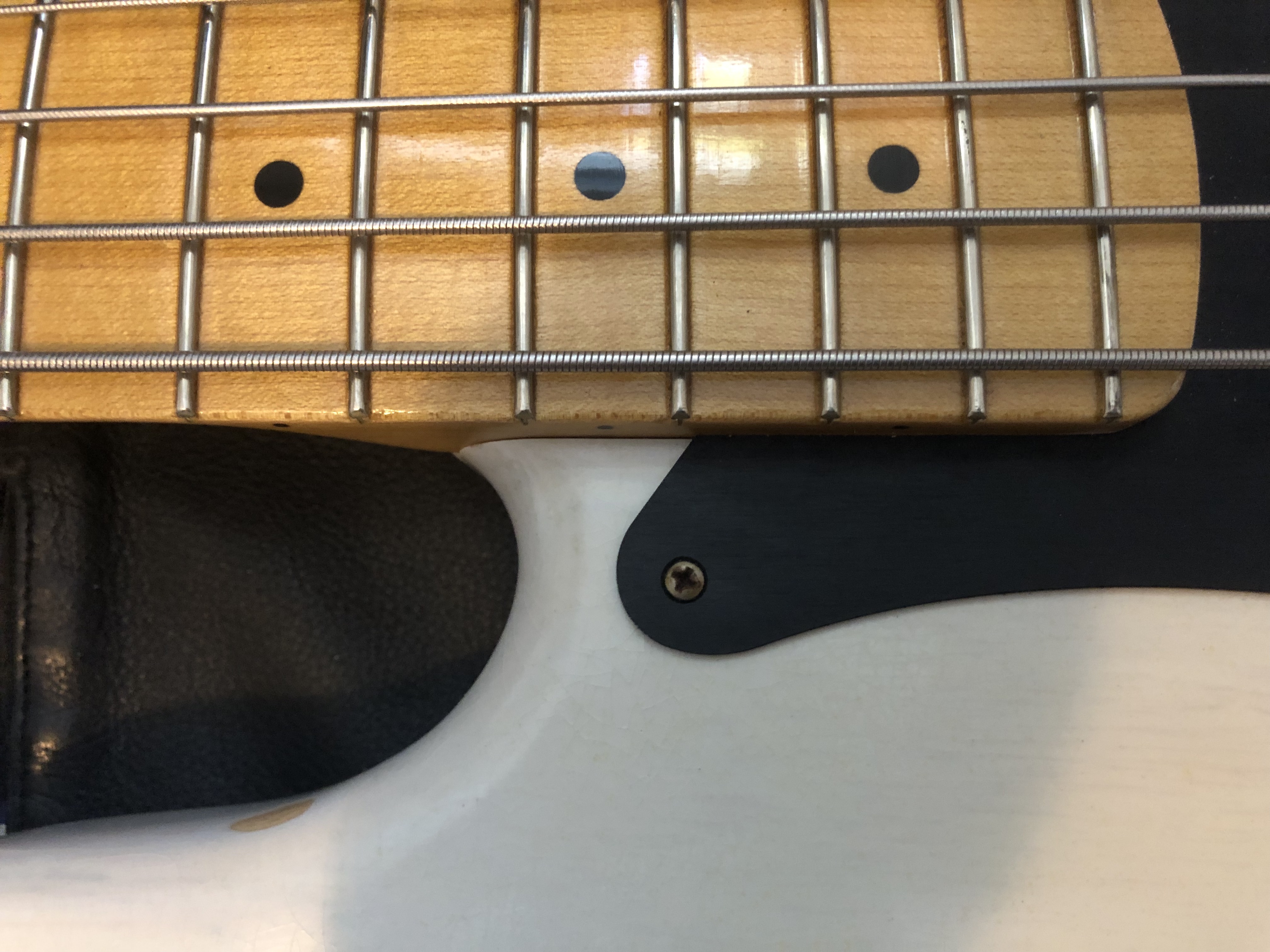
Snap...
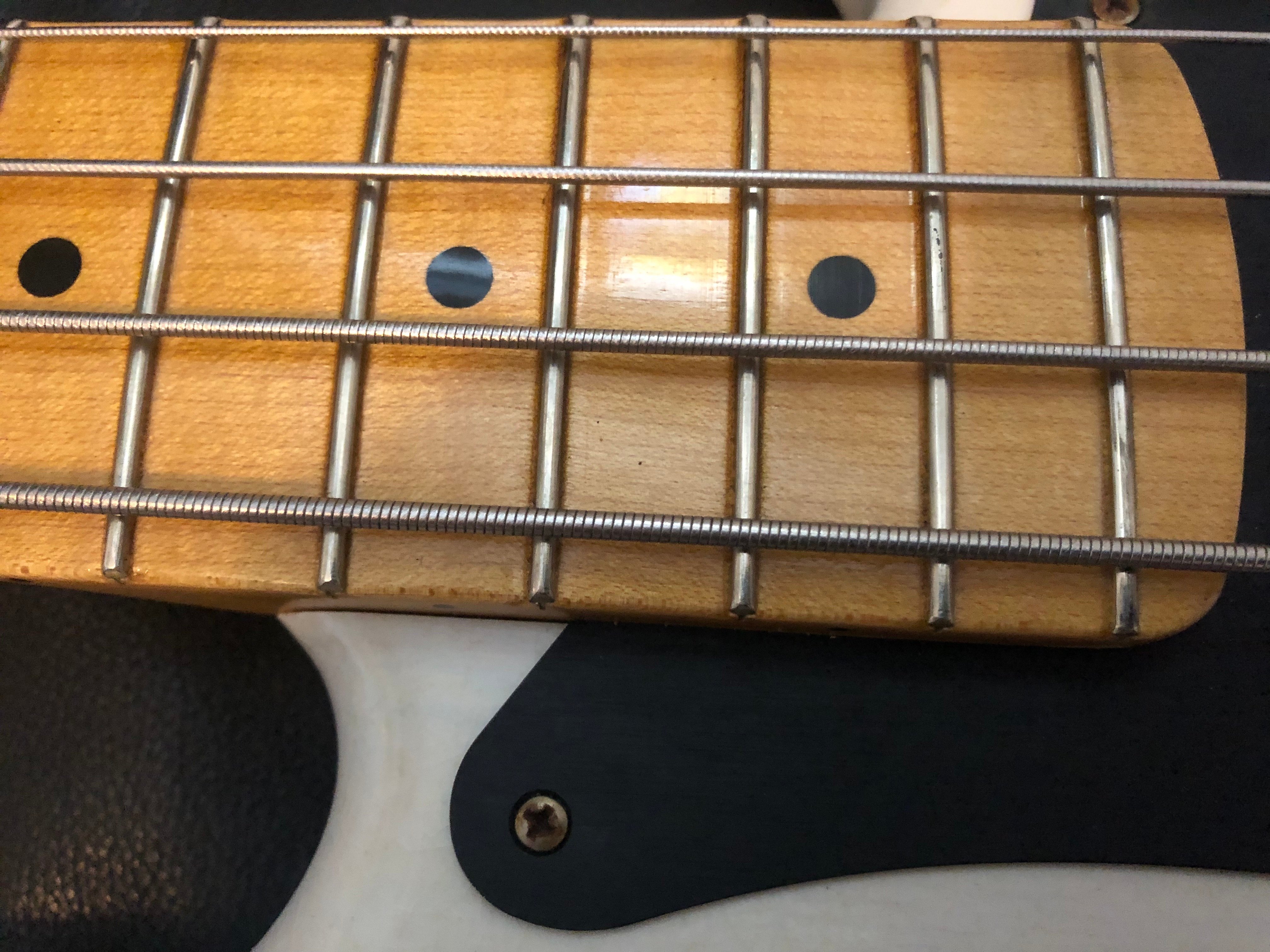
Here is a visible gap, though perhaps the contrast of the white finish versus the shadow line makes it easier to see.
In a correct setup, there's less than .001" gap at the mid-depth of this neck pocket. Any tighter than that, have fun sufficiently loosening the neck enough to make a truss rod adjustment without a hassle and possibly doing big damage to your finish.
Still, yet we can see that the neck can still be positioned in the pocket such that the visible gap on the low side of the neck can be made larger by pivoting the neck.
Q: Why is this possible? A: Because of the asymmetry between the upper and lower body horns.
Q: Is it loose enough to make any adverse tonal or other performance issues? A: Not at all as far as I can tell.
Q: Would a tighter neck and pocket fit improve the tonal characteristics or other performance aspects? A: I suspect not unless you care about ever getting the neck out again without difficulties.
Suggestion: If what you see here is problematic or displeasing to your eyes then you probably should stick to set-neck and neck-trough instruments.
Snap...
Here is a visible gap, though perhaps the contrast of the white finish versus the shadow line makes it easier to see.
In a correct setup, there's less than .001" gap at the mid-depth of this neck pocket. Any tighter than that, have fun sufficiently loosening the neck enough to make a truss rod adjustment without a hassle and possibly doing big damage to your finish.
Still, yet we can see that the neck can still be positioned in the pocket such that the visible gap on the low side of the neck can be made larger by pivoting the neck.
Q: Why is this possible? A: Because of the asymmetry between the upper and lower body horns.
Q: Is it loose enough to make any adverse tonal or other performance issues? A: Not at all as far as I can tell.
Q: Would a tighter neck and pocket fit improve the tonal characteristics or other performance aspects? A: I suspect not unless you care about ever getting the neck out again without difficulties.
Suggestion: If what you see here is problematic or displeasing to your eyes then you probably should stick to set-neck and neck-trough instruments.
@Grinderman, Yes all neck pockets have gaps. But there is a difference between a pencil line gap and a wide gap pocket as the OP was concerned about. But if the neck is secured it should not make a difference.
I haven't seen what they're referring to therefore nothing for me to characterize or comment on specifically.
AKA, pics or it didn't happen.

Last edited:

Most builders advise against having a super tight neck pocket because there is no room for anything to move with humidity shifts. If you've ever seen guitars with finish cracks jutting out from the neck pocket that is usually why it's happening. I'd consider the gap on the bass a few posts above mine to be normal.
Thank you all for your responses and time taken to respond. I did buy the bass and it plays and sounds fantastic. Using the term “gap” was probably over zealous. There is a very very very small tolerance after re attaching the neck and tightening the screws after a truss rod adjustment, and as many of you mentioned probably much preferred to allow for wood movement and truss rod adjustments if required. Too small to capture in a picture especially with the black finish so nothing to worry about. I was just being over concerned.

Now you've bought it, get some pics up!
- a (gapless) CS bass owner
- a (gapless) CS bass owner