
• TalkBass has been independent since 1998. Add your voice.
    Create a free account to reply to discussions, view embedded media, and browse with fewer display ads.
    Join freeLog in
    Want zero display ads or expanded classifieds tools? Compare plans.

Fender factory setups - why so high?

perhaps it's the quantity of product that's the issue here.
Think on this: Fender makes so many basses a day and requires that each of their distributors order and stock so many basses at any given time that perhaps, while all are fairly well set up when they leave the factory, time in transit, months in the stock room, then months on the sales floor leave them in less than pristine condition.
Just a thought.
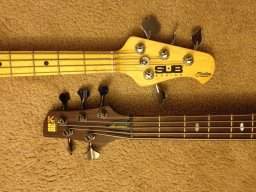
 
If you (not YOU personally, a general you) try a bass with a poor setup, it's instantly made a bad impression and if it makes a poor first impression you're probably not going to feel good about that good about it purchasing it when the bass sitting next to it that plays much better right off the shelf. Intellectually you can tell yourself that it can be improved greatly with a good setup but you might still be left wondering... I think most would leave the store either buying the instrument that plays better out of the box or leaving without buying anything. Understand that when I say "most" I'm talking your average buyer who is going to use the instrument with whatever setup it has directly from the factory.

Cheers, Joe

Can't agree with you more.
 
Ya know, I am usually pretty resistant to jumping into these kinds of threads about "factory" setups, as I always wind up going to the tired old saw of "learn how to do your own setups", but dammit... that's the truth.

It's just silly... if you take up the bass seriously and can't do very basic adjustments like the string height /intonation and neck releif. It just requires a couple allen wrenches! It's not magic, and if you go in small steps, it's pretty hard to screw up anything that you just can't back off and un-do.

Really, now, it's like going to the showroom to buy a new car and passing because the seatback, tilt-wheel and mirrors weren't set where you needed them to be comfortable.

Two allen wrenches, turn clockwise or counterclockwise and see if it's better or worse... not rocket science.
 
Most manufacturers (not just instruments) live by the mantra that quality in excess of consumer expectation is a waste. Why should they have to produce a higher quality when most people aren't even aware of how good their instrument can and should be?

Very well said. I'm sure there's a reason they do what they do and I can't imagine that they haven't run the numbers on this but to me it does seem counter intuitive. The responses have been interesting to read.

Cheers, Joe
 
Ya know, I am usually pretty resistant to jumping into these kinds of threads about "factory" setups, as I always wind up going to the tired old saw of "learn how to do your own setups", but dammit... that's the truth.

It's just silly... if you take up the bass seriously and can't do very basic adjustments like the string height /intonation and neck releif. It just requires a couple allen wrenches! It's not magic, and if you go in small steps, it's pretty hard to screw up anything that you just can't back off and un-do.

Really, now, it's like going to the showroom to buy a new car and passing because the seatback, tilt-wheel and mirrors weren't set where you needed them to be comfortable.

Two allen wrenches, turn clockwise or counterclockwise and see if it's better or worse... not rocket science.

Agreed. Most adjustments are one direction or the other and typically no one dies. Actually fairly simple.


Here's something I've seen time and time again... a bass with a "good setup" for me clanking in someone else's hands. Most people simply can't appreciate/work with what would pass for a good setup for a lot of us and the safest thing to do is to set the instruments up for that lowest common denominator. I used to wonder why setups weren't better in some stores and then I started to look around at who was playing the basses and how they were being played.

I've had seasoned players play some of my instruments and complain that the bass couldn't be played cleanly. I'd politely point out that in fact they could easily be played cleanly... by me... the person the bass was set up by/for...

and that the action could easily go higher to accomodate them. I used to think that was obvious. Not anymore.

Learn to sight a neck and look for obvious flaws. learn how pickup height affects output. Learn how to adjust a trussrod and saddles... heck, get a decent tuner and learn to set intonation. Once you get these basic skills under your belt

A. You'll wonder why you didn't do this a long time ago and
B. You'll have an instrument that is truly set to how you play.

Where's the downside in that? Some people will even think you're a genius because you know that turning a saddle screw clockwise raises it and counterclockwise lowers it. Wow.

Anyone who wants to limit their decision about an instrument on what they should know is a generic setup... hey, it's your loss.
:cool:
 
That's certainly a possibility as I live in New England and most basses seem to be manufactured in much warmer climates (and at least in the winter time, much more humid climates as well). If that was the case though, I would expect other manufacturers to suffer from the same issues as many other basses seem to be manufactured in the same geographic areas.

As mentioned though, Fender isn't the only one with such issues but of the Ibanez, Schecter, Spector, Music Man and a few other basses I've tried out, it seemed that the Fender setups were the highest of the bunch.

Ultimately it doesn't matter much to me. The curiosity is sparked more from the business side of me (I own two businesses) and I was thinking that if I built basses or guitars, I'd want them to arrive at the store with a really decent factory setup as it would make for a more competitive product. Granted Fender might not need that because when a lot of beginners ask their instructors what to buy they are (I am speculating) more likely to hear "get a Fender (insert P or J here based on the instructor's recommendation)" than anything else.

Cheers, Joe

In some store there are people with the ability to tweak a bass you're interested in. People don't seem to ask for that very often, not sure why other than thinking the bass is as it is.

Setup isn't permanent. Always keep that in mind.
 
I'm going to go against the grain and throw out an alternative answer: they set them high (and recommend extremely high setup specs) because it makes them less culpable for less than quality work.

Except they don't recommend high setup specs. When a instrument travels cross country and varying conditions a store might need to restore it to factory specs. I still think it's the store doing the bare minimum not Fender.
 
Ya know, I am usually pretty resistant to jumping into these kinds of threads about "factory" setups, as I always wind up going to the tired old saw of "learn how to do your own setups", but dammit... that's the truth.

It's just silly... if you take up the bass seriously and can't do very basic adjustments like the string height /intonation and neck releif. It just requires a couple allen wrenches! It's not magic, and if you go in small steps, it's pretty hard to screw up anything that you just can't back off and un-do.

Really, now, it's like going to the showroom to buy a new car and passing because the seatback, tilt-wheel and mirrors weren't set where you needed them to be comfortable.

Two allen wrenches, turn clockwise or counterclockwise and see if it's better or worse... not rocket science.

Not sure if that's a good analogy. If a noobie goes in trying out that new bass that caught his eye, but doesn't feel right he would probably walk away from the purchase. Much like I would if I went to purchase a car and the doors didn't line up right or if it pulled to the right while driving. Both easy fixes if you know what you're doing, but why should something right off the showroom floor need maintenance?
 
Ya know, I am usually pretty resistant to jumping into these kinds of threads about "factory" setups, as I always wind up going to the tired old saw of "learn how to do your own setups", but dammit... that's the truth.

That's all fine and dandy. I don't disagree but you're missing the point of the thread entirely. Regardless of how you feel about setting up a guitar, and regardless of whether or not you're right or wrong, the fact of the matter is that most people do not have this skill, and most people will never acquire it. With that fact in mind, if you're a manufacturer of musical instruments and you know your instruments will be on a rack competing with other manufacturers, what do you do with that knowledge in order to keep your competitive edge? That's the point. Even if you are a master guitar tech, it's completely irrelevant because I don't know of any store that's going to let you do a full setup of every instrument on their rack before you try it. The store I worked for wouldn't have allowed that because we have no way of knowing what someone's level of proficiency is and they could end up damaging and instrument.

Cheers, Joe
 
Well said. Couldn't agree more.

Thanks, I felt the same about your post.

I've almost felt sorry for some of the people I've bought killer instruments from... the only issue they had with them was the setup. In many cases they've bugged me about buying their basses back after they played them following my very basic tweaks. Crazier still is that even after showing or explaining exactly what I did, I've seen them do the same with a subsequent instrument. After a while I stop looking the gift horse in the mouth.
:D

Action too high, dead strings, you name it... I've found boutique instruments for killer prices due to dissatisfaction with the simplest, easiest to fix stuff imaginable.

"Wow, this sounds like a new bass. What did you do?".

"Changed the strings. Turned the trussrod about a 1/4 turn. Put some foam rubber under the pickups to raise them up".

:hmm:

*often a stupid look comes over their face because in many cases this is exactly what I recommended they do BEFORE I bought their bass. I try to help first if possible. They apparently don't believe how big a difference it can make.

Honestly I'd rather see someone happy with their gear than acquire another stupid deal.
 
Okay, I understand that nowdays people don't like working with tools. Maybe it's because I'm an old guy, I don't get the "plug-n-play" mentality.

Even if yoiu buy the bass "off the rack" perfect, what do you do when you go change to your chosen favorite set of strings? Whine about the setup changing, go pay a tech to fix it? Really?

I worked with a news cameraman, one of the guys who gets the call at 3:15 in the morning to jump in the van and get the footage of the flaming building downtown, and he told me something that stuck with me a long time:

"it's not enough to just take pretty pictures, in order to get this gig, you gotta be able to field-strip the camera in the back of the van with a flashlight to figure out what's wrong with it, if it jams up or acts up, because you usually have a limited window of time to get the footage."

If you're a serious player, some knowledge of how to set up and maintain your instrument should be part of the learning process.
 
Except they don't recommend high setup specs. When a instrument travels cross country and varying conditions a store might need to restore it to factory specs. I still think it's the store doing the bare minimum not Fender.

I find them to be exceedingly high. But then again, I do this for a living, so my standards are different than most. Of course I'm happy to set up an instrument to a person's taste, but I almost never hear complaints about an action that plays too low and too clean.
 
In some store there are people with the ability to tweak a bass you're interested in. People don't seem to ask for that very often, not sure why other than thinking the bass is as it is.

Setup isn't permanent. Always keep that in mind.

To reiterate what I said in another post... I know that, and you know that, but that's not the point. Many buyers (especially inexperienced buyers) don't know that. A privately owned shop might extend that courtesy to you but I'm willing to bet that the local Guitar Center (which is often all there is in many places) isn't going to extend that level of service (nor would most buyers know to ask for it).

So again, someone goes into a store, starts pulling instruments off the rack and playing them. They have no idea how to do a setup, and they have no idea that some stores might be willing to do a quick setup on request (and more likely, they wouldn't). This would be the majority of retail situations in the US. From the point of view of the manufacturer knowing that you're competing against other brands, what do you do with this knowledge?

Cheers, Joe
 
That's all fine and dandy. I don't disagree but you're missing the point of the thread entirely. Regardless of how you feel about setting up a guitar, and regardless of whether or not you're right or wrong, the fact of the matter is that most people do not have this skill, and most people will never acquire it. With that fact in mind, if you're a manufacturer of musical instruments and you know your instruments will be on a rack competing with other manufacturers, what do you do with that knowledge in order to keep your competitive edge? That's the point. Even if you are a master guitar tech, it's completely irrelevant because I don't know of any store that's going to let you do a full setup of every instrument on their rack before you try it. The store I worked for wouldn't have allowed that because we have no way of knowing what someone's level of proficiency is and they could end up damaging and instrument.

Cheers, Joe

You're missing the point another poster and I already made which is very valid... the same people who won't acquire the skill to set up their instrument in large part won't acquire the skill to play a bass with a really good set up. No offense to anyone, it's almost amazing how bad some people can make even an excellent bass sound. I've seen it and it ain't pretty.

The safest thing for a manufacturer to do is to set up the basses with that lowest common denominator player in mind... IME they're typically the ones who are going to be obsessing over the store setup vs. understanding that they may need tweaks to get the bass in the sweet spot for them. By the same token they're also the ones who will write a bass off quickly because they don't like what they see. There is no perfect situation... somebody's going to be bothered no matter what.
:D

Again, if you're seriously interested in a bass, ask the store to tweak it. I wouldn't go in GC and ask if I could tweak a bass but I have gone in stores where they know me and they have no problem because they know I know what I'm doing.
 
To reiterate what I said in another post... I know that, and you know that, but that's not the point. Many buyers (especially inexperienced buyers) don't know that. A privately owned shop might extend that courtesy to you but I'm willing to bet that the local Guitar Center (which is often all there is in many places) isn't going to extend that level of service (nor would most buyers know to ask for it).

Again, no offense... are you assuming that or did you actually try? I ask because I did ask that a bass be tweaked at the GC in Rockville, MD and they sent me upstairs to the repair dept. and the tech tried toi get the instrument in the ballpark setup-wise that I was looking for. It can happen.

So again, someone goes into a store, starts pulling instruments off the rack and playing them. They have no idea how to do a setup, and they have no idea that some stores might be willing to do a quick setup on request (and more likely, they wouldn't). This would be the majority of retail situations in the US. From the point of view of the manufacturer knowing that you're competing against other brands, what do you do with this knowledge?

Cheers, Joe

It's a no-win situation. You have many folks who don't know any better and they'll simply leave, come to place like TB and complain about how horrible this bass or that bass was... it happens often. people try to educatethem hear but often that falls on deaf ears.

You have sales people ask questions and often not get honest answers like "This is cool but the action's kind of high for me"... because the customer has simplified it to "That bass sucks. GC sucks. I'm leaving".

Funny thing is typically the thing that sucks isn't the bass. But it's the easiest to blame. What some of us are saying is that the customer needs to be more educated and that the setups in the stores are okay for most people.
 
  • Like
Reactions: Nimzowitsch
That's all fine and dandy. I don't disagree but you're missing the point of the thread entirely. Regardless of how you feel about setting up a guitar, and regardless of whether or not you're right or wrong, the fact of the matter is that most people do not have this skill, and most people will never acquire it. With that fact in mind, if you're a manufacturer of musical instruments and you know your instruments will be on a rack competing with other manufacturers, what do you do with that knowledge in order to keep your competitive edge? That's the point. Even if you are a master guitar tech, it's completely irrelevant because I don't know of any store that's going to let you do a full setup of every instrument on their rack before you try it. The store I worked for wouldn't have allowed that because we have no way of knowing what someone's level of proficiency is and they could end up damaging and instrument.

Cheers, Joe

A set up can change during shipping and it can change on the rack that the manufacturers know the prospective buyers are pulling the basses off of. It's really the stores responsibility to make sure the instruments are set up "well." And as I said in an earlier post its about some basses are set up well and others aren't. I could see manufactures being cautious and setting basses up a little higher so that players who really hate any fret buzz don't get any and then who knows what it goes through while its shipped or what the environment of the back room at a GC or something else is like and how long it sits there. That's just my take on it.