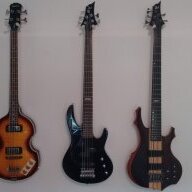
And blah blah blah makes for a fine fingerboard material!This "just doesn't matter" thread will eventually become 1000 pages of if blah blah blah

TalkBass has been independent since 1998. Add your voice.
Create a free account to reply to discussions, view embedded media, and browse with fewer display ads.
Join free Log in
Want zero display ads or expanded classifieds tools? Compare plans.
And blah blah blah makes for a fine fingerboard material!This "just doesn't matter" thread will eventually become 1000 pages of if blah blah blah
It`s fine to like a dark fretboard but your prejudice against lighter coloured ones is baseless. Also, pau ferro comes in darker shades. The pau ferro on my Fodera and Ken Smith looks like rosewood.
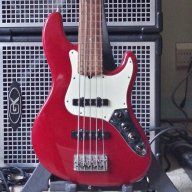
...
In another thread, someone informed me that Ishibashi is no longer willing/able to sell instruments that contain rosewood internationally. Invalid Link Removed
Then you haven't read the whole thread. And I'd rather be accurate than summarily dismiss the opinion of someone just because you disagree with it.One, but who's counting. I mean, we know you aren't.
I'm waiting for the price of used instruments with rosewood to soar!
They (CITIES) need to seriously revisit their decision to put ALL species of dalbergia (rosewood) on the endangered list regardless of whether they are endangered or not.
Saturday morning tonewood rambling started. I think this applies to rosewood, ebony or any other hard to find wood and how cosmetics and sound quality interact and affect it's use as a tonewood. If not, hopefully it's at least interesting!
As far as spruce goes, I'm a luthier who also cuts Adirondack Spruce trees, which long ago was the only species of spruce used by the big acoustic builders like Martin and Gibson. They stopped using red spruce some time during the 1940s because there were not enough good trees left. So they switched to Sitka. Sitka was great because the trees were abundant, huge, old and it was very easy to find trees with near perfect, straight, even, 18+ grain per inch.
Sweet Parlor!

I have a bass with pau ferro, and nobody ever said it looks cheap. It wasn't cheap, either.

Pau Ferro is a wood of many names, and is sometimes called Morado: and because the wood is so similar in appearance and working properties to rosewood, it is also sometimes referred to as Bolivian or Santos Rosewood. The wood has been used in various capacities as a substitute for the endangered Brazilian Rosewood. Although the wood is not technically in the Dalbergia genus, it’s in a closely-related genus (Machaerium), and contains the same sensitizing compounds found in rosewoods—about as close to a true rosewood as a wood can get without actually being a Dalbergia species.
From: The Wood database
I guess I'll weigh in here.
Off topic: I have had the opposite experience to 5544 as my two pau ferro boards are amazing and on amazing instruments. One is a warmoth-neck fret less with an unknown body. It feels and sounds great. Much better than the $400 I paid for it. The other is a Peavey Millennium 5. If you read much of my post history you will know that I'm a bit of a peavey-aholic so not much explanation needed there.
On topic: Actually I think this is a good move for the big F as they are a global brand and the new cites ******** would otherwise make their business a lot harder. Added bonus is that now the rosewood boards from now will be "collectible and rare" in a decade or so. Other personal preference issues will be vocally shared I'm sure and as with every decision the there will be winners and losers. Sad but true.
Ebony will be great on the higher end models, but pau ferro on the Mexi's will just make them look cheap.
Was about to state the same. As far as i remember most of their top line signature basses late 90s were made with Pao Ferro ( RBV, STUHamm URge I. Deluxe Vs etc etc) so to my record Cheap is not the word that comes to my mind when speaking about Pao FerroLook cheap? How so?
Well, as with everything, it all comes down to personal preference. I have had a couple Pau Ferro boarded basses, as well as a Sadowsky Metro with Morado. Absolutely nothing wrong with them.
However... Strictly my personal preference, but I much prefer the APPEARANCE of a dark rosewood over the lighter Pau Ferro or Morado. IMO, the darker rosewood gives a more aesthetically appealing, and dare I say "richer" appearance.So there is no right or wrong in this case. Only opinions, which almost always clash.
Besides, you like maple! 


Good thing there's about 250,000 used Fender basses with rosewood fingerboards still around



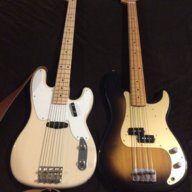
The main thing I don't like about maple boards, and I have two of them, is that the high gloss finish on them feels a little sticky or grabby under my fretting hand. No doubt I'd get used to it if it was all that's available. The roasted maple sounds very promising as I understand that it doesn't require a finish on top. If it can also accept stains or dyes then you could end up with something visually and physically similarly feeling to ebony or dark rosewood.We are such creatures of habit and bias. Here in N. America we have a fantastic and versatile tonewood, maple, that literally grows like weeds. Makes a great fingerboard, but , it's not brown. So we must have a species from 1000's of miles away, to use on solidbody instruments no less.
I've got a parts jazz bass with an MIM deluxe neck with a pau ferro board and it looks fine to me.Ebony will be great on the higher end models, but pau ferro on the Mexi's will just make them look cheap.


 say that.