
Enjoy the benefits of a premium membership!
Upgrade Account
-
TalkBass has been independent since 1998. Add your voice.
Create a free account to reply to discussions, view embedded media, and browse with fewer display ads.
Join free Log in
Want zero display ads or expanded classifieds tools? Compare plans.
You are using an out of date browser. It may not display this or other websites correctly.
You should upgrade or use an alternative browser.
You should upgrade or use an alternative browser.
Fender P Bass Fake?Parts bass?
- Thread starter kickshoot
- Start date
- Status
- Not open for further replies.
More options
Who Replied?

All Fenders are parts basses. The parts bass isn't from Fender.
Whether it's worth buying depends on what you want and how much the sellers asking for it.
Whether it's worth buying depends on what you want and how much the sellers asking for it.



First, look under the pickguard.Would I need to loosen the neck to verify the body.

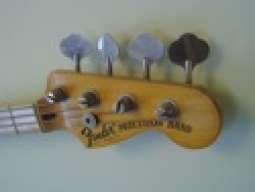

All Fenders are parts basses.
ALL basses are parts basses. About time to retire this lame comment. You know what he's asking.


It’s not genuine thats not in doubt
What does it play like? What does it sound like? How much could you buy it for?
Might make the basis for a project
Ummm...
"Fender P Bass Fake?Parts bass?"

ALL basses are parts basses. About time to retire this lame comment. You know what he's asking.
All basses are not parts basses - A Rickenbacker isn't made from parts that are easily swappable (the neck certainly isn't).
Fenders are fundamentally different - one of the key aspects of Leo's design is that you can make one pretty much anywhere in the world, and so long as you don't mess things up too much, it'll work - it's a very tolerant design, it's the AK47 of basses, and the parts have defined interfaces - you can change necks, bodies, pickups, bridges, etc. without drilling new holes. That's a double edged sword - it means Fender can make then fast, sloppy, and cheap, but you can also make basses from the basic design that work just fine, even with out the "expertise" of Fender's folks. That's the other edge of the sword.
And yes, the person was asking if the bolting together occurred in a Fender factory. The consensus on this one seems to be no. The thing that the OP should be looking at is the neck - if that's straight, the thing plays well, the truss rod works, and it doesn't have a pronounce dead spot, then it's a serviceable instrument. But, the seller seems to be starting from a point of deceit - selling something that isn't what it's claimed to be. That's my issue - I don't want to buy something from someone who does that kind of thing - that bass would be worth something to me without the Fender logo, but with it, it's not something I would buy.
Last edited:

Check out Kennis Russell on YouTube. He tells how to spot fakes.Please look at these pictures and tell me what you think.
- Status
- Not open for further replies.


