• TalkBass has been independent since 1998. Add your voice.
    Create a free account to reply to discussions, view embedded media, and browse with fewer display ads.
    Join freeLog in
    Want zero display ads or expanded classifieds tools? Compare plans.

Fender Rumble Club

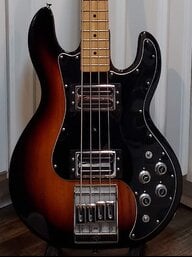
Anyone else find out that some basses need to be EQ'd completely different? Might be a no brainer here but I find a sound that works and go with it. For instance, Fender basses seem to warm up and sound really good with the "contour" button engaged IMO but I almost didn't buy a Thunderbird I played on the same Rumble 500 in store that I have at home because I set it up the same way I do for Fender basses. Sounded terrible with the Thuderbird, too dark and muddy. Took the contour button off, played with the EQ knobs for a good 15 minutes and found an awesome tone. I should have read the manual I guess. Says right in it that contour is a "mid-frequency cut, combined with low-and- high frequency boosts that offer a fat pleasing tone, useful for slap style playing, low-volume practice, or in combination with OVERDRIVE.

I have never slapped a day in my life and I don't touch the overdrive. The "low-volume" practice would also explain why it sounds great playing at home alone and like crap in a mix at even practice volumes. Now I wonder how many great basses Ive passed on because of that damn contour button :rollno:
 
Hey guys/gals... just wondering; I have a Rumble 500 head and I would like to start using my Rumble 115 cab more often for practice and gigging. Anybody use this setup for gigging/practice? I know I would have to be cautious when running the 500 through the 15 (to avoid blowing the speaker). I have a R410 cab also but would like to see what kind of air I can push (without damaging the speaker) using the R115 paired with the 500. Thanks!
If you add an HPF to your signal chain, it will protect your speakers and increase clarity at higher volumes.
It cuts out unwanted sub-sonic lows that create mud and will reduce unnecessary speaker movement.
 
If you add an HPF to your signal chain, it will protect your speakers and increase clarity at higher volumes.
It cuts out unwanted sub-sonic lows that create mud and will reduce unnecessary speaker movement.
Never thought of that. Not familiar with High Pass Filters. What exactly are they. Do you put them in a signal chain like an effects pedal?
 
Just before Easter, my Rumble 500c developed a scratchy volume pot, so I took it back to the store in the hope of getting it fixed. After inspecting it, they sent it on to Fender. I had imagined that they would replace the bad pot, but I received word today that they’re replacing the amp altogether - a new one has been ordered, and should be with me shortly. Not bad, considering I got the amp three and a half years ago. :)


January 1, 2017, almost 2 and ½ years ago, started the new 2-year non-transferable warranty. 3 and ½ years ago you got the 5-year transferable warranty. Sounds like they are just living up to their warranty. What a great idea!
.
That is excellent customer service :thumbsup: ... ...


Yes. Yes, it is, indeed. :thumbsup:
.
... ... PS: do you think they will do the same with my scratchy modded 100C :D :laugh:?


Oops! eric, if you mean this modded 100C, I bet you already know the answer. :roflmao:
.
 
You actually already have a High Pass Filter built into the circuitry of your Rumble 500.
Just wondering where is it set?

What I was referring to above is an adjustable HPF that also tames boomy venues and hollow stages.

A fixed, internal HPF is set to protect the speakers, which is good but really is just a part of what an adjustable one can do.:thumbsup:
 
January 1, 2017, almost 2 and ½ years ago, started the new 2-year non-transferable warranty. 3 and ½ years ago you got the 5-year transferable warranty. Sounds like they are just living up to their warranty. What a great idea!
It is excellent customer service, no doubt about it.

As for the five-year transferable warranty, I'm not so sure. To my knowledge (I may be wrong, @Linnin would probably know for sure), this warranty was only offered in some markets, notably the US. It's certainly never been mentioned in my neck of the woods.

However, we have good consumer protection in Norway, so for expensive items that are intended to last for five years or more (electronics fall into this category), we have a right to put in a claim if something goes wrong within those five years. The vendor or manufacturer must then inspect the item and assess the problem. If the problem is found to be caused by a manufacturing defect (rather than user error), they then have the option of repairing or replacing the item. Fender chose to replace it altogether when they could have got away with less, thereby showing themselves to be a class act.
 
Just wondering where is it set?

What I was referring to above is an adjustable HPF that also tames boomy venues and hollow stages.

A fixed, internal HPF is set to protect the speakers, which is good but really is just a part of what an adjustable one can do.:thumbsup:
Hey Stumbo...would you provide me with a couple links so I can check out a couple of these? Thanks!
 
  • Like
Reactions: GonePlaid
Right! As an update: it is still working great, no issues whatsoever.
The volume pot is a bit scratchy but not an issue as I just set the volume and don't touch it anymore.


I just have to say, "thank you, again", eric, for taking the time and effort to do, and document, what I, and probably others, have only fantasized about doing in separating a combo's amp and speakers. That is still my favorite of the collected Rumble Modifications on the Rumble Wiki page. :thumbsup:
.
 
Hi Rumblers
I have a Send and Return query, hope someone can advise.
Just experimenting, I plugged by bass in to my GK150 combo, then took an effects send from the GK to the effects return of the Rumble 500c.
The GK worked as it usually does (as expected), but the signal bypassed the master volume on the Rumble, meaning the input gain on the GK became a 'master' for the Rumble. Is this normal for amps to behave like this, as I was expecting the Rumble master still to be working?
By the way, it sounded great and I might well use this on a gig where the GK can be used as a monitor with the Rumble providing the welly.
 
  • Like
Reactions: GonePlaid
Hi Rumblers
I have a Send and Return query, hope someone can advise.
Just experimenting, I plugged by bass in to my GK150 combo, then took an effects send from the GK to the effects return of the Rumble 500c.
The GK worked as it usually does (as expected), but the signal bypassed the master volume on the Rumble, meaning the input gain on the GK became a 'master' for the Rumble. Is this normal for amps to behave like this, as I was expecting the Rumble master still to be working?
By the way, it sounded great and I might well use this on a gig where the GK can be used as a monitor with the Rumble providing the welly.
Going into "Effects Return" bypasses the preamp section of the Rumble. So, yes, it's normal-by design.
 
Hi Rumblers
I have a Send and Return query, hope someone can advise.
Just experimenting, I plugged by bass in to my GK150 combo, then took an effects send from the GK to the effects return of the Rumble 500c.
The GK worked as it usually does (as expected), but the signal bypassed the master volume on the Rumble, meaning the input gain on the GK became a 'master' for the Rumble. Is this normal for amps to behave like this, as I was expecting the Rumble master still to be working?
By the way, it sounded great and I might well use this on a gig where the GK can be used as a monitor with the Rumble providing the welly.
It is normal for it to bypass the master volume. It bypasses everything and the preamp is ignored. You are only using the amp then as a slave power amp.
 
I just have to say, "thank you, again", eric, for taking the time and effort to do, and document, what I, and probably others, have only fantasized about doing in separating a combo's amp and speakers. That is still my favorite of the collected Rumble Modifications on the Rumble Wiki page. :thumbsup:
.
Thanks G, although technically it is pretty simple.
It just takes the guts to cut a hole and some wires in your nice combo and get it working again :)

It is nothing compared all the time and efforts you (have) put into the Rumble Club Wiki page.
A more than excellent job, I take my hat off for that and I think you deserve more than a big mention for that! :thumbsup: