

Enjoy the benefits of a premium membership!
Upgrade Account
-
TalkBass has been independent since 1998. Add your voice.
Create a free account to reply to discussions, view embedded media, and browse with fewer display ads.
Join free Log in
Want zero display ads or expanded classifieds tools? Compare plans.
You are using an out of date browser. It may not display this or other websites correctly.
You should upgrade or use an alternative browser.
You should upgrade or use an alternative browser.
First build: 5 string EUB
- Thread starter Rickett Customs
- Start date
More options
Who Replied?
Next considerations will be truss rods, tuners and string ferrules.......
Was considering 2 "U" channel trussrods....possibly a cf rod in the center.
This should allow me to get a thin profile for the neck.
Hipshot ultralites for tuners.
Was considering 2 "U" channel trussrods....possibly a cf rod in the center.
This should allow me to get a thin profile for the neck.
Hipshot ultralites for tuners.
Didn't do alot. Marked it out a little bit.
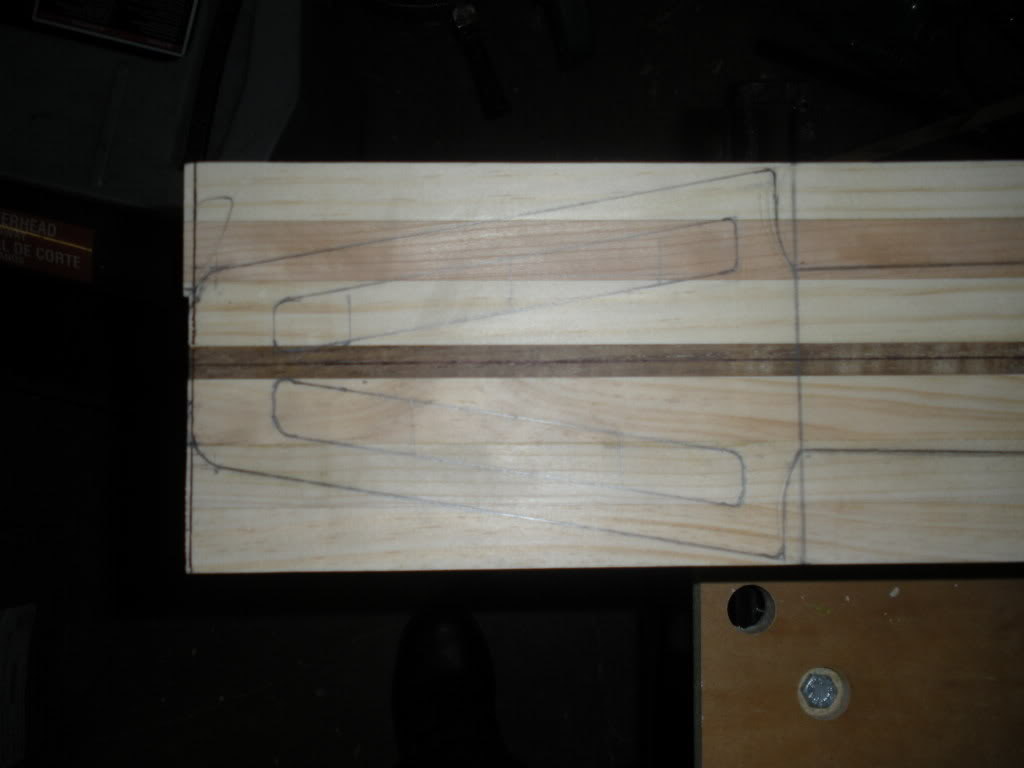
Decided to go with a 10deg tilt for the headstock
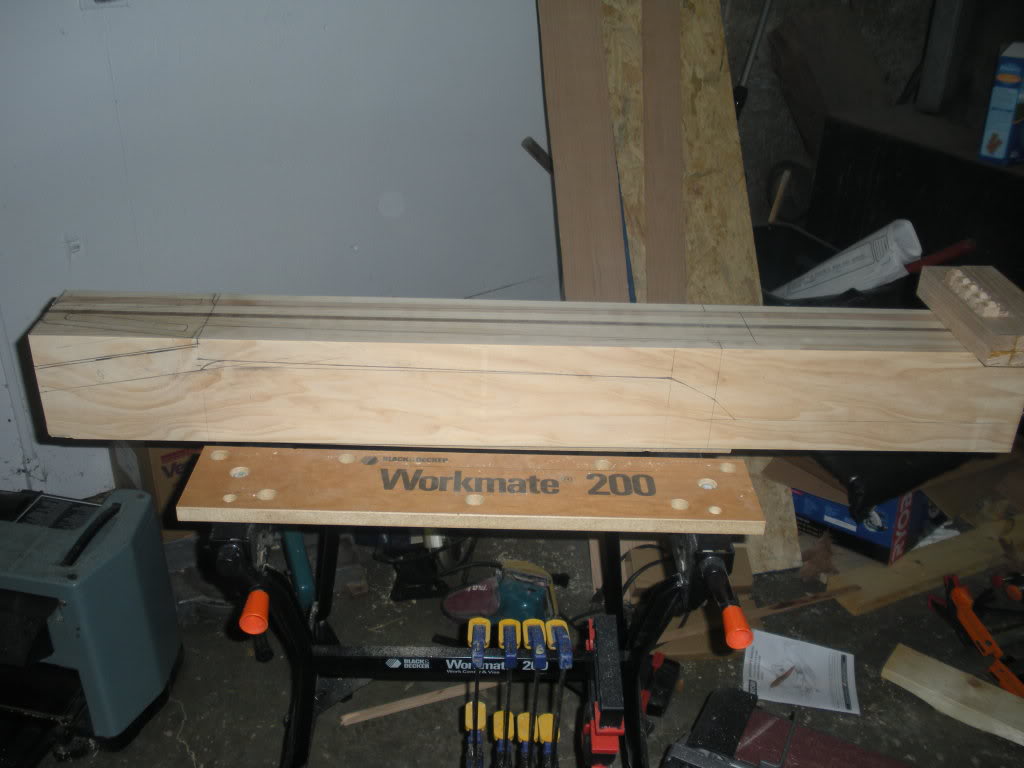
Did speak with erikjobrik today, he suggested 2 dual action truss rods, instead of u channels, because the u channel is only one direction, made sense to me, so I may just go with the "hot rods" from Stu mac.
Decided to go with a 10deg tilt for the headstock
Did speak with erikjobrik today, he suggested 2 dual action truss rods, instead of u channels, because the u channel is only one direction, made sense to me, so I may just go with the "hot rods" from Stu mac.
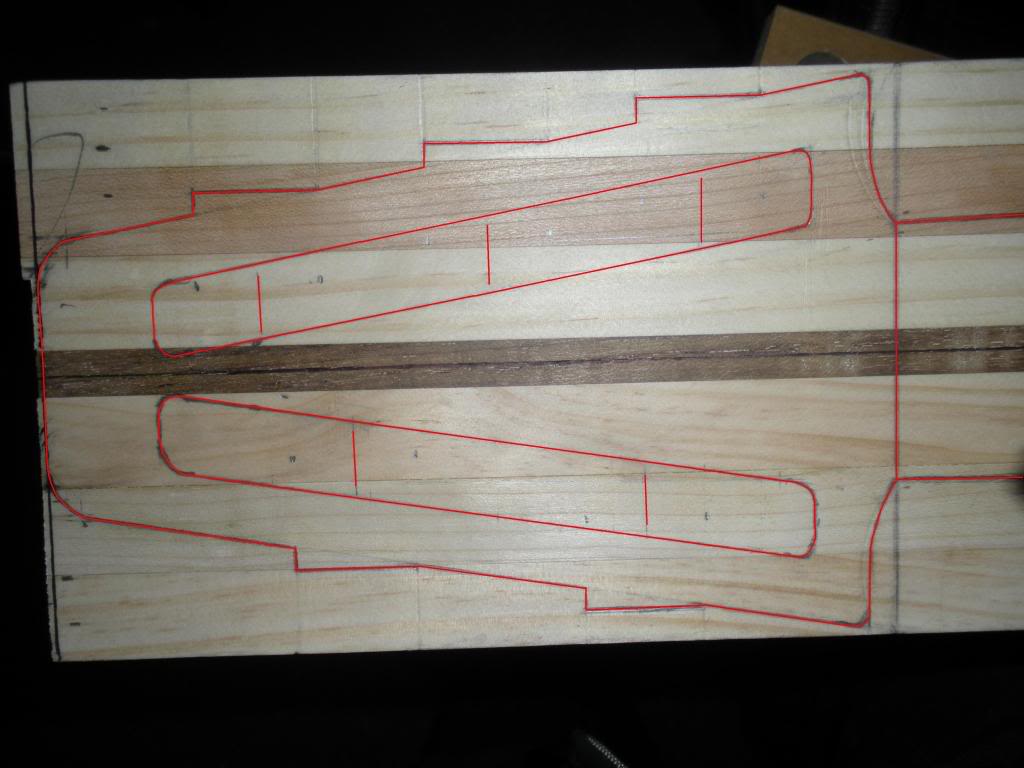
Just a couple of illustrations of what is to be:
**Red lines were added for visibility**
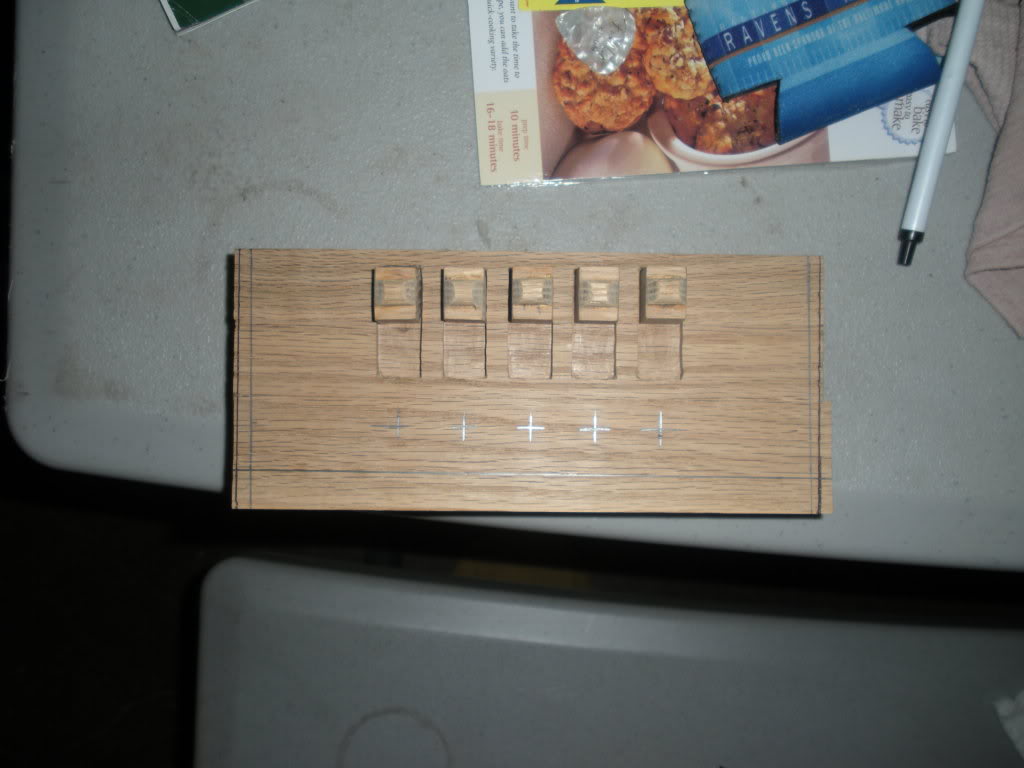
Added some points, so that the tuners will sit level after taper.
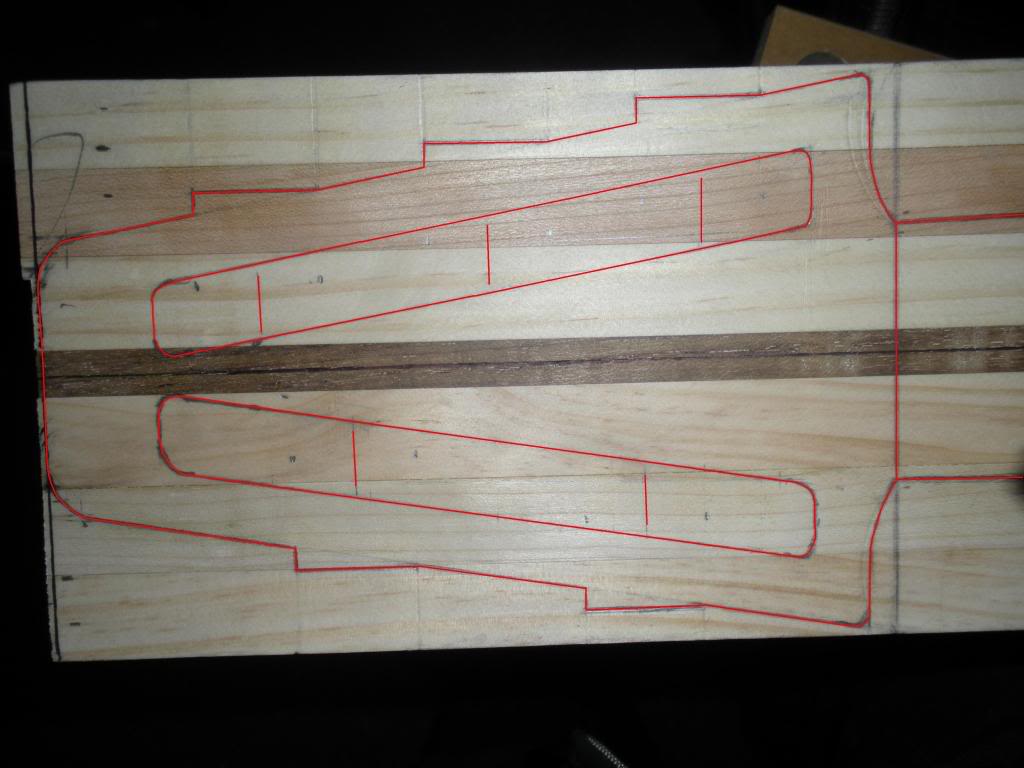
This is close to what the final neck taper will be.
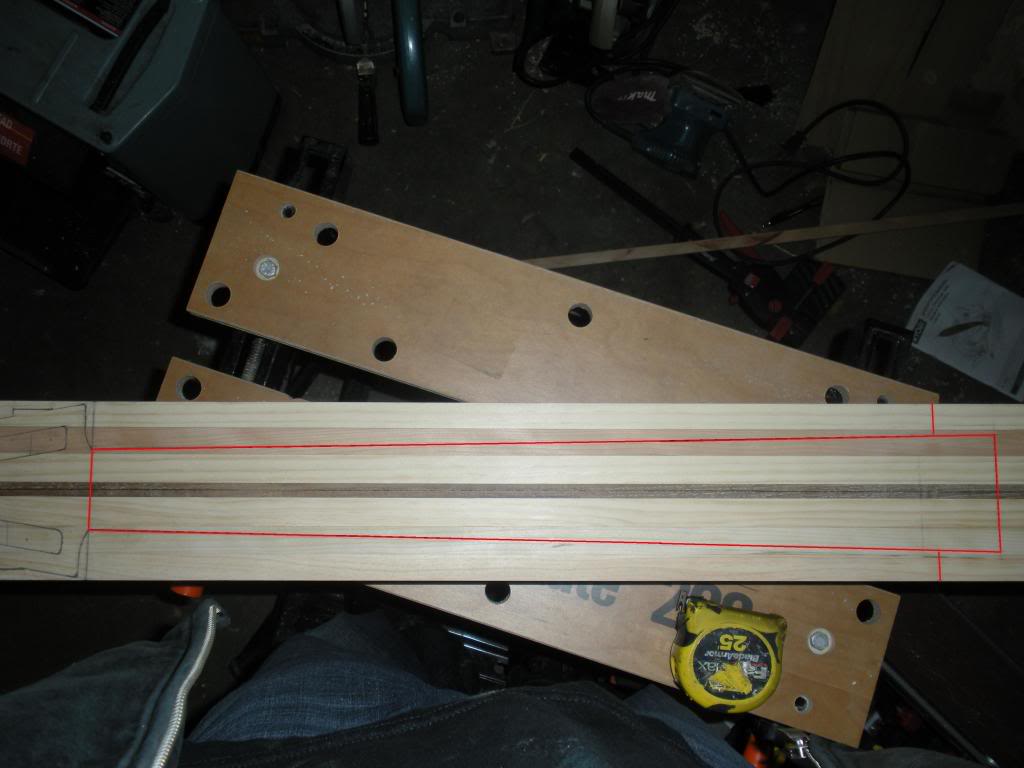
Marked out the centers for the ferrules.
**Red lines were added for visibility**
Added some points, so that the tuners will sit level after taper.
This is close to what the final neck taper will be.
Marked out the centers for the ferrules.

Taylor Livingston
Commercial User
I hate to be Mr. Negative here, but I don't really get the point of this build. What you have here is a fretless bass guitar on a stick. I'm not even really satisified with the sound of my EUB, which has a 42" scale and is bowable, but in your case, with the standard scale and lack of a soundboard or any acoustic space, you might end up being disappointed if you wanted anything like a DB sound. If it's mainly for looks, then more power to you. I hope it works out for you in any case. 
I hate to be Mr. Negative here, but I don't really get the point of this build. What you have here is a fretless bass guitar on a stick. I'm not even really satisified with the sound of my EUB, which has a 42" scale and is bowable, but in your case, with the standard scale and lack of a soundboard or any acoustic space, you might end up being disappointed if you wanted anything like a DB sound. If it's mainly for looks, then more power to you. I hope it works out for you in any case.
Why thank you sir
, give yourself about 10 years, repost then, maybe you'll change your mind my friend.Not to be negative about you (sincerely), that response reminds me of myself when I was 21 (no TB then), I would have probably responded the same to this thread, besides that, You just seem sort of condescending
It not completely about the instrument itself, it's also the experience of building one as well.
Taylor Livingston
Commercial User
Eh? Why would I change my mind in 10 years? Will physics be different then? If so, that's awesome, because I'm getting sick of M-theory.
M Theory? I don't follow you.
I'm just sayin' In your post you seem to be convinced I will dislike the finished product. you know this how?
I'm just sayin' In your post you seem to be convinced I will dislike the finished product. you know this how?

Don't you also need to provide surfaces, parallel to the tuner mounting surfaces, for each tuner post nut to tighten against? How are you going about that? Or are you using some sort of nylon string guitar styled barrel tuners?Added some points, so that the tuners will sit level after taper.
In my experience, wooden saddles don't do the trick. I needed to find a harder material so it does not absorb the vibration from the strings. In my case it was a hard thermostable (I'm not sure if that's the word in english) plastic used in electric stuff, pretty similar to the ones used in comercial acoustic saddles.
Besides that, it looks so cool so far. Subscribed also!
Another 2 Observations:
1. Are you sure you need adjustable saddles for a fretless bass? ABGs or URBs I've seen do not use them. I bet there are a few, but I never saw a fretless bass with adjustable saddles.
2. I would place the volume knob in the other side of the bridge. You may touch it with the side of your plucking hand sometime and change volume by accident. While practicing, it isn't a big deal, but while gigging...
Anyway, I think it's a cool idea and gratz on the project, I'll be following every step you take, every move you make, na na na
Besides that, it looks so cool so far. Subscribed also!
Another 2 Observations:
1. Are you sure you need adjustable saddles for a fretless bass? ABGs or URBs I've seen do not use them. I bet there are a few, but I never saw a fretless bass with adjustable saddles.
2. I would place the volume knob in the other side of the bridge. You may touch it with the side of your plucking hand sometime and change volume by accident. While practicing, it isn't a big deal, but while gigging...
Anyway, I think it's a cool idea and gratz on the project, I'll be following every step you take, every move you make, na na na
Don't you also need to provide surfaces, parallel to the tuner mounting surfaces, for each tuner post nut to tighten against? How are you going about that? Or are you using some sort of nylon string guitar styled barrel tuners?
You sir, are right. That is why I post things like this here. Prime example.........
Thanks pilot
Besides that, it looks so cool so far. Subscribed also!
Another 2 Observations:
1. Are you sure you need adjustable saddles for a fretless bass? ABGs or URBs I've seen do not use them. I bet there are a few, but I never saw a fretless bass with adjustable saddles.
2. I would place the volume knob in the other side of the bridge. You may touch it with the side of your plucking hand sometime and change volume by accident. While practicing, it isn't a big deal, but while gigging...
Alexi,
Yeah, I wanted to try the saddles for the intonation capabilities (I mostly play electrics), but I too have not seen them either.
the #2 one, Is kind of confusing to me, but I am left handed of course

Thanks
Yeah, it seems to me if you're going for straight string pull, that unless you do some sort of front valence that hides the mounting surfaces, you've got to choose between posts nicely parallel to the nut, but the sides stair stepped; or sides nicely straight and angled, but the posts angled to the nut and looking like they're going to lose their strings (even if that's not actually going to happen).
I guess a lot of people go for not quite straight string pull, with somewhat less of a tuner angle. Splitting the difference.
I guess a lot of people go for not quite straight string pull, with somewhat less of a tuner angle. Splitting the difference.

the string positions on the neck don't look like they will line up with your tuner slots...you're not going to get a straight string pull
After scratching my head for awhile, I redrew the headstock a
bit. I don't think the dual slot channels are going to work, with the other side of each tuning machine, having a flat surface and still not disrupt the most inner lines, was not happening, without making the slots too big, especially where they would meet. (If any of what I'm expressing here in text makes sense).
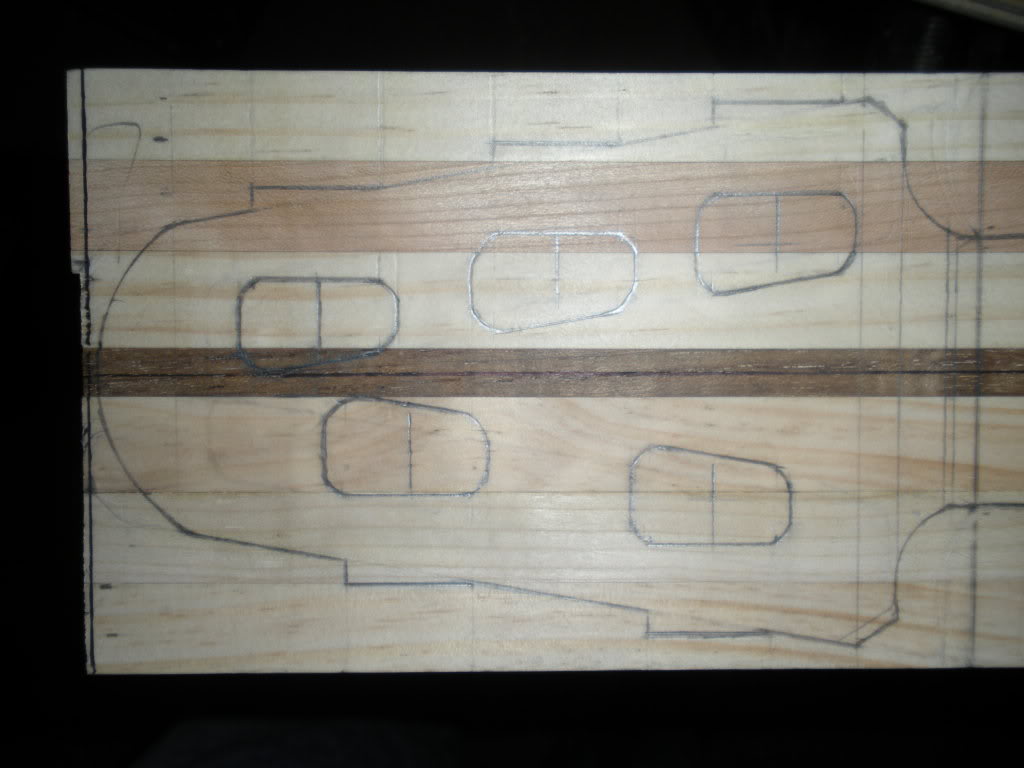
bit. I don't think the dual slot channels are going to work, with the other side of each tuning machine, having a flat surface and still not disrupt the most inner lines, was not happening, without making the slots too big, especially where they would meet. (If any of what I'm expressing here in text makes sense).
That's interesting. A few things come to mind.
- The steps on the outside might be both stronger and easier to form and finish if the short walls were more angled out and/or blended to the main headstock line rather than being strictly 90 degrees to the outer tuner mounting surfaces, and the sharp points rounded over
- again, be sure you'll be able to get a wrench on the tuner nuts to turn them through >60 degrees. It looks like you may be OK on that.
- unless you're OK with the strings hanging up on the edges of the tuner holes towards the nut, you're going to need to do some interesting carving of the face if you want the strings to have a free path from the nut to the tuners. A uniform dish out of the center of the face might do it, though. You'll probably want to draw in each tuner post, draw in the nut slots, and draw in the V-shaped range of the path each string might take depending where along the tuner post it ends up.
- The steps on the outside might be both stronger and easier to form and finish if the short walls were more angled out and/or blended to the main headstock line rather than being strictly 90 degrees to the outer tuner mounting surfaces, and the sharp points rounded over
- again, be sure you'll be able to get a wrench on the tuner nuts to turn them through >60 degrees. It looks like you may be OK on that.
- unless you're OK with the strings hanging up on the edges of the tuner holes towards the nut, you're going to need to do some interesting carving of the face if you want the strings to have a free path from the nut to the tuners. A uniform dish out of the center of the face might do it, though. You'll probably want to draw in each tuner post, draw in the nut slots, and draw in the V-shaped range of the path each string might take depending where along the tuner post it ends up.
Alexi,
the #2 one, Is kind of confusing to me, but I am left handed of course
Thanks
oh! then forget what I've said! cool work!
That's interesting. A few things come to mind.
- The steps on the outside might be both stronger and easier to form and finish if the short walls were more angled out and/or blended to the main headstock line rather than being strictly 90 degrees to the outer tuner mounting surfaces, and the sharp points rounded over
- again, be sure you'll be able to get a wrench on the tuner nuts to turn them through >60 degrees. It looks like you may be OK on that.
- unless you're OK with the strings hanging up on the edges of the tuner holes towards the nut, you're going to need to do some interesting carving of the face if you want the strings to have a free path from the nut to the tuners. A uniform dish out of the center of the face might do it, though. You'll probably want to draw in each tuner post, draw in the nut slots, and draw in the V-shaped range of the path each string might take depending where along the tuner post it ends up.
I think I'll still go with the original plan of doing a radius on the headstock face, this may (or may not) do away with carving out before each tuner hole, if I do enough of a radius that is.
I think the only way to execute this, without losing my flat spots for the tuners is, cut out the flat surface way before I ever start the profile cut, right? Well that and perhaps more thickness on the headstock profile, until the radius is completed.
Since I probably won't run anything through the bandsaw until after thanksgiving, I decided to have a go at a headstock template.
I traced it out on, what I believe is "olive paper" and glued it on to a piece of luan. I'm going to try it again, next time I will use carbon paper as well, to transfer it easier.
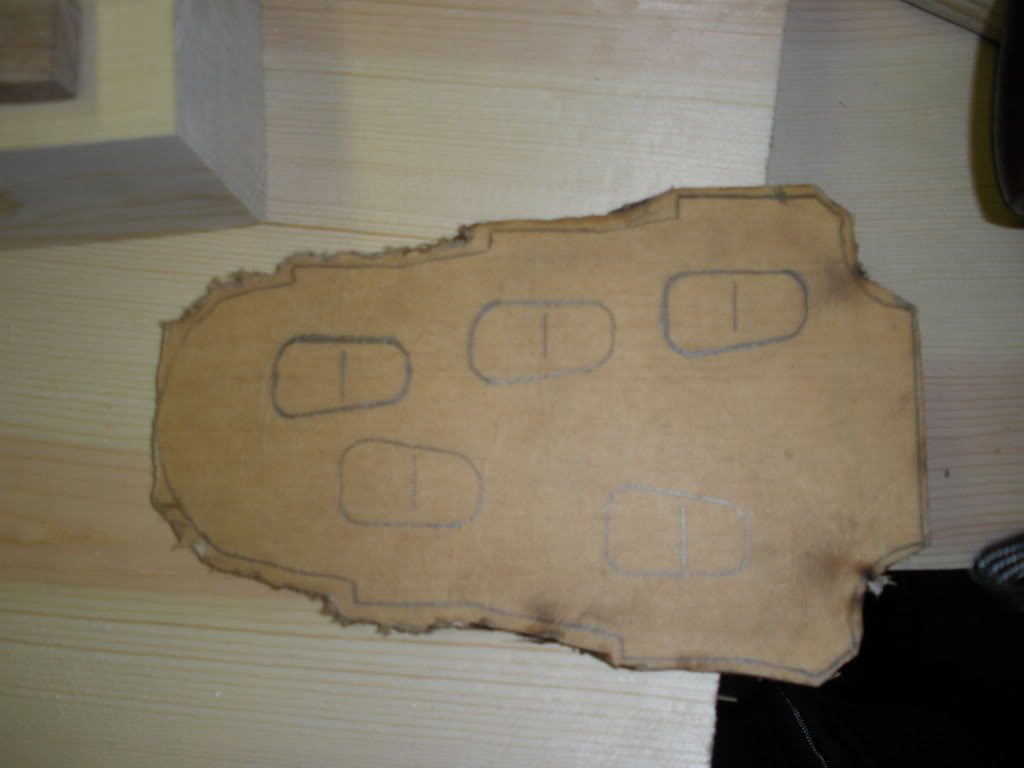
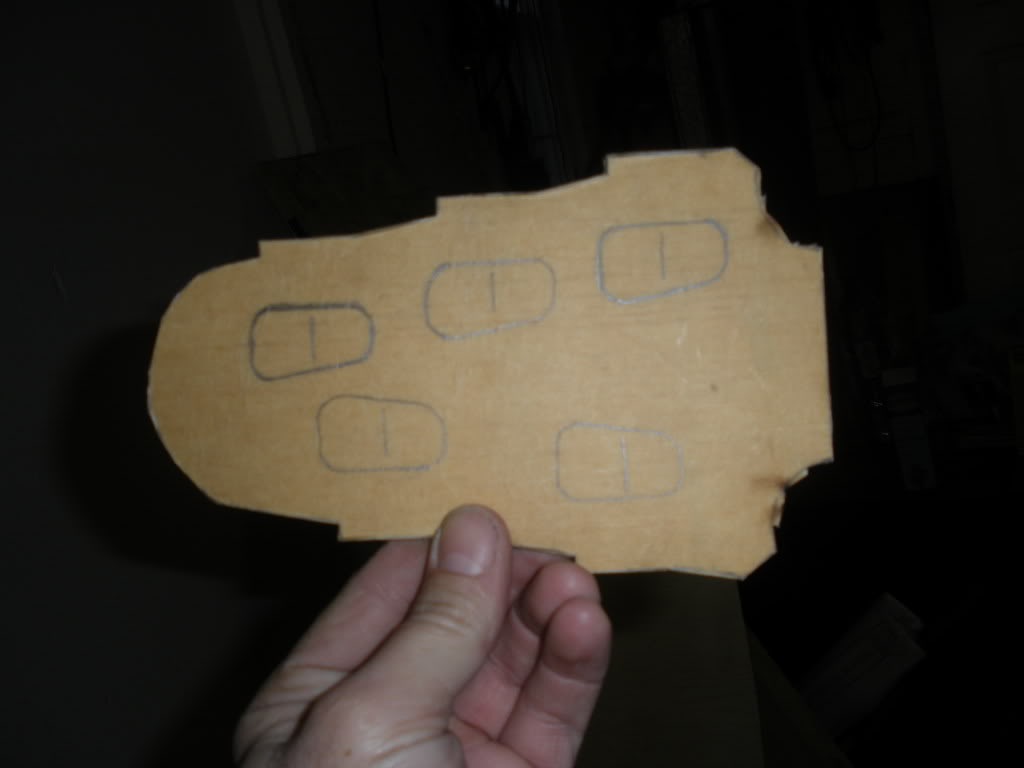
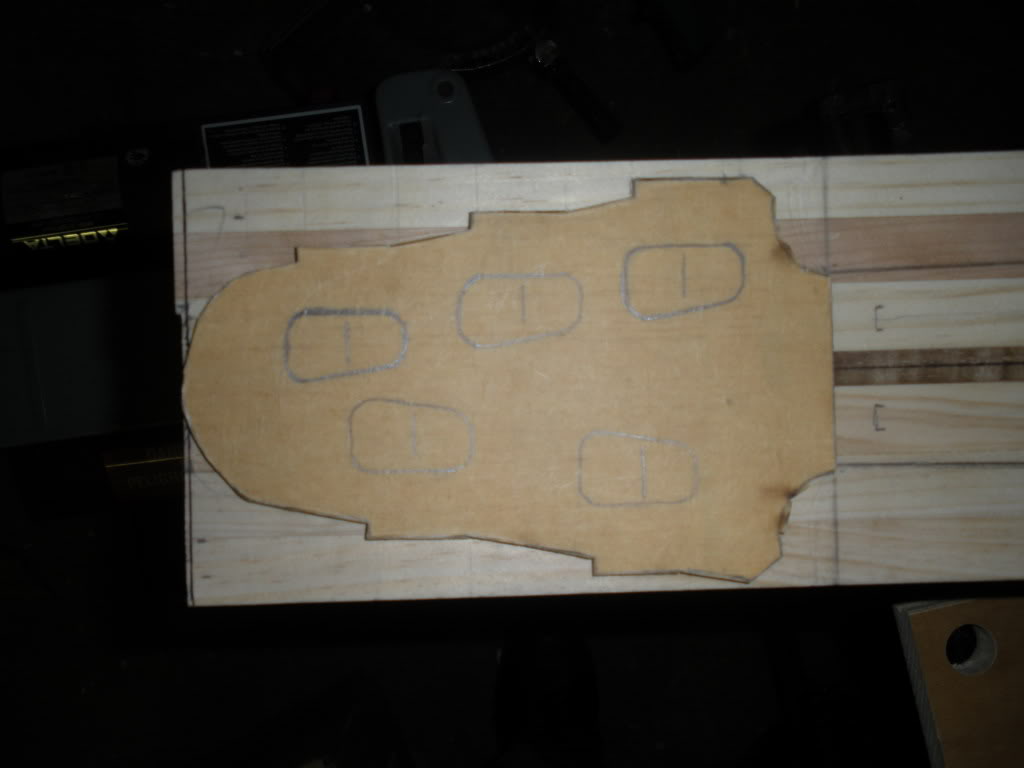
I traced it out on, what I believe is "olive paper" and glued it on to a piece of luan. I'm going to try it again, next time I will use carbon paper as well, to transfer it easier.


