

Enjoy the benefits of a premium membership!
Upgrade Account
-
TalkBass has been independent since 1998. Add your voice.
Create a free account to reply to discussions, view embedded media, and browse with fewer display ads.
Join free Log in
Want zero display ads or expanded classifieds tools? Compare plans.
You are using an out of date browser. It may not display this or other websites correctly.
You should upgrade or use an alternative browser.
You should upgrade or use an alternative browser.
Five- or Six-String Players: How much would you miss your low B, really?
- Thread starter Persona87
- Start date
More options
Who Replied?


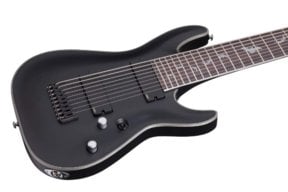
So much that if I had to use a 4-string, I would string it BEAD.

I've changed the way I play, so rather than play and open E string, I play a fretted E on the B string. And rather than play and open A, I play a fretted A on the E string. My left hand is further up the neck, so jumps to higher notes are not as far. I find that I struggle with songs I learned on a 5 string if I have to play them on a 4.
I’d like to try and buy a 5 string for this very reason! Seems sensible.
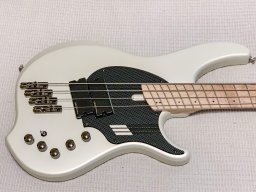
Depends. I'm in 3 bands. I play 4 string in two of them (and obviously don't miss the B string), and 5 string in the other band (and I would miss it). Classic rock band - 4 string, Hawaiian band - 4 string, all I need on either. The third band I find the B useful for the stuff we play, mostly improvisational jazz rock. Gives me more options.
I converted over to fives in the early 80's: I tend to think more across the fingerboard, and with my fours, it always seemed I'd start something HERE and have to jump up or down to THERE to finish it, and it got tiring, and a little irritating. Then I wound up in several horn bands with lots of stuff in flat keys, and I wished I could play the occasional E-flat, low C, etc.
Two years ago, I bought a Squier James Johnston Signature Jazz Bass, as I always wanted a matching-head Lake Placid Blue Bass, and oh-ridge-n-ul Fenders like that were stupidly expensive. After years of 24-fret fives, this little four suddenly felt like I was playing a toy bass. But I grew back into it, and now, it's a gas-gas-gas.
But it's really an occasional desert. I'm too used to fives from the fingering standpoint, and having those extra low notes (where they fit) is icing on the cake.
So yes, I'd miss it. But I think I envision it as a five-string-bass, and yet there seems to be a certain number of guys who never get past it's a four-string bass with an EXTRA string. . . . . and those are completely different viewpoints.
Two years ago, I bought a Squier James Johnston Signature Jazz Bass, as I always wanted a matching-head Lake Placid Blue Bass, and oh-ridge-n-ul Fenders like that were stupidly expensive. After years of 24-fret fives, this little four suddenly felt like I was playing a toy bass. But I grew back into it, and now, it's a gas-gas-gas.
But it's really an occasional desert. I'm too used to fives from the fingering standpoint, and having those extra low notes (where they fit) is icing on the cake.
So yes, I'd miss it. But I think I envision it as a five-string-bass, and yet there seems to be a certain number of guys who never get past it's a four-string bass with an EXTRA string. . . . . and those are completely different viewpoints.

I would miss it a lot too. In fact, when I was planning my new bass build, I originally wanted a four because I already own a five. The idea was that I would not need the low B for most of my rock band covers. But... there are a few songs which need a low D. So I thought a D-tuner would be OK, and actually make those songs easier to play, as they were originally written in drop D. But... some of our originals also needed a low C. So I thought a Hipshot double stop would take care of that.
Before actually settling on that, I decided to tune my bass in drop D, and then CADG, to see how it would feel, and it turns out the fingerings for my originals needing the low C were very awkward, much more so than the covers played in standard BEADG instead of DADG.
Si in the end, I decided to make another five string, which would just have a different look, feel and sound rather than feeling limited by a four for what I am playing and the way I compose.
Fours are nice and I would like one, but I don’t want to shlep two basses to rehearsals.
Before actually settling on that, I decided to tune my bass in drop D, and then CADG, to see how it would feel, and it turns out the fingerings for my originals needing the low C were very awkward, much more so than the covers played in standard BEADG instead of DADG.
Si in the end, I decided to make another five string, which would just have a different look, feel and sound rather than feeling limited by a four for what I am playing and the way I compose.
Fours are nice and I would like one, but I don’t want to shlep two basses to rehearsals.

My five string basses are my home basses. I play them in ways that I don't play my upright or four string electric bass. I've played four hour gigs on a four string just fine, but when I write parts on a five string bass, the B string is often an integral part of what occurs to me.
The darker timbres of the notes further up the neck inspire me in ways that the notes of first position on a four string do not. Not necessarily better, just differently. The B string is also very useful when dealing with non-guitar-centric keys or when the singer needs to lower the song a step or two.
Running the arpeggio patterns in Gary Willis' book on fingerboard theory was very validating. I just felt I could cover so much ground in one position on my fivers vs. a four. It wasn't just that I had an extra note or two, so much as I had that many more 3 or 4 or 5 note inversions in how I could outline a chord with the other strings in a position.
My six string tends to pull duty when I'm interested in playing chords and performing or recording solos. I'd own another nice one in a heartbeat, but I'm always drawn to my fivers when I want to bring all I can to a rhythm section as someone being paid to make low notes that make the band sound big.
The darker timbres of the notes further up the neck inspire me in ways that the notes of first position on a four string do not. Not necessarily better, just differently. The B string is also very useful when dealing with non-guitar-centric keys or when the singer needs to lower the song a step or two.
Running the arpeggio patterns in Gary Willis' book on fingerboard theory was very validating. I just felt I could cover so much ground in one position on my fivers vs. a four. It wasn't just that I had an extra note or two, so much as I had that many more 3 or 4 or 5 note inversions in how I could outline a chord with the other strings in a position.
My six string tends to pull duty when I'm interested in playing chords and performing or recording solos. I'd own another nice one in a heartbeat, but I'm always drawn to my fivers when I want to bring all I can to a rhythm section as someone being paid to make low notes that make the band sound big.
I blame you all for today's impulse buy... And thank you very much!
Honestly not that much, but I like to rest my thumb on the B string and I like the spacing on 5ers.
I discovered over time that in order to make that range effective in the music, it has to be integrated into the part rather than tacked on the bottom. And there are only certain types of music where that works. It certainly doesn't work in jazz because jazz bass parts tend to be higher, more in the range of a guitar. (Sometimes I actually play bass parts on guitar, with a little extra low-end EQ).
Sometimes I think of the 5-string as being a transposing instrument, which sounds down a fourth, then I play everything up a fourth. So if it’s concert A, I play it like it’s in D on the lower four strings primarily. This way it's more integral.

Played five string for almost nine years and cant live without that low B#, D and Eb. I may have violated some bass playing rules but now I play higher towards the bridge using the scale involving the fifth string
I would really miss the B str. It has opened up new approach's to positioning and interpretive offerings.

I use my B string a lot - more than the G. So if I had to go to a 4, which I don't, I too would go BEAD
I'm not overly experienced but found I liked the option of the 5th string so I switched to concentrate on the 5 string about 8 months ago. Last week I found myself jamming on a 4 again air playing the missing B string!
Maybe switch back to a 4 string for a while and see if it makes a difference to the way you play?
Maybe switch back to a 4 string for a while and see if it makes a difference to the way you play?


