• TalkBass has been independent since 1998. Add your voice.
    Create a free account to reply to discussions, view embedded media, and browse with fewer display ads.
    Join freeLog in
    Want zero display ads or expanded classifieds tools? Compare plans.

Five- or Six-String Players: How much would you miss your low B, really?

I mainly play six string basses now, but I find myself almost never using the low B or high C strings. Since I don't really use them that much, I'm thinking about selling my sixes and replacing them with some four-strings. I know the old thing about Jaco only needing four strings, but I'm not Jaco and neither are most of you. So those of you who consider yourselves five or six (or more) string players, how often do you use your low B strings? Would you miss them if you were forced to play four string basses? What genre do you mostly play?
 
Yes, I'd miss it. When I moved over from 4-strings to 5-strings I changed how I approach the fretboard. I play across the neck rather than down. Seldom do I play things that you have to play on a 4 down in the first or open position down there (unless it incorporates low B or C)...and utilize the 5th string to play across the neck in the 5th-to 12th fret range. I have no desire to go back to a 4 string.
 
I play 6. Since moving to 5s and then 6s I have changed my way of playing. I play higher up the neck and use the B string in nearly every song. It sort of replaces the first few frets of the E string, and the higher notes on the E string replace the lower notes on the A string, and so on. I use the C string for soloing and for the occassional chords. I have a couple of 4s but they don't get used unless a 6 is out of place, like in 40s and 50s swing and rock n roll. Would I miss the B? Hell yeah. Would I miss the C? Maybe.
 
How much “missing it” does it take to not want to be without it?

This question is like....

24A3615A-680B-4CDB-9A4C-61B8C62A0AE0.jpeg
 
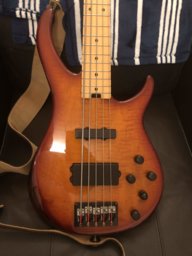
Extended range makes so many things easier. Even adding a 21st fret on a four increases versatility. I love having a B string for both the low notes and the additional ways to play things that can be played on a standard four.

There is a challenge, however, of making things happen on a traditional 20 fret Fender or Fender style bass. I am always amazed by great players, like Marcus Miller or Joe Dart, who squeeze something extra out of four strings and twenty frets.:bassist:
 
Last edited:
I find myself playing in keys that it is super helpful to have those couple extra low notes. If the 5 didn’t exist I would be ok, but since it does I like it more. I still have 4 strings I jam in too.
 
  • Like
Reactions: Steve88
It depends on the style of music you play, doesn’t it really?

I use my low B (C and D on the B) a lot... I’ve incorporated into most of our tunes and you can really hear the low registers ring out on our recordings. I also play across the fretboard versus down, so for me I can’t live without it, or at least I choose not to :)

I also have several four string basses that I literally have not picked up in years, so maybe it’s time for me to get rid of all my 4’s as those Jazz and P basses seldom if ever get played or even take it out of their cases. :thumbsup:
 
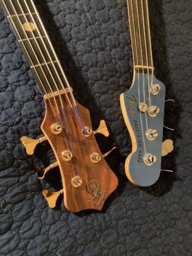
When I have a low B, I use it. And definitely not as a thumb rest. But I can't really say the same for a high C. I had an MTD 635 for a several years as my #1, but aside from some beautiful chording that was enabled by the C, I often found myself working around it in many playing situations. Eventually I moved back to 5's, and then back to 4's for the last 3 years or so. Just recently picked up an MTD 535 and I'm happy to have the low B again, but I can move between a 4 and a 5 with no problems.
 
I play in 2 Big Bands and there is much more need to play in the upper rather than the sub-E registers. I have all of my 5-strings strung E-C so I can reach high G's, etc. without having to jump up the neck. There are almost no big band charts that call for playing below low E.

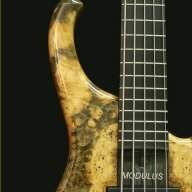
Having said that, I'm thinking of stringing my Modulus Q5 back to B-G because the low B string on the Modulus is something special.

Rick B.
 
Everywhere else: wouldn't miss it. My current 10-piece party band that I have the most gigs and make the most money: too many songs with parts that use the B string, too many songs the guys want to take down a key or two for vocals - definitely. This band is the reason I bought a 5-string in the first place back in 2012.
 
  • Like
Reactions: Wasnex
Yes, I'd miss it. When I moved over from 4-strings to 5-strings I changed how I approach the fretboard. I play across the neck rather than down. Seldom do I play things that you have to play on a 4 down in the first or open position down there (unless it incorporates low B or C)...and utilize the 5th string to play across the neck in the 5th-to 12th fret range. I have no desire to go back to a 4 string.


My response is similar. After decades of playing primarily a 6-string I tend to play more across the strings than up and down the neck. This relates more to the C string for me as I don't tend to play the B string much above 5th fret, because I don't like the tone. I believe the problem is inharmonicity. For the same reason, I don't generally play the E string above about the 10th fret.

I play jazz standards quite a bit and am expected to solo, so I play up the C to about the 15th fret quite a bit (maybe a bit higher). I would definitely miss the extended range and tonal variance. Obviously I could play those high notes on the G string of an extended range instrument as well , but I am not really that familiar with that area of the fretboard. The extra strings makes it much more efficient to cover the required range without the need to make huge shifts on the neck.

I do think the B string is more essential than the C string for most players. There are many songs that really benefit from the extended low range. Also there are many times when singers cannot covers tunes in the original key. The B string makes it possible to transpose the original bass line down without having to invert intervals. This can be very important with an iconic bassline.

I played 6-string in country band for a couple of years and there were plenty of lines that benefited from the low B and high C. There's an irritating Geico commercial currenlty on TV with an old Ratt tune, "Round and Round." Pretty sure the lowest note is a D# or Eb and it looks like the bassist is using a detuned 4string. (That's what the tabs I have looked at indicate as well). If I were playing this song in a cover band, it would be more convenient to play it on a B string than detuning for one song.

Ultimately it doesn't matter what I think. If you think four strings is enough, then it's your choice and you need to accept and work around the consequences regardless of how large or small.