I love the sound of flats but find that playing them without lots of FOH support is difficult. For that reason I play rounds that I beat deader than than some TB debates.

Enjoy the benefits of a premium membership!
Upgrade Account
-
TalkBass has been independent since 1998. Add your voice.
Create a free account to reply to discussions, view embedded media, and browse with fewer display ads.
Join free Log in
Want zero display ads or expanded classifieds tools? Compare plans.
You are using an out of date browser. It may not display this or other websites correctly.
You should upgrade or use an alternative browser.
You should upgrade or use an alternative browser.
Flats and playing live
- Thread starter NeonNobody
- Start date
More options
Who Replied?
are they the ones saying that bass is buried, and they can't fix it? or is it just in what you hear in amp/monitor?
I wonder if its just the difference of the amp in different rooms, and you maybe need to turn up a bit at some gigs, or add a 2nd cab to move more air in a larger space.
I'm thinking more they don't know how. It's a new board, but the sound people working now didn't set it up, so they aren't entirely familiar with fine tuning the channels.

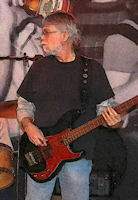
I use Chromes on pretty much everything and they produce just the sound I want. Punch. No mud. Fall right in the mix. Drive the stage sound hard. Also sound pretty good in the practice room, but the sound in the live or recording mixes are all that really matter.
I use flats on both active and passive basses. My number 1 is a Drake Custom Precision style body, four string in 33" scale. The body is Basswood with a Maple neck and Rosewood board. It has Hipshot hardware. String through the bridge. It is set up as a PJ with Aguilar balanced pups to eliminate any hum from the J pup. '60s spacing. Very basic, traditional bass.
I run the P pup at about 80% volume, the J pup at about 70%. Tone on the P is about 90% open, on the J about 80% open. Use these settings as a guide, as they will vary according to the room and your ears. Remember, subtle tweaking of settings like this can make real differences. The suggestions I make might be good beginning reference points for you to get what you want.
In years past, I've played a variety of amps and cabs, but have found that in class D amps, master volume at as near full out as possible, with actual volume being being controlled by bringing gain up not beyond half way, will produce the cleanest sound and hit hard. I typically set the bass tone control at about 1 'o clock, treble at about 10:00, and high and low mids at about 2:00.
My experience has been that eliminating mud and creating good punch that drives the mix depends on getting the right balance between master volume and gain, AND finding the right level of mids in relation to the treble and bass controls. Lots of players think, "It's a bass, so gotta push the bass tone control up". Not so in my experience. Mids with the right balance is the secret.
So, take this to other pup set ups and active basses. Different pups, in my experience only require slight tone and balance adjustment from these baseline levels, if they are quality, and you stick with similar amp settings.
Active -vs- passive, for me....active = a 10 db volume boost (generally) and perhaps a bit more tonal variety. Not a lot more complicated than that unless you're wanting to work with effects to create something more exotic.
Bottom line is, if you use my suggestions as a starting point, some slight tweaking will probably get you close to what you want. Listen carefully....your ears will tell you when you're there.
Remember. ....your question was relative to using flats. I don't like rounds due to the feel and string noise, so I have minimal experience with them. The suggestions above are based on my experience since 1964 on stage, in the studio, and in the 'shed....using flats.
If you want more info, please feel welcome to shoot me a PM.
Hope this is helpful.
Koog
PS.....I use D'Adarrio black tapes on my acoustic and fretless basses with the same starting points on settings.
I use flats on both active and passive basses. My number 1 is a Drake Custom Precision style body, four string in 33" scale. The body is Basswood with a Maple neck and Rosewood board. It has Hipshot hardware. String through the bridge. It is set up as a PJ with Aguilar balanced pups to eliminate any hum from the J pup. '60s spacing. Very basic, traditional bass.
I run the P pup at about 80% volume, the J pup at about 70%. Tone on the P is about 90% open, on the J about 80% open. Use these settings as a guide, as they will vary according to the room and your ears. Remember, subtle tweaking of settings like this can make real differences. The suggestions I make might be good beginning reference points for you to get what you want.
In years past, I've played a variety of amps and cabs, but have found that in class D amps, master volume at as near full out as possible, with actual volume being being controlled by bringing gain up not beyond half way, will produce the cleanest sound and hit hard. I typically set the bass tone control at about 1 'o clock, treble at about 10:00, and high and low mids at about 2:00.
My experience has been that eliminating mud and creating good punch that drives the mix depends on getting the right balance between master volume and gain, AND finding the right level of mids in relation to the treble and bass controls. Lots of players think, "It's a bass, so gotta push the bass tone control up". Not so in my experience. Mids with the right balance is the secret.
So, take this to other pup set ups and active basses. Different pups, in my experience only require slight tone and balance adjustment from these baseline levels, if they are quality, and you stick with similar amp settings.
Active -vs- passive, for me....active = a 10 db volume boost (generally) and perhaps a bit more tonal variety. Not a lot more complicated than that unless you're wanting to work with effects to create something more exotic.
Bottom line is, if you use my suggestions as a starting point, some slight tweaking will probably get you close to what you want. Listen carefully....your ears will tell you when you're there.
Remember. ....your question was relative to using flats. I don't like rounds due to the feel and string noise, so I have minimal experience with them. The suggestions above are based on my experience since 1964 on stage, in the studio, and in the 'shed....using flats.
If you want more info, please feel welcome to shoot me a PM.
Hope this is helpful.
Koog
PS.....I use D'Adarrio black tapes on my acoustic and fretless basses with the same starting points on settings.
Last edited:


I suspect the problem is in the mix. Flats have a nice warm sound, but if others in the group are dropped into the mids and low-mids, they can get a bit buried. I think you might have a discussion with the sound people and ask them to keep the other instruments out of the bass territory, or at least moderate their presence there.
From what I've read, GHS Flats are really warm. Wouldn't that just worsen the problem? Or with flats do you just need to lean into having a warm tone?
You are correct. The Ghs Flatwound will make you SR500 become grandma bass if you looking old school thumb.
Last edited:

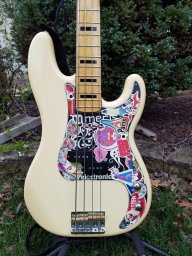
With heavy instrumentation, chances are you have too many people overlapping on the frequency spectrum. Regarding P&W, that dense mix you hear in recordings turns to mush live. Sounds like you need someone to thin the orchestration, or thin the parts of each respective member. 2 guitar, a piano player, and a synth pad underneath it all is a lot of sonic information already.

+1, especially on a Stingray!My experience with the GHS Precision Flats (45-95) is exactly the opposite. Not the most exciting tone all on their own, but I love the way they sit just right in the mix. Warm and woody with a focused low-mid punch without ever getting lost.
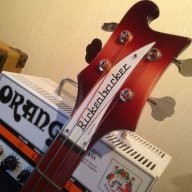
...I like my hex core nps rounds.
Which ones?


Some good points made about potential issues with the dense mix. Don’t forget about the acoustic guitar too. Poor technique, over eq and intonation issues on the acoustic can muddy the bass big time and contibute to sonic sludge.
Also, does the MB200 allow for a pre-eq direct line out? Sending the FOH a flat signal is key.
Also, does the MB200 allow for a pre-eq direct line out? Sending the FOH a flat signal is key.
Some good points made about potential issues with the dense mix. Don’t forget about the acoustic guitar too. Poor technique, over eq and intonation issues on the acoustic can muddy the bass big time and contibute to sonic sludge.
Also, does the MB200 allow for a pre-eq direct line out? Sending the FOH a flat signal is key.
That's exactly how it's run. Everything flat.
Heavy, with the organist using foot pedals consistently.Keyboarder left hand(s) ?
That's what I'm discovering. Flats sound great in the bedroom or in appropriate recording contexts. But live? You need rounds.Unlike the TB brain collective, flats are seldom the answer for me either, and I play exclusively at church. I have tried fender 9050's, Chrome's, TI's....they don't cut it for me at all. I like my hex core nps rounds.
My experience has been that eliminating mud and creating good punch that drives the mix depends on getting the right balance between master volume and gain, AND finding the right level of mids in relation to the treble and bass controls. Lots of players think, "It's a bass, so gotta push the bass tone control up". Not so in my experience. Mids with the right balance is the secret.
And that's what I've worked on avoiding. I actually cut a bit of bass to try and cut back on the boominess. I also crank the mids and treble. I ask people who sit out in the audience and they say they can't hear my bass.

My main gig is at a church. So a lot of organ, synth, piano, drums, guitar with heavy effects, etc. A very dense mix for sure.
Tell everyone playing anything with keys to not play anything EVER below middle C, period. PERIOD.
 Have a nice day.
PS: 3 services a week plus a practice for the last 10 years; I learned this lesson the easy way (from someone else) and early on. Works like a charm if the egos don't get in the way.
The notes below Middle C belong to me!Keyboarder left hand(s) ?
The notes below Middle C are mine!Tell everyone playing anything with keys to not play anything EVER below middle C, period. PERIOD.
PS: 3 services a week plus a practice for the last 10 years; I learned this lesson the easy way (from someone else) and early on. Works like a charm if the egos don't get in the way.
BTW, I also play piano, and FOH guys always compliment me because I stay out of the bass player's range.
Latest posts
-
 Just picked up a used Bugera Veyron Mosfet BV1001M
- Latest: Gianni "Orlandez" Orlati
-

-

-

