
Enjoy the benefits of a premium membership!
Upgrade Account
-
TalkBass has been independent since 1998. Add your voice.
Create a free account to reply to discussions, view embedded media, and browse with fewer display ads.
Join free Log in
Want zero display ads or expanded classifieds tools? Compare plans.
You are using an out of date browser. It may not display this or other websites correctly.
You should upgrade or use an alternative browser.
You should upgrade or use an alternative browser.
Flats and playing live
- Thread starter NeonNobody
- Start date
More options
Who Replied?
That's what I'm discovering. Flats sound great in the bedroom or in appropriate recording contexts. But live? You need rounds.
Almost every live band I've seen live in the last 5 or 6 years was using flats on the bass. They sound great. The one time they didn't it was because the soundman did a bad job. The same band sounded great in two other venues.
Think of all the live music performed with an acoustic double bass that sounds good, and that's a lot darker than an electric bass with flats. If you don't sound good in the mix it's because the person doing the mixing doesn't care about the bass being heard, or doesn't know how to give it it's own space. Either way it has nothing to do with your choice of strings.

Is this based on the sound heard on stage when close to the cab, or from when standing in the room with people and hearing the mix at ear level? In my experience these can be quite different.
For example, I think Duck Dunn is a good example, clips of his P-bass with flats live can be found online and I think it sits well in the mix of his band/instrumentation.
For example, I think Duck Dunn is a good example, clips of his P-bass with flats live can be found online and I think it sits well in the mix of his band/instrumentation.

The problem is not the strings. It could be they’re accentuating a different range, and that’s getting stepped on by others, causing you to hear those frequencies “go away.” My guess, based on experience.

Do you have a set you would recommend? I never see any sets outside of talkbass, except for the Dadarrio Black Nylons at GC.
LaBella White Nylons work very well for me. They come in three flavors: plain, gold, and copper in order of brightest to warmest. I use the coppers because I favor their complex and musical mids combined with good solid bottom and just a hint of top. They can definitely heard with anything I’ve played them afainst.
Prior to these strings I has no use for nylon tapewounds. Tried them all (LaBella, Fender, etc.) when the classic black nylon variety was all that was available - and I yanked them all within days. They were just too “meh” sounding on what I loaded them on.
These white nylons are another story. Love the feel and love their tone. A little on the pricey side - and not always easy to find someone who has them in stock. But they’ve rapidly become one of my favorite sets. Especially on a PB with a split-coil pickup.

Let me start by saying I love flats. I have a set of Chromes on my Ibanez SR500 and love them. The feel, the sound, and even the tension just feels right to me. At home. In a live context? Complete disappointment. The warm and focused sound at home turns to mush and just gets buried under everything. I've tried EQ'ing every way I know how. No luck. Short of changing strings, what else can I do? I don't cut any mids on my amp or bass (I actually boost them quite a bit). Is this the fatal flaw of flatwounds? Is there a better flatwound I can use?
Every bass is different. Does your bass sit well in the mix with rounds?
+1 ... sometimes i can't hear myself too on the stage but my bass is heard a few meters away clearly and loud... i guess bass needs some distance to fully blossomBefore you change anything in your setup that you like, be sure to talk with FOH and audience members. Sometimes what gets buried in the stage mix is loud and clear out front
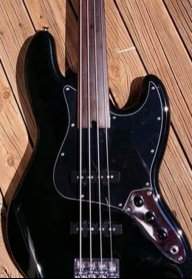
I don't know about the Ibanez but with my Franken P i can get a good sound that cuts through any mix through just about any amp and PA. Mind you, I do use a pick on most upbeat songs which give a good attack.
Let me start by saying I love flats. I have a set of Chromes on my Ibanez SR500 and love them. The feel, the sound, and even the tension just feels right to me. At home. In a live context? Complete disappointment. The warm and focused sound at home turns to mush and just gets buried under everything. I've tried EQ'ing every way I know how. No luck. Short of changing strings, what else can I do? I don't cut any mids on my amp or bass (I actually boost them quite a bit). Is this the fatal flaw of flatwounds? Is there a better flatwound I can use?
Depends on who you are playing with and what kind of music, but loudness is a b!tch (that's the problem, of which the flats thing is a symptom). Especially if you are just playing out of an amps with acoustic drums, everyone is competing for loudness. I think that's why bassists gravitated toward that super bright tinny sound and even to slap, just to "cut through". I did the same for a long time, until I got a degree in audio engineering and learned how to mix. But even that doesn't help much if your bandmates don't understand mixing and how to control dynamics while playing. It's not easy, given all of the multitude of situations, places, setups, songs etc that you have to deal with.
I would suggest since you can't control much except your own sound, just go back to the rounds, and maybe make some attempt at controlling the dynamics of your bandmates and yourself, but that's kind of like herding cats. I know from experience, telling a musician to play softer is like slapping them in the face. Drums are the root of the problem, as they have no volume control, so it's all in their touch, and I find most believe, whether true or not, that they get the best tone when hitting harder. So everyone is forced to compete with the drums, which makes the drummer want to hit harder, and so on.
The best musicians i have ever played with, were the best listeners. They weren't so completely caught up in their own playing that they listened to what you were doing, played off of you, which made you listen to them and play off them. That is not something to take for granted, it takes a long time of playing with people to get to that level. But that gets tougher the more people in the band there are.
In the mid-60's through 1976 when my '65 Jazz was stolen, I used flat wounds including the Fender Black Tape Wound Flats. In 1985 I bought my current MIA Jazz Bass and for 33-years I used round-wounds - Dean Markely Blue Steel and DR Black Beauties. I liked the brightness of the round wounds compared to the flats I used in the 60's and 70's.
Since May of 2018 I have used La Bella White Tape Wound Flats on my bass. I got them at a friend's recommendation and they are not the dull thud you often think of when thinking of flat wound strings. They have plenty of upper frequencies to them, and the audio balance of the strings is far better than any strings I've used.
With the round wounds and even the old flat wounds, the D and G strings were a bit thin sounding or "tinny", for lack of a better word, while the E and A strings were much darker sounding. The La Bella Tape Wounds Flats have a far better balance of sound across the four strings than those round wounds did and nothing sounds "tinny". I can play an A on the G string without it sounding weak. With other strings, I almost never played that A on the G string, but instead would always play it on the 7th fret of the D string. Now I just play it wherever it is most convenient to play because there is very little difference in the sound of the two strings.
By the way, I gig with them every week. I run my Eden amp flat with the exception of 3 clicks of boost of low-mids at ~250Hz. That slight boost at 250Hz gives you definition in the mix and adds that "thump in the chest" to your bass.
I let two other bassist use my gear at an open mic we hosted last Friday and added that same low-mids boost to them. I was listening to them from the back of the room and they both sat in the mix just fine even though their basses sounded totally different from each other. If you don't already do so, I'd suggest you give a slight boost to you low mids at ~250Hz if your amp will do that. The bass is usually the only one that sits in that frequency area and you should hear yourself just fine.
Since May of 2018 I have used La Bella White Tape Wound Flats on my bass. I got them at a friend's recommendation and they are not the dull thud you often think of when thinking of flat wound strings. They have plenty of upper frequencies to them, and the audio balance of the strings is far better than any strings I've used.
With the round wounds and even the old flat wounds, the D and G strings were a bit thin sounding or "tinny", for lack of a better word, while the E and A strings were much darker sounding. The La Bella Tape Wounds Flats have a far better balance of sound across the four strings than those round wounds did and nothing sounds "tinny". I can play an A on the G string without it sounding weak. With other strings, I almost never played that A on the G string, but instead would always play it on the 7th fret of the D string. Now I just play it wherever it is most convenient to play because there is very little difference in the sound of the two strings.
By the way, I gig with them every week. I run my Eden amp flat with the exception of 3 clicks of boost of low-mids at ~250Hz. That slight boost at 250Hz gives you definition in the mix and adds that "thump in the chest" to your bass.
I let two other bassist use my gear at an open mic we hosted last Friday and added that same low-mids boost to them. I was listening to them from the back of the room and they both sat in the mix just fine even though their basses sounded totally different from each other. If you don't already do so, I'd suggest you give a slight boost to you low mids at ~250Hz if your amp will do that. The bass is usually the only one that sits in that frequency area and you should hear yourself just fine.
Since you mentioned getting tech assistance, has the audio system been "tuned" for the space it is in?
I would talk to the sound personnel and ask them if they could "thin out" the conflicting instruments' EQs
before changing anything else, providing the system has been optimised.
I would talk to the sound personnel and ask them if they could "thin out" the conflicting instruments' EQs
before changing anything else, providing the system has been optimised.
Heavy {left hand on the organ}, with the organist using foot pedals consistently.
Ah, that's going to swallow ALL your sonic space unless you go for an awfully trebly, 70s/80s Entwistle style typewriter bass tone!
Any chance, for more contemporary tunes, of convincing the organist to either sit out or to move to keys/synth (e.g. more rock Hammond patches). The rationale would be that the electronic keys would be more sympathetic for the more rock/pop based sound and writing style of the contemporary worship songs where the writers didn't envisage church organ. It could be played as giving the organist more scope to be creative in arrangements in the context of the contemporary music. So not so much "STOP PLAYING THOSE ORGAN PEALS!", more "You could be much more creative in the parts you play using a more contemporary keyboard instrument."
You could just try a set of rounds and see if it helps.
I might be way off here, but this is a current theme I think it might have something to do with the use of Subs in PAs. They are crossing over right in the sweet spot of our frequency range and we are getting lost. I saw the Who with Pino and did not hear a note. The same with Tim Lefebvre using Chromes with TTB. I have the same issue with gigs I do at most clubs with big FOH rigs. Right there in the board mix and the monitors but week in the FOH.
I am curious if the subwoofer setups are causing a scoop around that 80-100 crossover point. With the scooped tone of Flats a cut at 80 might pull the bass right out.
This is probably another thread
I might be way off here, but this is a current theme I think it might have something to do with the use of Subs in PAs. They are crossing over right in the sweet spot of our frequency range and we are getting lost. I saw the Who with Pino and did not hear a note. The same with Tim Lefebvre using Chromes with TTB. I have the same issue with gigs I do at most clubs with big FOH rigs. Right there in the board mix and the monitors but week in the FOH.
I am curious if the subwoofer setups are causing a scoop around that 80-100 crossover point. With the scooped tone of Flats a cut at 80 might pull the bass right out.
This is probably another thread

Keyboarder left hand(s) ?
Heavy, with the organist using foot pedals consistently.
Under those circumstances, playing bass is useless.I ask people who sit out in the audience and they say they can't hear my bass.
I love flats and try to use them whenever I can. It has been my experience however, that what sounds great at home or in the studio may not sound good in a live performance situation. I have multiple basses and amp combinations to choose from and have found that I have to try different setups to find the best live sound. So my experience is that the live sound has more components than just string selection, or the bass/amp selection. There's the room effect, the blend with the other instruments, and the players' technique.
Lots of words to basically say that I find that getting that perfect live sound is a matter of trial and error. And I have found that in my case what has a "just blah" sound at home sounds great live, and what frequently sounds really good at home just doesn't do it live.
Thump on,
One_Dude
Lots of words to basically say that I find that getting that perfect live sound is a matter of trial and error. And I have found that in my case what has a "just blah" sound at home sounds great live, and what frequently sounds really good at home just doesn't do it live.
Thump on,
One_Dude

Quote:"Under those circumstances, playing bass is useless." Unless you have a sense of humor. At rehearsal sometime play as you normally play but on one tune turn your volume all the way OFF. Don't send anything to the sound board. See if anyone notices. If the BL turns and looks at you and then looks at the board operator - you are missed. But if no one notices . . . During a concert at a private school years ago the principle kept telling us to turn down. We finally turned all instruments (except the keys) off and the drummer just acted like he was playing. Principle was all smiles. "Now doesn't that sound sooooo much better?!" We just smiled and nodded. He was happy, we got paid, we were happy.

Reading through this thread, I'm starting to realize how fortunate I am to have the group of people I get to work with, including a couple of pro-level sound techs and a handful of well-trained volunteers who keep us all sounding good week in week out, not to mention a worship director who knows how to keep all of us musicians from stepping on each other's toes.
I tend to agree that the issue the OP is experiencing is more than a question of string selection.
I tend to agree that the issue the OP is experiencing is more than a question of string selection.

Flats are not a panacea. They are just a type of string, one that presented specific limitations on players that were addressed via development of rounds. I love the feel of flats, I love the envelope they project, but their narrower frequency range is not suitable for much of what I do. Sheesh...

This sounds like (pun intended) a problem with your sound man not knowing what he is doing, not the strings or your instrument. I live in SW Mo. So we have many churches, many theatres in Branson, etc. The sound professionals I know can mix anything with clarity and cohesion.My main gig is at a church. So a lot of organ, synth, piano, drums, guitar with heavy effects, etc. A very dense mix for sure.
If you are listening to bass lines on YouTube videos of well-known groups (such as Hillsong) be aware that the audio on those videos is really well-worked. Meaning, what you hear on your computer is not what was being played on stage. If you notice in many the bass player is way in the back of the stage, in the dark, and many times is not playing at all. What you do NOT see is who is sitting directly behind the stage, down on the floor out of sight. Bass, several guitars, some shows up to 3 keys, plus several percussionist. Lots of re-working goes into those videos. Good to practice by but NOT so good to make purchase decisions by. Case in point - on one video currently on YouTube the key player is using a Moog. Nice sound, but unless you have $10,000 to spend it's not for you.


