• TalkBass has been independent since 1998. Add your voice.
    Create a free account to reply to discussions, view embedded media, and browse with fewer display ads.
    Join freeLog in
    Want zero display ads or expanded classifieds tools? Compare plans.

Flats on a 6 string?

I suppose the number of strings does not really matter, but I am curious how many 6 stringers prefer flats?. With a 6 string bass being a forward looking idea and approach, flats seem counter intuitive save for maybe a fretless instrument.
You gave yourself an answer: "forward looking" does not equal "roundwound".
[Also, flats+fretless is only a thing if you're obsessed with preserving your board (or if you like that specific tone): the Jaco tone requires rounds, not flats.]
 
  • Like
Reactions: dkelley
I have flats and rounds on my sixers, but my no. 1 carries flats. I mainly play in bigbands or funk/fusion type settings.

Chords sound beautiful on flats, slapping depends on the strings you use, but you can shred on anything. Flats do play nice with anything that tracks, and the extended range helps in that regard.

Just my two cents, but I feel the upper range sounds much fuller on flats, without pingor zing rounds give you. With rounds I always felt like I get lost in dense mixes when I travel "upstairs.

Basically, you can do anything with flats on a six that you want with rounds, it's just another palette. Thundercat has been mentioned, and I'd be lying if I said he hasn't been an influence on me. He also slaps them, which sounds as oldschool as you'd expect. I don't personally, so I don't miss it..
 
Flats on a six is only for the upper crust - the cost alone can force one to move out of ones penthouse apartment, return the Bugatti to the dealer and call Christie's to auction off the Patek Philippe to make ends meet.

Seriously, your standard 6 set of flats will set you back about a hundred bucks.

But.
Depending on what it is you're trying to achieve, when debating pros and cons, you can take all the reasons people have to put them on a 4 and multiply them by 1,5 - because you're not getting only four of them, you get six!

I discovered six sting basses for me, and I loved playing them. Then I discovered flatwound strings for me and I loved playing them. Putting the strings I like best on the kind of bass I like best seemed like the logical next step, so I took it.

I often have a choice of three positions in which I can play the lick. Fat and short strings for maximum thump and minimum sustain, thin and long strings for more of a singing voice and less of the thump and somewhere down the middle with a healthy mix of the two.


I had a set of LaBellas on my six for two years before I sold it and I felt that the strings were feeling just right by then. When selling it, I felt a bit sad that this great set will probably go straight into the trash because who uses flats on a six .... but the caller texted me two days later, telling me that the strings on that bass are amazing and that he'd like to know the make and model - so this guy probably plays flats on a six, too by now.
 
I
Just my two cents, but I feel the upper range sounds much fuller on flats, without pingor zing rounds give you. With rounds I always felt like I get lost in dense mixes when I travel "upstairs.


I like to add a little bit of dirt when going up there, with the treble knob cranked on the overdrive pedal. The way the notes bloom when you've set it just on the brink of breakup is something I cannot get from rounds without sounding harsh.
 
  • Like
Reactions: Nashrakh
I've been curious about this, too. I'm a 4-, 5-, and 6-string player, but I really do prefer 6 most of the time. I've thought about trying flats on my 6ers, but the cost is a little steep for a trial run, and it's not like you can return the things.

My hesitation is that I've tried flats on a five and hated them. The B string was just horrible, and the tension was weird. I think someone pointed out in a post that there is actually more friction involved with the strings because there is more surface area engaged with your fingers. That makes sense, because it always felt to me when I was playing flats on my 5ers that they felt nice under my fingers, but seemed to "stick."

Any recommendations, then, on a 6-string set that isn't too high-tension?
 
I bought the 6 when I was young and naive and thought a 6 string bass would cover every contingency and I would only ever need one bass. I bought a nice instrument figuring I would buy once and cry once. It really sounds and plays great but a 6 string neck is a beast to play when bass is your second instrument and not getting the lion's share of practice time.

I have found that I like how flats sit in a mix but its not necessarily the sound I want for every track. I want at least one bass with flats. I am debating which basses get which string types.
 
Last edited:
  • Like
Reactions: Jason Hollar
I've been curious about this, too. I'm a 4-, 5-, and 6-string player, but I really do prefer 6 most of the time. I've thought about trying flats on my 6ers, but the cost is a little steep for a trial run, and it's not like you can return the things.

My hesitation is that I've tried flats on a five and hated them. The B string was just horrible, and the tension was weird. I think someone pointed out in a post that there is actually more friction involved with the strings because there is more surface area engaged with your fingers. That makes sense, because it always felt to me when I was playing flats on my 5ers that they felt nice under my fingers, but seemed to "stick."

Any recommendations, then, on a 6-string set that isn't too high-tension?
There are not a ton of options. I got a set of Labella 760's about a year ago and have not put them on yet. I just looked at the package and realized they are the extra long.. I may or may not be using them soon. Have to see if they fit..

I have no idea about the tension, but the Penthouse, Bugatti and the Patek Philippe are all safe @ $67 for the set. TI's on the other hand are threat to our economic security @ $122... They need to be taken down... :D:roflmao::smug:
 
Last edited:
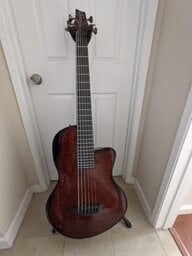
I use rounds (Kalium; gonna try Newtone as well) on my 6-string solidbodies and flats (TI-JFs) on my 6-string ABGs. It's a true thing that choices in flats are very limited for 6-stringers, not to mention expensive when you do find them. I haven't yet felt impelled to go to flats on my solidbodies--though this thread is kinda making me feel I should try it some time--but I love the way TI-JFs sound on my ABGs. In particular, when you get up into melody territory, they can be beautifully expressive.
 
  • Like
Reactions: Scarysharkface
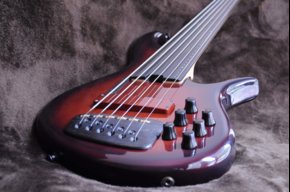
I'll do you one more: my Dingwall Afterburner I 6-string has flats AND is passive! :bassist:
IME flats in no way impede the upper register. The type of gigs where I use it would usually also be suitable for flats on a guitar.
The only application where I really miss rounds is for the modern slap sound, which doesn't come up too often for me anymore and when it does, I have 5-strings & 4-strings that are better suited. (Not saying of course that one can't slap on a 6 - just that my uses for hi C & modern round tones are usually not simultaneous.)
 
  • Like
Reactions: Nashrakh
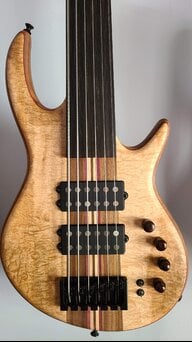
I have ti jazz flats on all three of my fretless six string basses. Love the tone, feel and longevity of the strings. Different pickups on each bass.
20221020_171317.jpg