
Enjoy the benefits of a premium membership!
Upgrade Account
-
TalkBass has been independent since 1998. Add your voice.
Create a free account to reply to discussions, view embedded media, and browse with fewer display ads.
Join free Log in
Want zero display ads or expanded classifieds tools? Compare plans.
You are using an out of date browser. It may not display this or other websites correctly.
You should upgrade or use an alternative browser.
You should upgrade or use an alternative browser.
- Status
- Not open for further replies.
More options
Who Replied?
- Aug 21, 2008
- 1,168
- 33
- Disclosures
- Endorsing Artist : Fodera Guitars , Harvest fine leather bags & straps
just saw this on FB
Link Removed
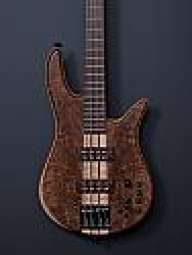
what a waiste of wood on that guitar

This top wood would have looked much better on my Imperial


As a neck material will provide more open resonance and sound slightly warmer. It is not as compact, tight, and/or bright sounding as Maple.
From a utility standpoint (weight and stability), for all practical purposes -- as long as the right Ash is used -- there is no significant difference.
Hope that helps!
It's interesting that you find the ash neck warmer- Mike Tobias says it's brighter. I can't tell much of a difference beyond the calmer attack, honestly.
I can't wait to hear how my wenge necked bass comes out. I still haven't heard a better Fodera than the wenge-necked/bubinga-bodied Monarch I played years back. I wish I'd bought it (luckily, it sounded nothing like a Warwick like one would expect!).
That is interesting as I've always understood that Ash had a brighter tone, as well.
I've never had the opportunity to play a bass with an ash neck. With the strong grain that ash has, does it feel different under the hand compared to maple?

KoaFodera
Commercial User
just saw this on FB
Link Removed
Given that Chestnut is all but gone, I'm sure any one of us would have liked a shot at this top. I'm pretty sure the guy holding the guitar is really pleased.
It's a good thing Vinny doesn't include guitars in the Fodera product line. Otherwise we would be waiting twice as long for a bass.
Cool to see that Christian McBride is having a Fodera of his own being built!
http://fodera.com/PublicPages/AroundtheShop.aspx
http://fodera.com/PublicPages/AroundtheShop.aspx
Just Thumpin'
Commercial User
- Mar 7, 2008
- 4,534
- 1,664
- Disclosures
- Manager and Partner, Fodera Guitars (10/14/09 - 12/16/19)
We actually do make several guitars a year. Over the next 12 months we will be building 4 or 5...
J
J
Given that Chestnut is all but gone, I'm sure any one of us would have liked a shot at this top. I'm pretty sure the guy holding the guitar is really pleased.
It's a good thing Vinny doesn't include guitars in the Fodera product line. Otherwise we would be waiting twice as long for a bass.
Just Thumpin'
Commercial User
- Mar 7, 2008
- 4,534
- 1,664
- Disclosures
- Manager and Partner, Fodera Guitars (10/14/09 - 12/16/19)
That is not the way I have heard them at all...Maple is definitely a brighter sounding neck material than Ash (IMHO). Vinny and Joey would agree as well...
That is interesting as I've always understood that Ash had a brighter tone, as well.
I've never had the opportunity to play a bass with an ash neck. With the strong grain that ash has, does it feel different under the hand compared to maple?
Just Thumpin'
Commercial User
- Mar 7, 2008
- 4,534
- 1,664
- Disclosures
- Manager and Partner, Fodera Guitars (10/14/09 - 12/16/19)
Off the top of my head, I do not know how many were made, but they were a way to test out new ideas for the NYC's without putting the Fodera name on them. From the few that I have seen / heard, they were actually very good!
Anyway, the link that climb provided sounds like it is pretty accurate!
Anyway, the link that climb provided sounds like it is pretty accurate!
Jason, you have some cool story about this Lauricella bass?
I found this pictures on Felix's Myspace site... Thanx! t


We actually do make several guitars a year. Over the next 12 months we will be building 4 or 5...
J
Are the guitars going up on the website too?
I really like the one shown in this post and would like to see more!

Just Thumpin'
Commercial User
- Mar 7, 2008
- 4,534
- 1,664
- Disclosures
- Manager and Partner, Fodera Guitars (10/14/09 - 12/16/19)
As we build 'em, they will be posted in the Newborn Section!
J
J
Are the guitars going up on the website too?
I really like the one shown in this post and would like to see more!

Here's some very preliminary data from an fMRI piano experiment... showing Mike Pope's functional imaging in a subtraction map between trading fours (improvised) and trading fours (memorized). This map shows intense activation of Broca's area during interactive improvisation, a cortical region known to be involved for expressive language function in the brain. I don't want to get into too many details at this point, but really cool for early data; thanks Mike! It'll be interesting to compare your results with the other subjects.
doing your part to make all the cannibals surfing this site hungry
That is not the way I have heard them at all...Maple is definitely a brighter sounding neck material than Ash (IMHO). Vinny and Joey would agree as well...
Very interesting. Thanks for the info!
Jason,
You mentioned that Fodera is using Buckeye Burl instead of Chestnut now. With Chestnut once being used for tone blocks, could Buckeye Burl conceivably be used for that application as well?
You mentioned that Fodera is using Buckeye Burl instead of Chestnut now. With Chestnut once being used for tone blocks, could Buckeye Burl conceivably be used for that application as well?

Just thought I'd post this excellent video of Rich Brown playing his composition "Lua". Brown is one of the top names in jazz in Canada today - I had the opportunity to lend him my Markbass rig (he's an endorser) when he came to play at the Wreckhouse Jazz & Blues Festival this summer.
One beautiful Imperial, too.
One beautiful Imperial, too.



That's my former student Warren Brown's bass. Warren has done really well for himself as an engineer and producer, working with Rich Brown and Matt Garrison. I love this track!
Me too! I tried to buy the bass, but Warren had already sold it I guess. Gah.
Rich is a great player, though.
Rich is a great player, though.
Just Thumpin'
Commercial User
- Mar 7, 2008
- 4,534
- 1,664
- Disclosures
- Manager and Partner, Fodera Guitars (10/14/09 - 12/16/19)
No, it just does not have enough mass or dimensional stability for that...Alder is similar to Chestnut from a tone perspective...
Jason,
You mentioned that Fodera is using Buckeye Burl instead of Chestnut now. With Chestnut once being used for tone blocks, could Buckeye Burl conceivably be used for that application as well?
- Status
- Not open for further replies.
Latest posts
-

-
 Curious what the percentage of bass players use rounds vs flats is.
- Latest: Rip Van Dan
-


